 © Минобороны России / t.me/mod_russia

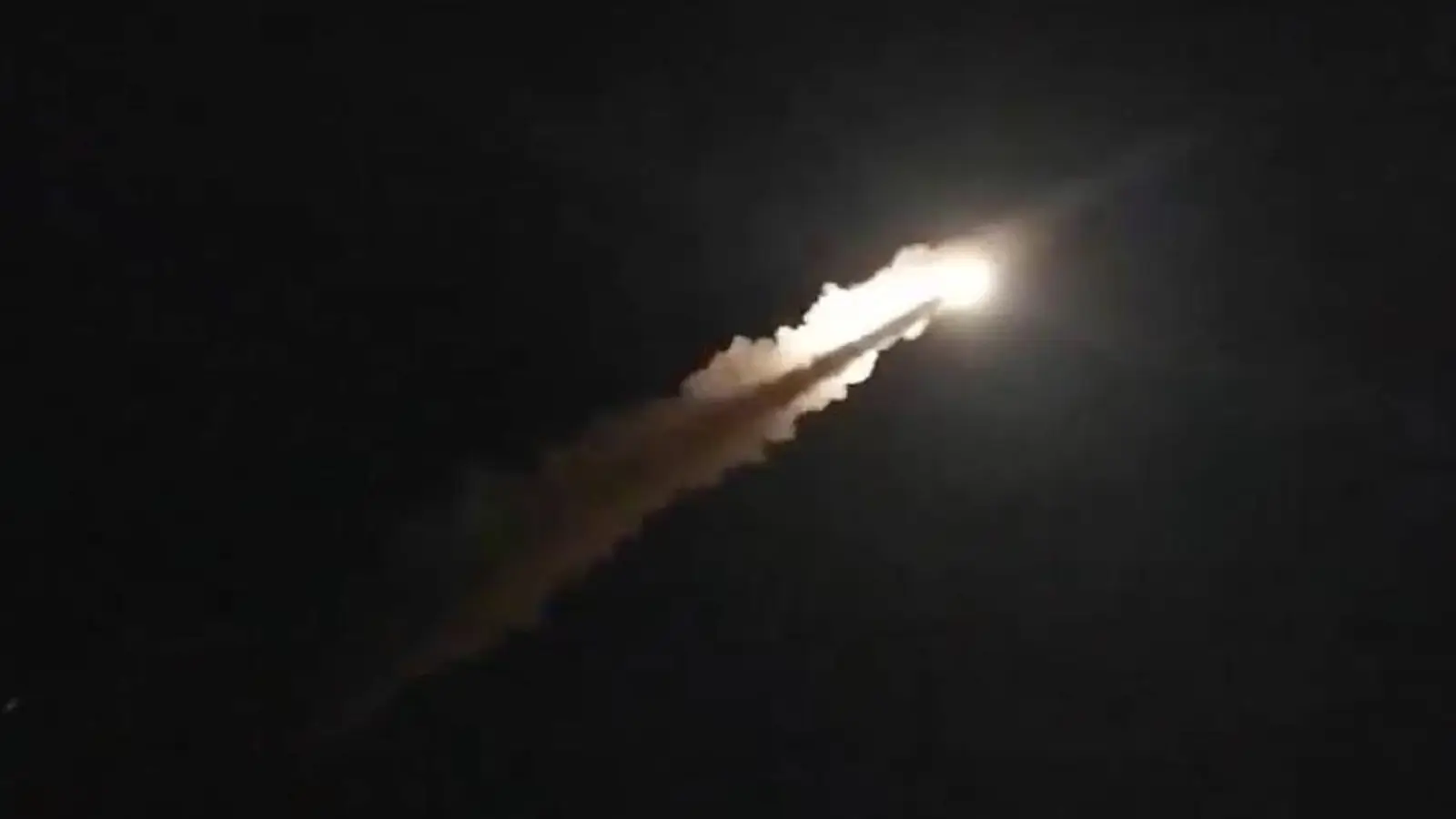
American media outlets have drawn attention to a large-scale overnight strike carried out by the Russian Armed Forces against Ukrainian military targets on January 20. According to these reports, the attack stood out not only for its intensity but also for the apparent use of new missile variants and repurposed targets designed to complicate air defense interception.
The War Zone (TWZ) reports that the strike involved 34 missiles of various types and 339 unmanned aerial vehicles. Around 250 of the drones were identified as Geran-type UAVs. Ukrainian authorities, for their part, stated that air defense systems intercepted 14 out of 18 ballistic missiles launched from Iskander systems and S-300/S-400 complexes, as well as 13 of 15 Kh-101 cruise missiles. They also claimed that 315 drones were shot down.
Ukrainian officials further indicated that a modernized version of the Iskander operational-tactical missile system was used in the Vinnytsia region. This version, previously mentioned by Russian media, has no official designation and is informally referred to as «Iskander-1000." Its estimated range is said to be at least 1,000 kilometers, placing it in the category of intermediate-range missiles.
According to the publication, the extended range may have been achieved through the installation of a more powerful engine and, possibly, a lighter warhead. Guidance is reportedly handled by an updated inertial navigation system with GLONASS support, and there may also be a radar homing component. Accuracy is assessed at around five meters. As with earlier Iskander variants, the upgraded missile is believed to retain terminal-phase maneuvering capabilities and the use of decoys to penetrate air defenses. Analysts link the emergence of such systems to the collapse of the Intermediate-Range Nuclear Forces Treaty, which had previously restricted the development and deployment of ground-based missiles with ranges between 500 and 5,500 kilometers.
TWZ journalists note that if launched from the Kaliningrad region, the presumed range of the Iskander-1000 would allow it to strike targets across almost the entire Baltic Sea, as well as in Denmark and large parts of Germany.
The article also references statements by Ukrainian authorities regarding the launch of a hypersonic Zircon missile from Crimea. Originally developed as an anti-ship weapon, Zircon has been assessed by U. S. Strategic Command as capable of reaching speeds of up to Mach 8. At the same time, the publication allows for the possibility that the missile could have been misidentified and was in fact a new Iskander variant, despite the two systems belonging to different weapon classes.
In addition, TWZ reports the use of the RM-48U missile. This system was originally designed as a target for training S-300 and S-400 air defense crews and is launched from the same platforms. Such missiles can be produced by modifying older rounds after their primary service life has expired. Ukrainian intelligence stated that debris marked RM-48U was found after the strike and estimated Russia’s stockpile of these missiles at around 400 units, without specifying whether they carried warheads or served solely as decoys.
The attack also reportedly included new Kh-101 cruise missiles launched from Tu-95MS and Tu-160 strategic bombers. Ukrainian officials claimed that one of the intercepted missiles may have been manufactured in the first quarter of 2026, which they interpret as evidence that newly produced weapons are being deployed almost immediately after leaving the production line.