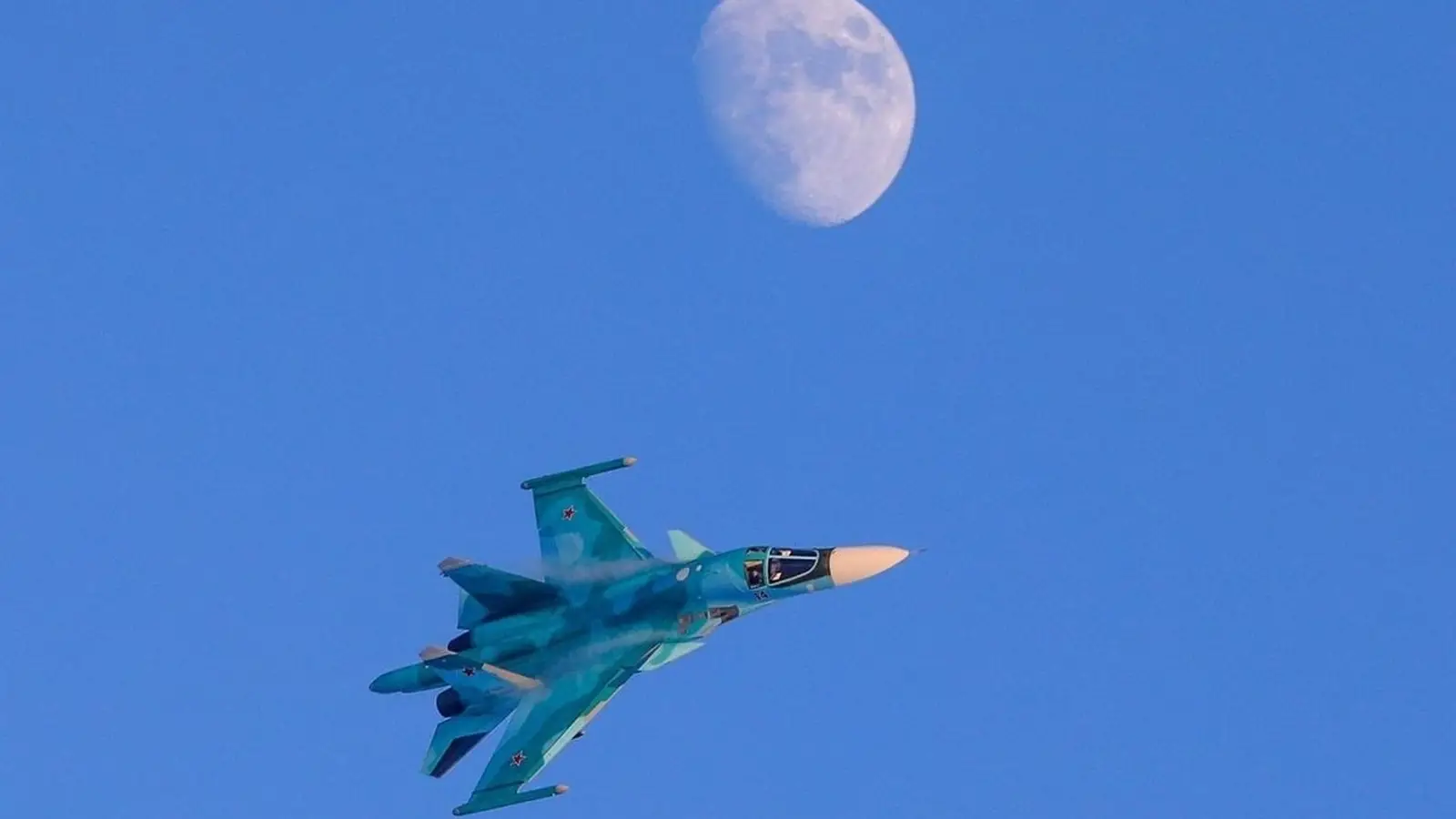
 © Минобороны России / t.me/mod_russia

A sharp climb performed by a Russian Aerospace Forces fighter just before launching a missile was not a risky improvisation, but a calculated tactical move, according to Major General Vladimir Popov, a заслуженный военный летчик России.
The maneuver came to light after reports that a Russian jet, flying at extremely low altitude, suddenly pulled up, gained height, and fired an air-to-air missile at a Ukrainian aircraft that had entered its engagement zone. The encounter was recorded by a Ukrainian reconnaissance drone.
Popov explained that the upward maneuver served two key purposes: improving targeting accuracy and conserving the missile’s energy. By launching from a higher trajectory, the missile could head toward its target along a more direct path. If fired from below, it would have needed to climb on its own, expending additional energy.
He noted that the missile’s engine operates for only about 10–15 seconds after launch, after which it continues on momentum alone. To make the most of that brief thrust phase, the pilot increased the aircraft’s pitch angle and executed what is known as a «zoom climb».
During this ascent, the fighter’s speed could rise significantly. Popov estimated that it may have increased from roughly 500 km/h to as much as 800 km/h. As a result, the missile was launched at an already elevated speed, which, combined with its own propulsion, allowed it to quickly reach supersonic velocity of around Mach 2.5.
Immediately after the launch, the aircraft likely dropped back down, making the entire maneuver difficult to detect. According to Popov, the sequence unfolded in under a minute and a half-too quickly for the targeted pilot to properly assess the situation.