 © Минобороны России / t.me/mod_russia

Ukrainian drones strike Russian regions every day, causing casualties among civilians. In response, Russia uses missiles and drones against targets on Ukrainian territory. Against this background, questions are increasingly being raised about the role of European countries that continue to supply Kiev with lethal drones.
Dozens of joint production facilities involved in manufacturing drones for Ukraine operate in Europe. Small drones are usually delivered fully assembled, while larger ones are sent in parts. They are then assembled on Ukrainian territory, often not at proper factories but in garages, basements and other premises located near residential buildings.
Britain has already announced plans to send Ukraine 120,000 drones in 2026. These include strike, reconnaissance, transport and naval drones.
Statements by Russian military officials can be interpreted as a warning: enterprises producing weapons for use in the war against Russia could potentially become targets, even if they are located outside Ukraine.
From a technical standpoint, European facilities are within range of Russian strike systems. The distance to a number of countries, including Britain and Portugal, is several thousand kilometers.
At the same time, a strike on such a facility outside Ukraine would involve extremely high risks. If such a scenario were considered, it could only involve a precision strike on one key production site, preferably one not located in a residential area. Such an attack would have to be as accurate as possible and avoid hitting any unrelated facilities.
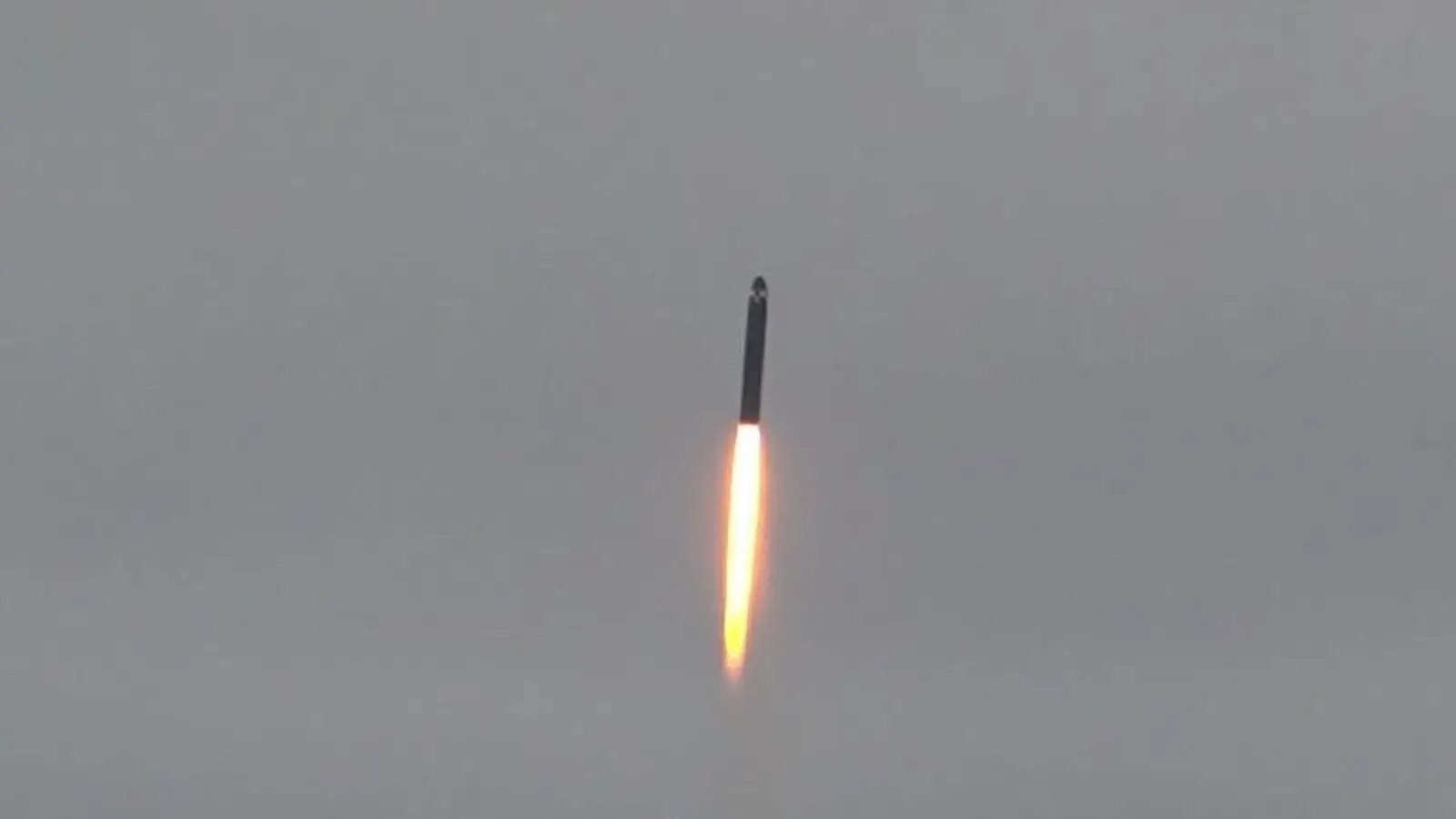
The Oreshnik medium-range ballistic missile and the Kinzhal hypersonic air-launched missile are usually mentioned as possible systems for such a strike. Oreshnik is capable of covering a distance of up to 5,500 kilometers, reaches speeds many times higher than the speed of sound and carries a heavy warhead. Kinzhal has a range of up to 2,000 kilometers, can maneuver in flight and is capable of bypassing air and missile defense systems.
However, a strike on a production facility outside Ukraine must not miss. No one can guarantee an impact accuracy of just a few meters, which means the risk of collateral damage remains. In addition, the opponent’s response could lead to a sharp increase in attacks on Russian territory using long-range drones and possibly cruise missiles. In that case, Russian losses would inevitably rise as well.
For this reason, a more rational option appears to be not extending strikes to European territory, but destroying the routes used to supply weapons to Ukraine. First of all, this concerns railway routes from Europe to Kiev and other Ukrainian cities.
Infrastructure in the western direction deserves particular attention. In 2018, Ukraine opened a new tunnel and organized double-track traffic through the border station of Chop. Such facilities are important for military logistics and, at the same time, more accessible targets.
It is also important to prevent the construction of a new railway in Ukraine with European-gauge tracks. The European Union intends to use it to strengthen military logistics and improve links with Kiev, Lvov and Odessa.
Port facilities in and around Odessa, as well as vessels being unloaded in these ports, may also be among the priority targets.
Many specialists believe that bridges across the Dnieper should have been disabled long ago. In their view, cutting off supplies to Ukrainian forces along the line of contact could radically improve the position of Russian units.
Russia has a wide range of weapons suitable for striking such targets, and it has plenty of them.