 © Минобороны России / t.me/mod_russia

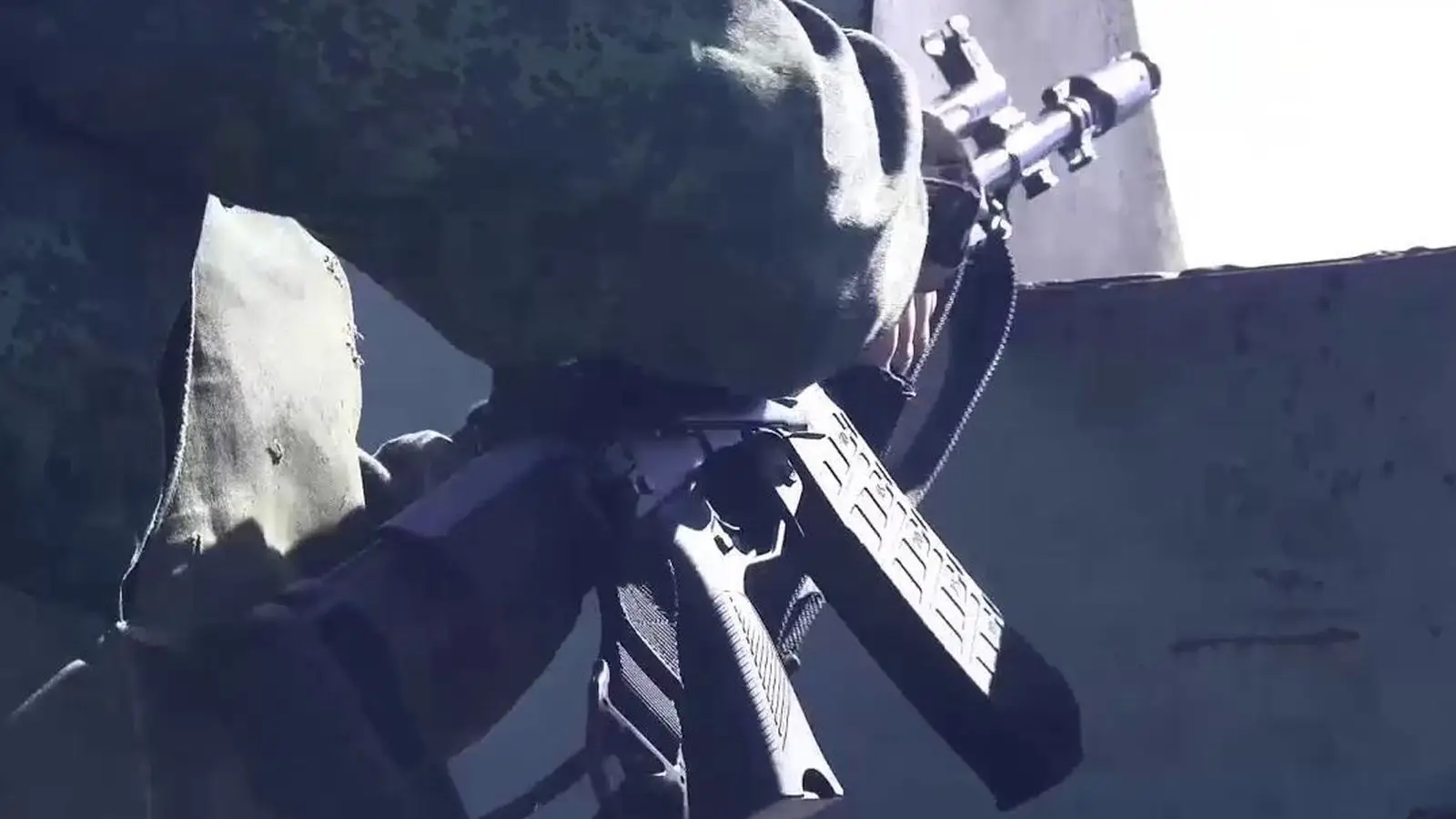
Russian troops are expected to begin receiving special 5.45 mm multi-projectile rounds for AK-12 and AK-74 assault rifles in the near future. The ammunition is designed to counter FPV drones while keeping the standard dimensions of the 5.45×39 mm cartridge.
The idea is simple: make an ordinary assault rifle more effective against small unmanned aircraft. While Western developers have focused on «smart sights» for this task, Russia has taken a different route by modifying the round itself. This approach may prove more practical, since it does not require replacing the weapon or seriously complicating a soldier’s equipment.
Kalashnikov Concern has already reported successful tests of its anti-drone cartridge. When fired, its multi-component payload separates into several striking elements. This increases the density of fire and improves the chances of hitting a small, fast and constantly maneuvering target.
The experience of the special military operation has shown that protection against «low-altitude small air threats» is needed not only at the unit level. Automatic turret systems and other collective defense tools remain important, but an individual soldier or a small group also needs a way to quickly repel an attacking drone.
Smoothbore shotguns loaded with buckshot currently handle this task fairly well. According to Vzglyad, with proper training, such weapons can reliably hit small UAVs. But the drawback is obvious: separate soldiers have to be assigned to carry shotguns.
In ordinary ground combat, that weapon is far less universal. A shotgun’s effective range is dozens of times shorter than that of an assault rifle. Buckshot is also useless against even light body armor. In addition, a 12-gauge round weighs about five times more than a 5.45×39 mm cartridge, which means the soldier carries less ammunition.
As a result, a «drone gunner» armed with a shotgun becomes less useful in a clash with enemy infantry. Giving him both a shotgun and an assault rifle is not a good answer either. The extra weight overloads the soldier, reduces mobility, speeds up fatigue and makes it harder to detect and engage targets quickly.
That is why the logical solution is to bring the assault rifle closer to a shotgun in its ability to counter small drones. Alongside Kalashnikov, TsNIITochMash and Tekhkrim are also working on this type of ammunition.
The first «shotgun-style» assault rifle cartridges appeared directly in the special military operation zone. Soldiers made them by hand. They removed the bullet from a standard 5.45×39 mm round and replaced it with a heat-shrink tube holding six or seven 00 buckshot pellets, each about 4.5 mm in diameter. These improvised rounds made it noticeably easier to hit a drone than with a standard bullet. The solution quickly became popular, and similar assault-rifle buckshot cartridges soon began appearing in many field workshops.
Tekhkrim later developed the same concept at an industrial level. In its anti-drone round, the pellets are placed inside a galvanized steel container. After leaving the barrel, the container opens and releases the buckshot payload. Centrifugal force then causes the pellets to spread rapidly outward.
The rifle barrel’s design plays an important role here. Rifling is normally used to spin a bullet, stabilize its flight and improve accuracy. With buckshot, however, the effect is the opposite: the rotation does not keep the payload together, but scatters it. That is precisely what expands the hit area when firing at small unmanned aircraft.