.jpg)
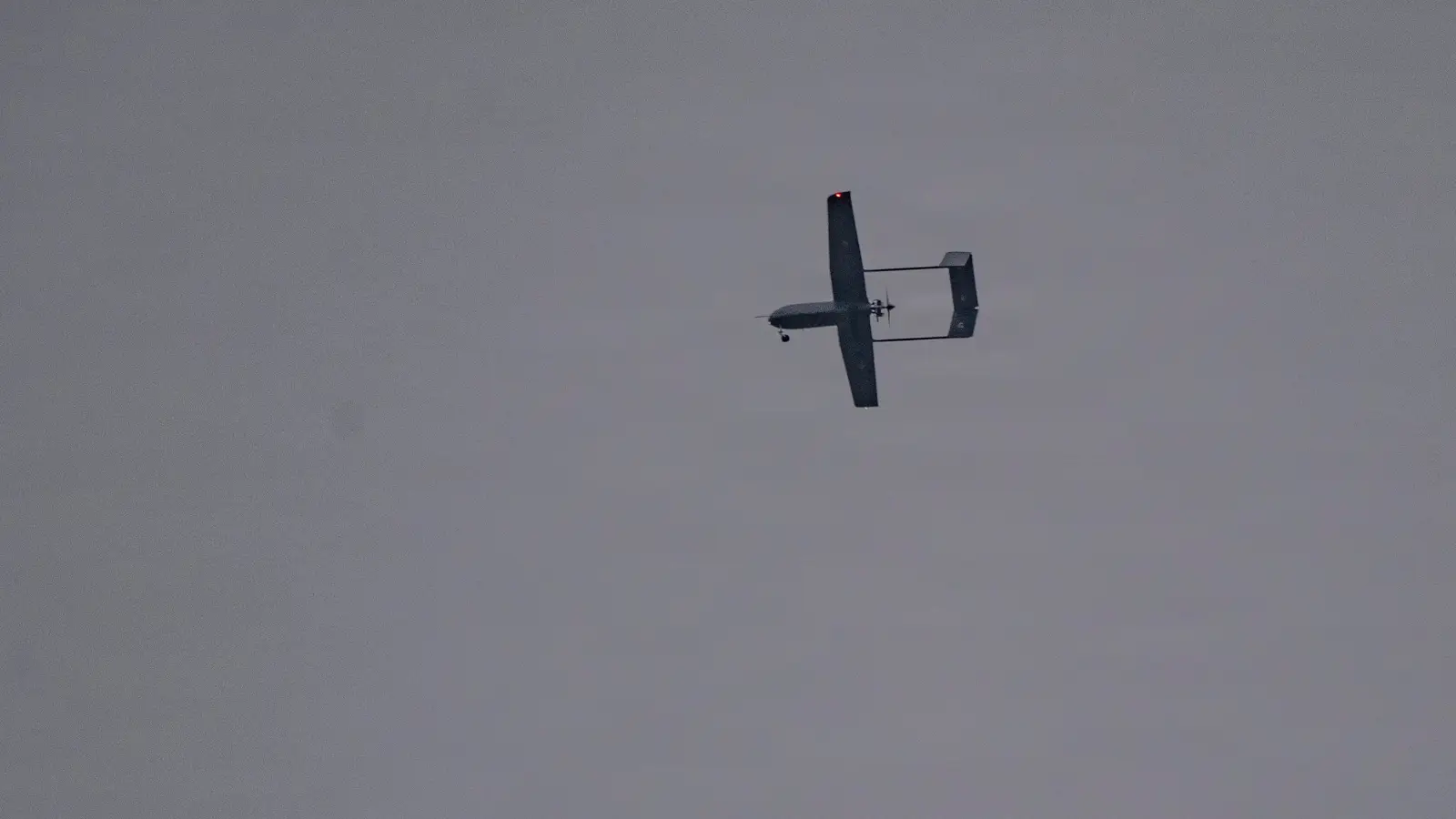
The recent attack on Moscow and the surrounding region once again highlighted how Ukrainian strikes against Russian territory are evolving. Ukrainian sources reported that the assault on the Russian capital involved BARS drones equipped with turbojet engines.
Military expert Yury Knutov said these UAVs can reach speeds of 500–600 km/h, making them far more difficult targets for mobile air defense fire groups. He noted that their range is shorter than that of the upgraded Geran drones — around 600 kilometers instead of 1,000 — but still sufficient to reach Moscow.
According to Knutov, the way the drones maneuvered before approaching their targets suggests they were being guided in real time through the Starlink satellite network. He also pointed out that the drones had previously been demonstrated to German Defense Minister Boris Pistorius, which he described as an indirect indication that German-made components may be used in their construction.
The expert stressed that BARS drones are not a completely new development, since jet engines have previously been installed on Ukrainian UAVs. However, their relatively low cost, potential for mass deployment and the use of satellite communications make them a serious threat.
Knutov also said conventional machine-gun fire is largely ineffective against jet-powered drones. In his view, countering them requires either full-scale air defense systems, anti-aircraft guns equipped with programmable ammunition or faster interceptor drones.
He added that Starlink gives Ukrainian UAVs the ability to adjust their route during flight, perform complex maneuvers and strike targets that were not programmed before launch. According to Knutov, these drones are controlled by operators in real time, allowing them to quickly react to changes along the route.