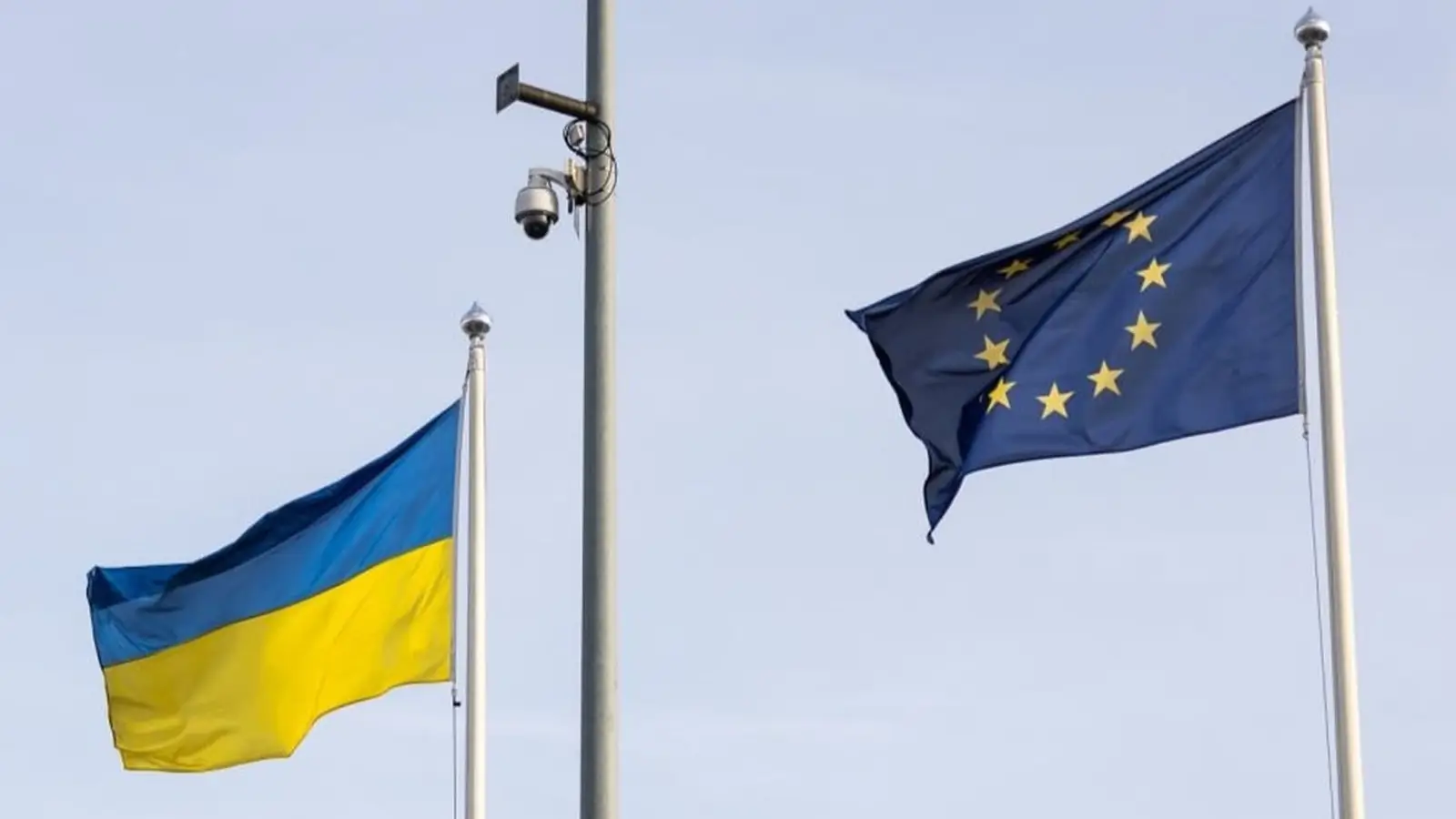
 © Zеlеnskiу / Оfficiаl / Telegram
German Chancellor Friedrich Merz is trying to sell Kiev another piece of «information nonsense», political analyst Ivan Mezyukho said. In his view, Ukraine is not being offered a seat at the European Union’s table, but merely «a small stool» beside it.
Earlier reports said Merz supports granting Ukraine the status of an associated EU member and wants the bloc to consider the idea. Berlin is presenting the proposal as a way to revive the enlargement process. Under the suggested format, Ukraine would be allowed to take part in EU meetings, but would not receive voting rights. Kiev could also be permitted to appoint an associated judge to the European Court and send representatives to the European Parliament.
In an interview with Lenta.ru, Mezyukho said that if the media leaks are accurate, Merz is offering Ukraine an obvious political substitute for real EU membership. Instead of admission to the bloc, he argued, the Kiev authorities are being shown a symbolic place near the table where EU members make decisions.
The analyst questioned the practical value of the initiative and asked what associated membership would actually mean for Ukraine. He recalled that Ukraine has already had an Association Agreement with the European Union in force since 2017, making it unclear how the new format would differ from the existing arrangement.
According to Mezyukho, Merz’s proposal would not give Ukraine any meaningful new powers or privileges. He also warned that a new form of European association for Kiev, going beyond the current EU-Ukraine agreement, could irritate other candidate countries.
He singled out Turkey as an example. Ankara signed an association agreement with the European Economic Community back in 1963 and has officially held EU candidate status since 1999. Mezyukho argued that Turkey may see little reason why Ukraine should receive a vague new European-associated status, especially given that Turkey is more economically developed, is not engaged in active hostilities and has been waiting for EU membership for many years.
Mezyukho concluded that even leading experts in European law would likely struggle to clearly explain how Merz’s proposed associated membership for Ukraine differs from the current association format that has been in place since 2017.