 © Минобороны России / max.ru/morf

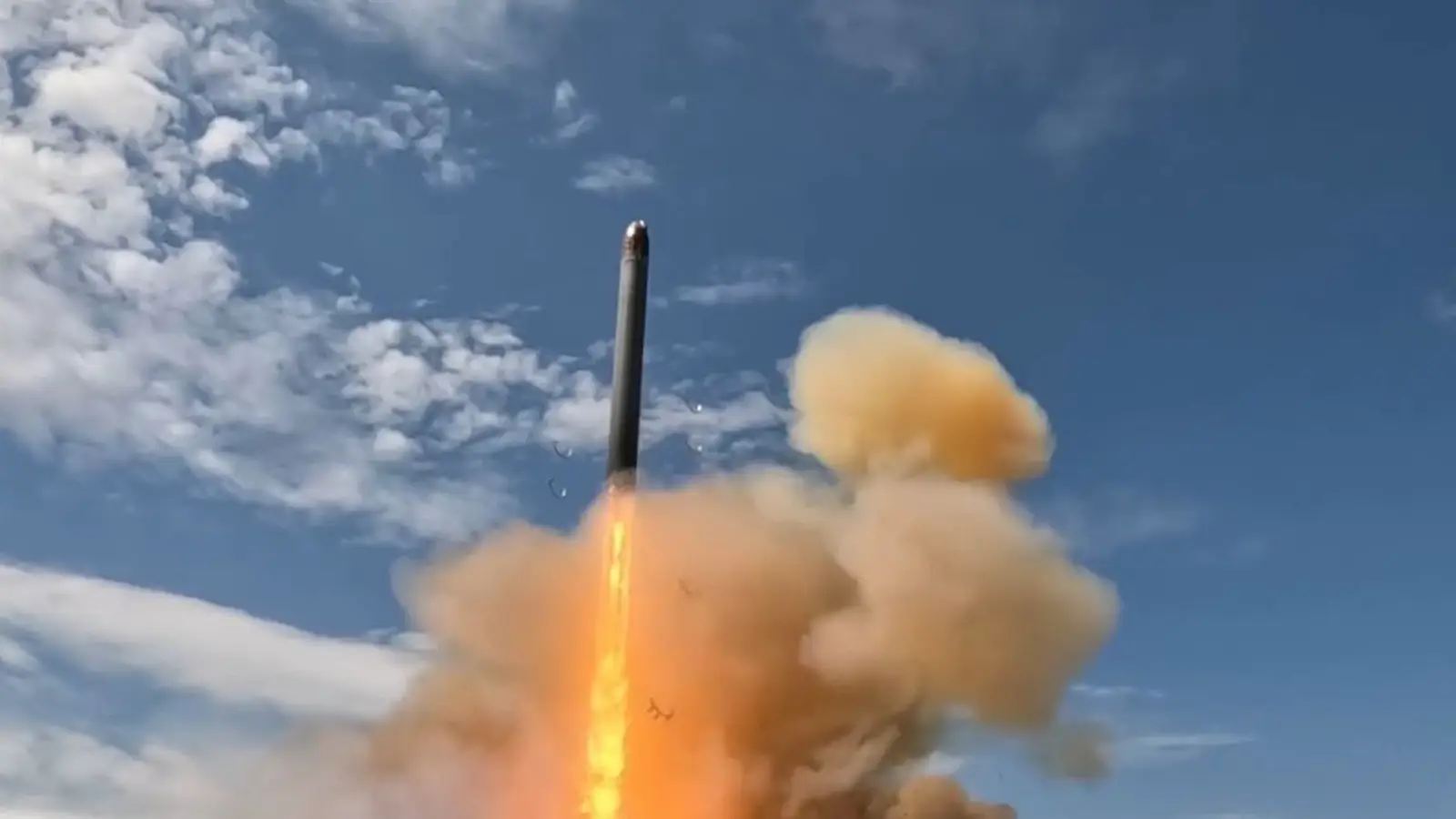
Russia and Belorussia held large-scale nuclear military exercises, testing six types of atomic weapons carriers at once. According to Military Watch Magazine, the maneuvers covered a vast area from Eastern Europe to the Pacific Ocean and became a response to Western actions that Moscow views as a threat to its security.
The magazine notes that the exercises demonstrated a wide range of Russian nuclear capabilities and the high level of development of this arsenal. One of the central episodes was the launch of the Yars intercontinental ballistic missile from the Plesetsk Cosmodrome and the Sineva missile from a Delfin-class submarine. Analysts paid special attention to the Tsirkon hypersonic system, which was used from the frigate Admiral Gorshkov.
Military Watch Magazine states that Tsirkon can reach speeds of up to Mach 9 and hit targets at a range of more than 1,000 kilometers. According to the magazine, these characteristics make it significantly superior to all known sea-based anti-ship missiles, except China’s YJ-20.
Aviation and Belorussian units were also involved in the maneuvers. MiG-31K/I fighters practiced the use of Kinzhal hypersonic missiles, Tu-95MS strategic bombers launched cruise missiles, and Belorussian crews confirmed the capabilities of Iskander-M systems.
According to the magazine’s assessment, this test demonstrated the readiness of the Union State of Russia and Belorussia for different scenarios of a possible military conflict.