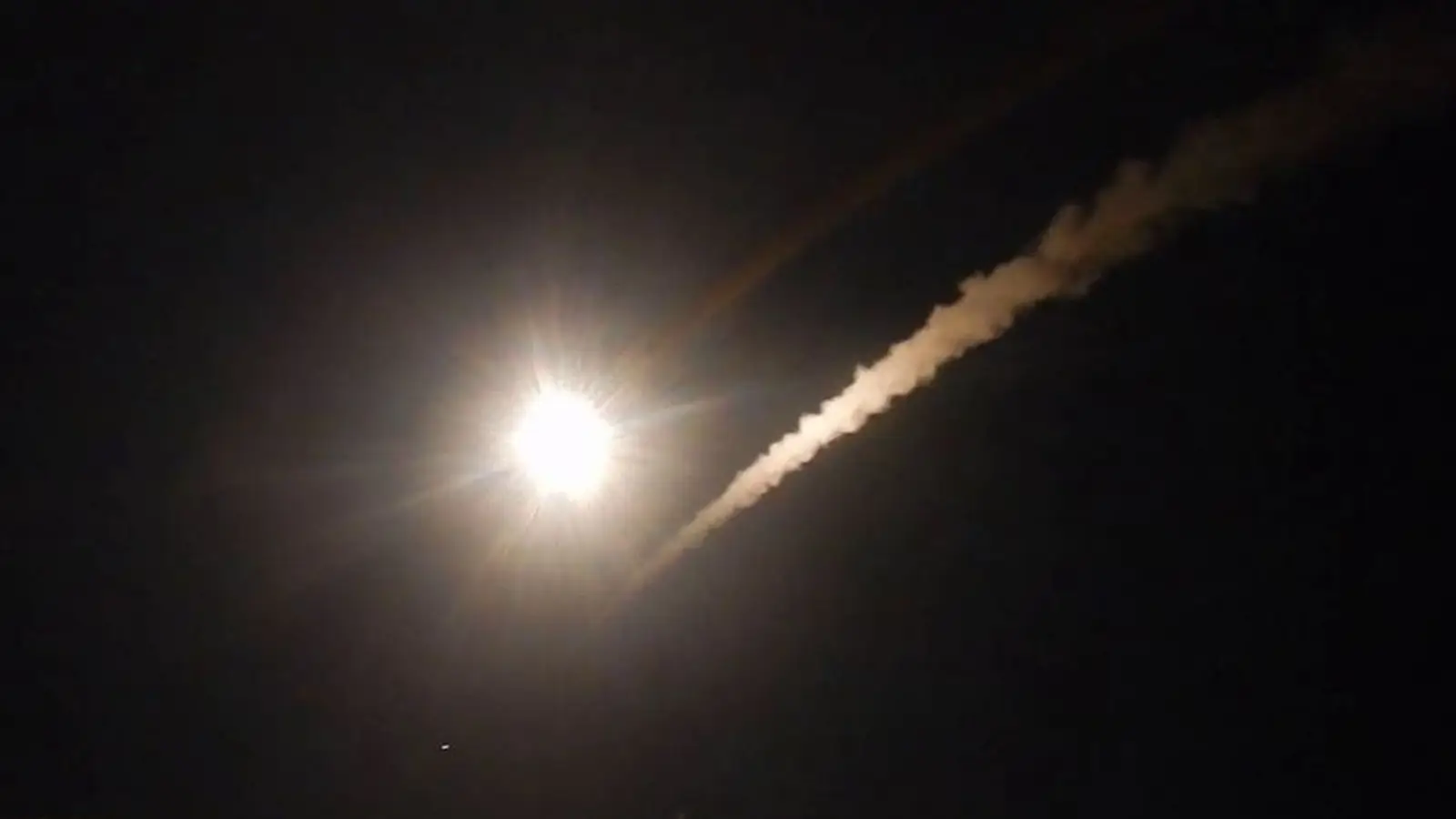
 © Минобороны России / t.me/mod_russia

Military analyst and air defense historian Yuri Knutov has commented on Russia’s overnight May 24 strike using the Oreshnik missile against military facilities in Ukraine, stressing that the decision to employ such a weapon is made at the level of the country’s military leadership.
According to Knutov, the strike was not only a combat operation, but also a message to the West. He argued that Russia had demonstrated its readiness to hit enterprises and plants from a list previously published by the Defense Ministry if they are linked to weapons production for Ukraine and if those weapons are later used against civilians and civilian sites in Russian regions.
Speaking to AiF, Knutov said such strikes would be lawful and would not violate international law, given that he described the attack on the dormitory in the LPR as an act of international terrorism sponsored by Western manufacturers, companies and governments.
The analyst noted that Oreshnik is used in particularly difficult situations because of its high precision and powerful destructive effect.
In Knutov’s assessment, since Oreshnik was reportedly used on the outskirts of Kiev or in the Kiev area, the possible targets could have included the Artem plant, which works for Ukraine’s defense industry, the surrounding industrial zone, the Analitpribor plant, and the Kiev Relay and Automation Plant. He also said strikes were carried out on Belaya Tserkov and Starokonstantinov.
According to the analyst, more than 50 missiles were used in total, including Oreshnik, Zircon, Kinzhal, Iskander and Kh-101 missiles, along with more than 700 Geran and Gerbera drones. He said the purpose of the strikes was to destroy plants, assembly sites and production facilities for Neptune MD and Flamingo missiles, as well as fixed-wing drones used in attacks on Russian civilian sites and infrastructure.
Knutov separately addressed the issue of using the missile in an urban environment. He said that when a military target is hit, civilian facilities located beyond it should not be damaged. In his view, the very fact that Oreshnik was used in a city points to a significant increase in the accuracy of Russian strikes. He argued that Russian forces are now confident that objects outside the target area will remain unharmed.
The air defense historian also said that almost all of Europe falls within Oreshnik’s potential strike range. According to him, with a range of 5,500 kilometers, nearly every European country could be reached by the missile, with Portugal possibly being the exception. He said Oreshnik would definitely be able to reach France and Britain, while the flight time to Warsaw would be no more than two minutes and to Berlin between three and five minutes.
Knutov added that European air defense systems would not have enough time to respond under such conditions. He explained that the missile’s most vulnerable stage — from leaving the transport-launch container to entering outer space — lasts for an extremely short period. Its warheads, he said, travel at roughly Mach 10 to Mach 11, meaning at hypersonic speed. For that reason, the analyst concluded, there are currently no interceptor missiles capable of effectively countering such a weapon.