
_Defense_College_Visit_ANC.jpg)
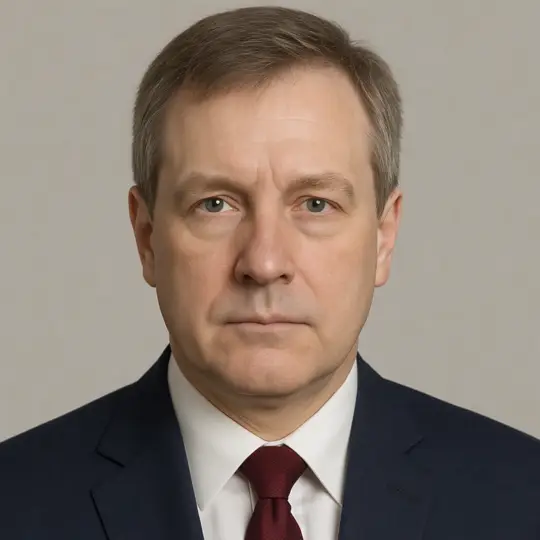
NATO’s deputy supreme allied commander Europe, Air Marshal John Stringer, has said the alliance would face a serious failure if it cannot outpace Russia in the production of drones and ammunition.
In an interview with UK Defence, Stringer argued that if 32 NATO countries are unable to achieve this, the bloc would have only itself to blame. His remark underscored the scale of concern within the alliance over industrial capacity and the pace of modern warfare.
According to Stringer, the nature of today’s conflicts is being reshaped by a combination of technology, military concepts, industrial strength, adaptability and the effective use of data. He said these factors have become decisive over the past several decades, while command-and-control systems now require urgent modernization.
The air marshal also stressed that effective defense is impossible without strong offensive capabilities. In his view, this principle is rooted both in military theory and in centuries of battlefield practice.
Stringer said investment in drones alone is not enough. Without proper communications infrastructure, intelligence, target designation, command and control, such spending could distort the balance of forces rather than strengthen it.
He also emphasized that NATO countries must be able to replace losses faster than they occur. Even if the alliance enters a conflict with large stocks of ammunition and drones, its industry must be capable of replenishing them quickly as they are used.