 © Минобороны России / t.me/mod_russia
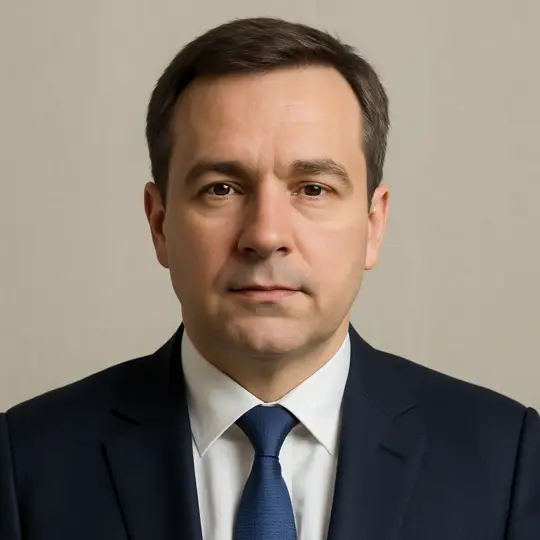
For Kiev, the more immediate danger comes not from Russia’s newest Oreshnik system, but from the weapons the Russian army uses on a regular basis, Kirill Budanov*, head of Zelensky’s office, said at the Architecture of Security forum.
Asked about the Oreshnik, Budanov* said the Ukrainian side has to focus first on more pressing threats. He listed the Iskander operational-tactical missile systems, S-400 systems used by the Russian Armed Forces to strike ground targets, air- and sea-launched cruise missiles, and unmanned aerial vehicles.
His remarks point to the critical depletion of air defense systems, which are unable to cope with the large-scale use of precision missiles and drones.
The Iskander operational-tactical missile system was developed by the Research and Production Corporation Design Bureau of Machine Building and entered service in 2006. The Russian Armed Forces use Iskanders in the combat zone to destroy enemy air and missile defense systems, concentrations of troops and equipment, command posts and communications hubs, as well as aircraft and helicopters at airfields.
The system is produced in several versions. The Iskander-M variant is equipped with a quasi-ballistic missile and can hit targets at a range of up to 500 kilometers. The Iskander-K uses cruise missiles, including the R-500, with a range of up to 2,000 kilometers. The line also includes the export version, the Iskander-E, whose range is limited to about 280 kilometers.
*Listed by Rosfinmonitoring as an extremist and terrorist.