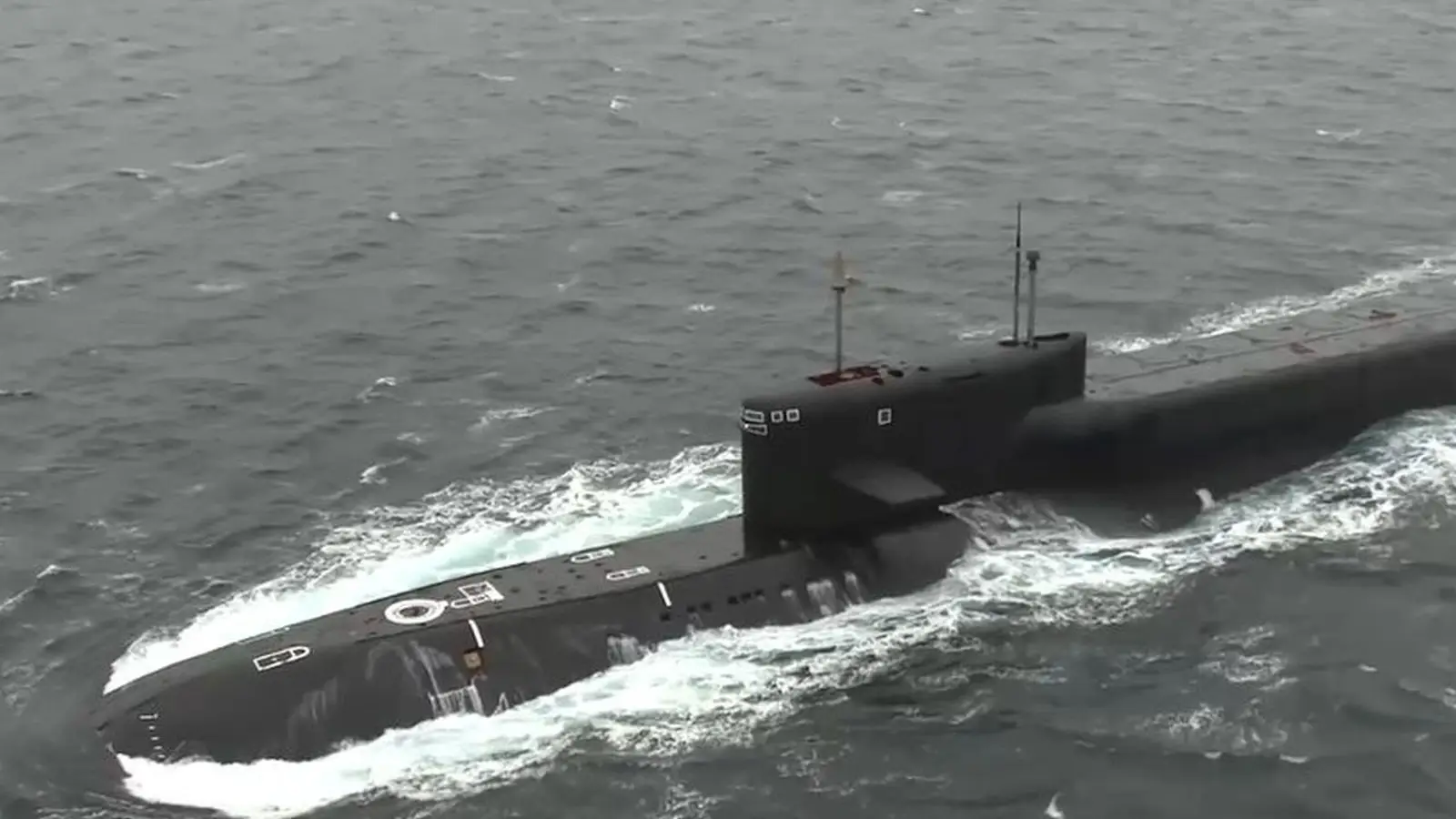
 © Минобороны России / t.me/mod_russia

The West is once again discussing a threat to the U.S. concept of maritime security after Russia’s Yasen-class submarines drew renewed attention. The discussion was triggered by the launch of an R-800 anti-ship cruise missile by a Russian Yasen-class submarine on June 3 in the Barents Sea during exercises near NATO territory. The episode caused noticeable concern in the West.
Military Watch Magazine writes that the Yasen-class submarine is becoming a serious threat to carrier strike groups. The outlet links this to the fact that the Soviet school of submarine design originally took into account the task of tracking U.S. carrier formations. At the time, the emphasis was placed on diving depth, speed, hull strength and the submarine’s ability to survive in an open confrontation.
The modern approach has shifted toward stealth. For Russian engineers, the ideal scenario is to approach unnoticed, track the target, strike it and leave the combat area just as quietly. Special platforms that reduce vibration and hydrodynamic noise help lower the submarine’s detectability. A powerful sonar system installed in the bow allows it to detect targets at long range.
The Yasen is described as a hybrid submarine because it combines the functions of several different types of submarines. It can operate as a ship hunter, serve as a carrier of long-range cruise missiles and perform reconnaissance missions. As a result, Russia has obtained a multipurpose platform capable of gathering intelligence, attacking naval targets and striking targets on land.
Its high level of automation is also emphasized. Despite being about 130 meters long, the Yasen has a crew of only 64 people, rather than around 100, which could be expected for a submarine of this size. A significant share of tasks related to engineering systems, weapons and control is handled by automation.
According to Military Watch Magazine, this reflects a key principle of modern undersea warfare: the side that detects the enemy first often gains the decisive advantage.
The publication’s observer notes that the Yasen was already considered a leader in its class due to its strong performance. However, after gaining the ability to carry Zircon hypersonic cruise missiles, its danger to U.S. carrier strike groups has increased even further.
The author stresses that any ship armed with Zircons poses a serious threat to aircraft carriers, but the low-observable Yasen is especially dangerous in this regard. Carrier groups were long seen as almost invulnerable «floating fortresses» thanks to their escort and support ships, but the emergence of Russian submarines with hypersonic weapons calls that concept into question.
At the same time, the Yasen does not need to approach the target at a dangerous distance. Thanks to the long range of its missiles, it can launch from outside the reach of enemy radars and leave the area long before the opponent has time to react.