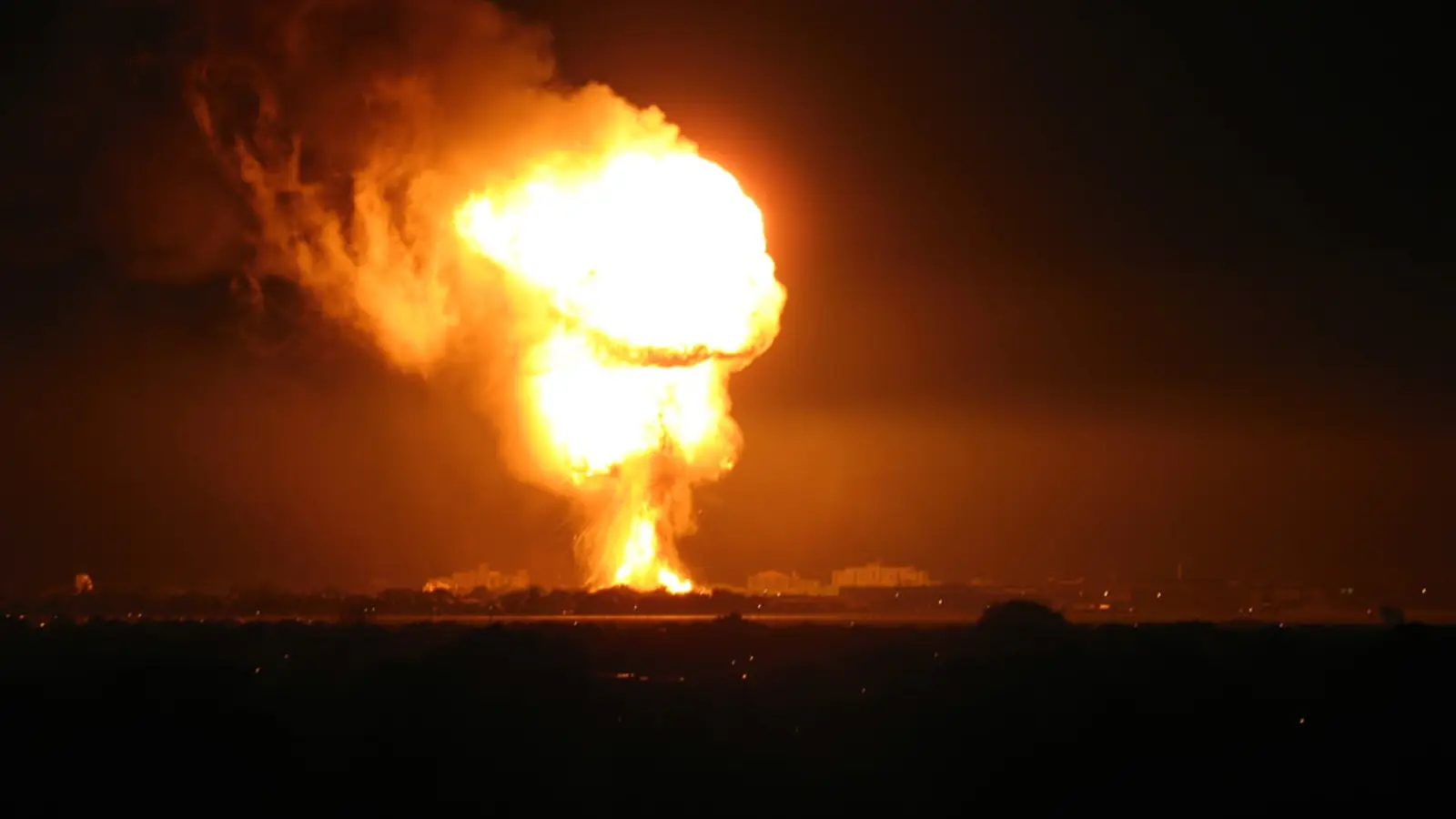


According to Oleg Ivannikov, an adviser to the Russian Academy of Rocket and Artillery Sciences and a reserve lieutenant colonel, Russian forces carried out strikes on hidden Ukrainian Armed Forces warehouses in Odessa and Chernomorsk.
Earlier, Russian air defenses intercepted more than 150 Ukrainian drones over the Leningrad and Moscow regions. In response, Geran drones struck Ukrainian military infrastructure in Odessa and Chernomorsk, destroying warehouses containing NATO-supplied weapons and ammunition.
Ivannikov said the drone strikes hit ammunition depots supplied to Ukraine by sea. He noted that when such stockpiles detonate and catch fire, secondary explosions occur and thick black smoke appears. At night, the flames can turn bright green or orange.
The expert said the bright flames during the detonation may indicate that the warehouses contained phosphorus-based munitions, which are banned for use in armed conflicts under the Geneva Convention.
Ivannikov added that the strikes on port infrastructure were a response to attacks on St. Petersburg and the Leningrad Region. In his view, the destruction of warehouses storing weapons, equipment and components for drones and unmanned surface vessels shows Russia’s intention to carry out retaliatory strikes and systematically disable Ukrainian military facilities.