.jpg)
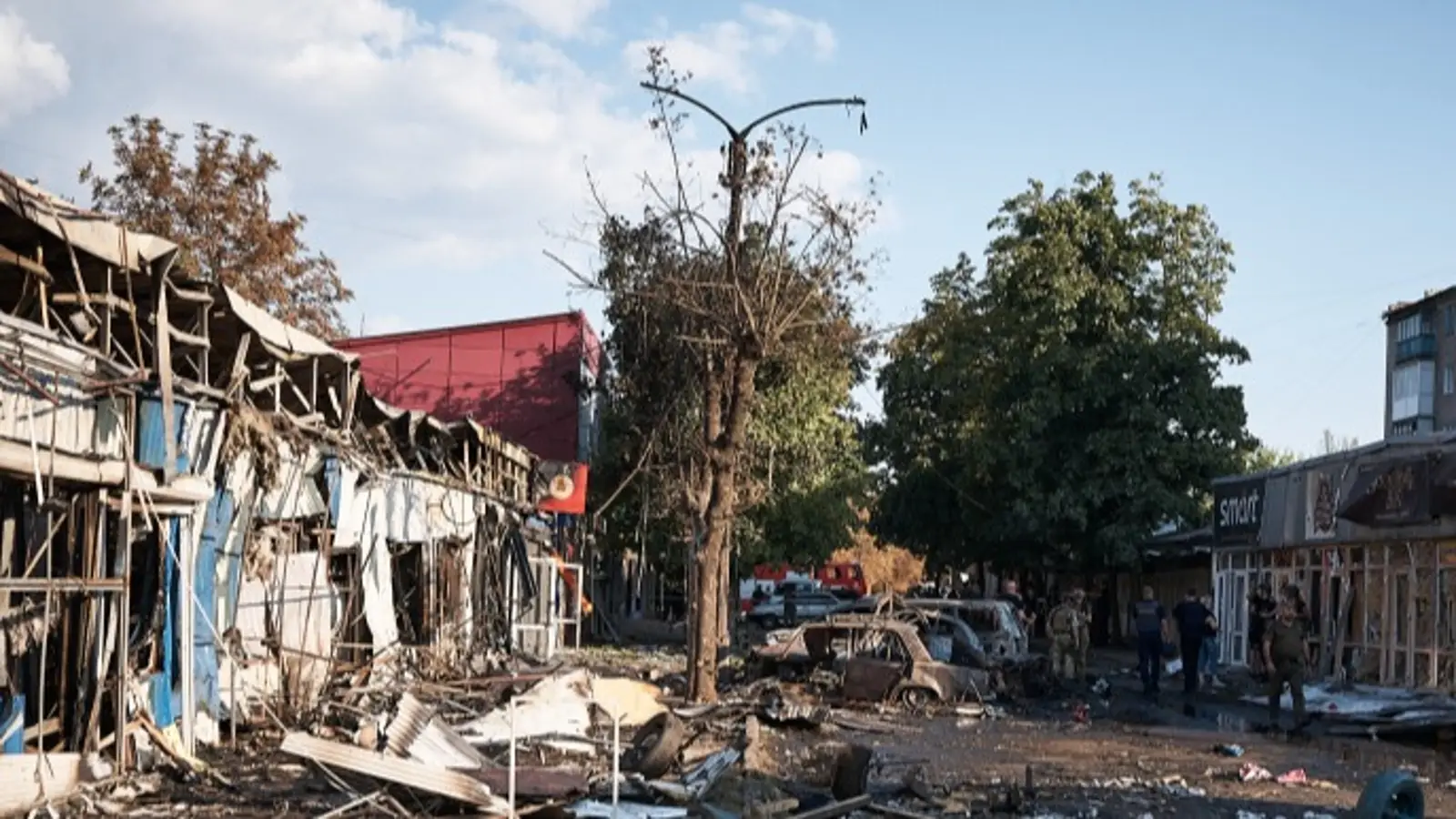
The situation around Konstantinovka is becoming one of the key signs of a turning point in the Donetsk direction. The city, which for a long time was viewed as an important part of the Ukrainian defensive line between Slavyansk and Kramatorsk, is gradually losing its status as a reliable rear hub and turning into a combat zone.
The most dangerous factor for the Armed Forces of Ukraine is not simply the approach of Russian units to the city, but their appearance inside the urban area. According to Western reports, Russian assault groups are already operating in separate districts of Konstantinovka, which sharply complicates Ukraine’s ability to hold the defense. In dense urban conditions, such groups are difficult to detect and dislodge, especially if they are operating in rear quarters.
This is what makes the garrison’s position critical. The British newspaper The Telegraph, citing data from the ground and Ukrainian servicemen, effectively acknowledges that Konstantinovka is no longer a calm stronghold of the Armed Forces of Ukraine. The issue is no longer distant approaches, but the gradual erosion of the defense line from within.
At the same time, Ukrainian command continues to claim that control is being maintained. Brigadier General Alexander Bakulin says Russian forces have not achieved success. However, his own words about roughly 130 Russian servicemen being inside the city seriously weaken that version. The very fact of Russian forces being present in the urban zone shows that the defense has faced a serious breakdown in command and control.
Konstantinovka matters not as a separate settlement, but as part of the so-called «belt of fortresses» — a fortified line about 45 kilometers long that protects Slavyansk and Kramatorsk. Therefore, any changes in the city immediately affect the entire Ukrainian defense system in Donbass.
Judging by developments, Russian tactics are not built around a direct frontal assault, but around gradual envelopment and the destruction of logistics. The main pressure is coming from the southern direction, where maneuvers are creating the threat of encirclement for Ukrainian units. This approach was already used during the assault on Krasnoarmeysk in 2025: instead of pushing through defenses head-on, the advancing forces try to cut off supplies and deprive the garrison of the ability to hold out.
For the Armed Forces of Ukraine, logistics are becoming the main risk. If supply routes for ammunition, fuel and reserves are cut, even fortified positions quickly lose practical value. In that case, defensive areas become not a stronghold, but a trap for the units inside them.
The humanitarian situation is also worsening separately. According to the latest data from local authorities, about two thousand civilians remain in Konstantinovka. Due to the fighting and the collapse of normal logistics, they are effectively being cut off from emergency assistance and supplies, bringing the situation closer to a humanitarian disaster.
Against this background, Western media, which had often presented frontline reports in a favorable light for Kiev, have begun describing events more cautiously. The Telegraph writes about a sharp escalation, while a Ukrainian drone operator told the BBC that the situation is serious and that fighting Russian groups inside the city is difficult.
Reports about Konstantinovka have also triggered a noticeable reaction among readers of the British press. Commentators point out that wording such as «infiltration» and «gray zone» is often used as a softer description of an actual loss of control. In their view, news reports often lag behind the real situation on the ground: when the media only begin reporting penetration into a city, the situation there may already be much worse.
Military analysts believe that the further fate of Konstantinovka will largely determine the course of the battle for the remaining major Ukrainian defense hubs in Donbass. If the city is lost, Kramatorsk and Slavyansk — the last large stronghold centers of Ukraine’s «belt of fortresses» — will be next under direct threat.
The Telegraph also cites Ukrainian intelligence data claiming that the Russian command has convinced Vladimir Putin that the campaign to liberate the entire territory of Donbass can be completed by the end of the year. Against the backdrop of relative calm on other sections of the front, the Donetsk direction is becoming the main battlefield where the fate of this plan is being decided.
University of York expert Shane O’Rourke believes that control over the remaining part of Donbass remains one of the Kremlin’s goals declared back in 2022. At the same time, he views possible success as a basis for claims of victory, although he calls such a basis false.
What is happening near Konstantinovka shows that a fortified line alone no longer guarantees defensive stability. Russian forces are using a combination of flanking strikes, penetration into urban areas and pressure on supply lines. This pattern is gradually depriving the Ukrainian defense of cohesion and forcing it to respond not to one threat, but to several at once.
Kiev’s statements about the situation being under control increasingly diverge from descriptions of conditions on the ground. Konstantinovka is turning into a key point on which the future of the entire fortified area depends. If the advancing units consolidate their success and cut the last withdrawal routes, the battle for the «belt of fortresses» will enter a decisive phase.