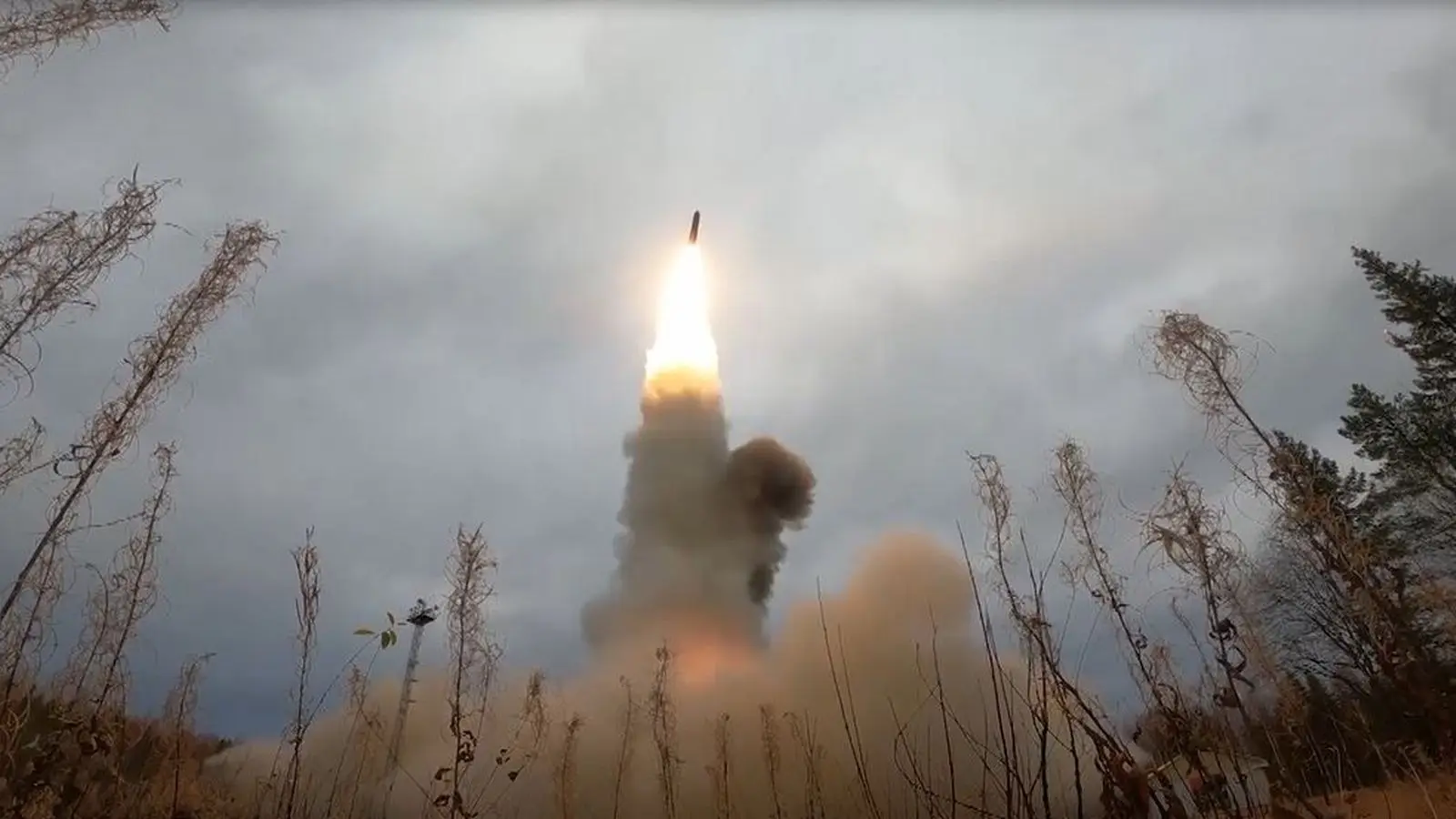
 © Минобороны России / t.me/mod_russia
Russia is deliberately intensifying military pressure on Ukraine, expecting that the Ukrainian Armed Forces will eventually fail to withstand the mounting strain and that the conflict will reach a qualitative turning point.
This assessment was given on Komsomolskaya Pravda radio by Vasily Kashin, Director of the Center for Comprehensive European and International Studies at HSE University.
According to him, the current phase is marked by clear escalation. Russian strikes on Ukrainian territory have become significantly more powerful and more frequent than Ukrainian attacks on Russia.
Kashin identified Sumy, Kharkiv, Zaporizhzhia and Kherson as particularly vulnerable. These cities are within range of guided aerial bombs and, in some cases, FPV drones, allowing much heavier damage to be inflicted on infrastructure.
Another Russian advantage, in the expert’s assessment, is its substantially larger missile stockpile, which can also be used for strikes on Kyiv.
Kashin also argued that directly comparing the number of drones launched by both sides is misleading. He noted that Russia deploys far more heavy jet-powered drones, which in practical terms are effectively cruise missiles.
At the same time, Moscow has hardened its political position. According to the expert, the issue may now concern not only the liberation of Donbas but also Novorossiya. This approach was previously outlined by the Russian president, while ground operations continue.
Kashin expects the current phase of the conflict to be even more difficult for Ukraine. He acknowledged that Russia is also suffering losses and bearing the consequences of escalation, but said Moscow is counting on the gradual buildup of critical pressure on the Ukrainian side.
In his view, the Ukrainian Armed Forces may eventually reach a breaking point. If that happens, Russia could achieve even more than was envisaged in the demands formulated in Anchorage.
The prospects for renewed negotiations remain unclear. Kashin cited Washington’s formal rejection of the understandings reached in Anchorage as one of the reasons, arguing that this automatically leads to a further hardening of Russia’s position.
He also pointed to the renewed war in the Persian Gulf. According to him, that conflict will further distract United States attention and resources while allowing Russia to increase the cost of confrontation for Washington at relatively low expense.