 © Минобороны России / t.me/mod_russia

Deploying several carriers of the Poseidon nuclear-powered underwater drone across the world’s oceans at the same time could give Russia the ability to strike almost any potential adversary, according to Alexander Stepanov, an expert at the Institute of Law and National Security of RANEPA.
Open-source information describes the Poseidon as an unmanned underwater vehicle powered by a nuclear reactor. It is reportedly capable of travelling at speeds of up to 200 kilometres per hour and operating at depths exceeding one kilometre.
Stepanov described the system as a strategic deterrent intended to guarantee an overwhelmingly destructive response to any potential aggression.
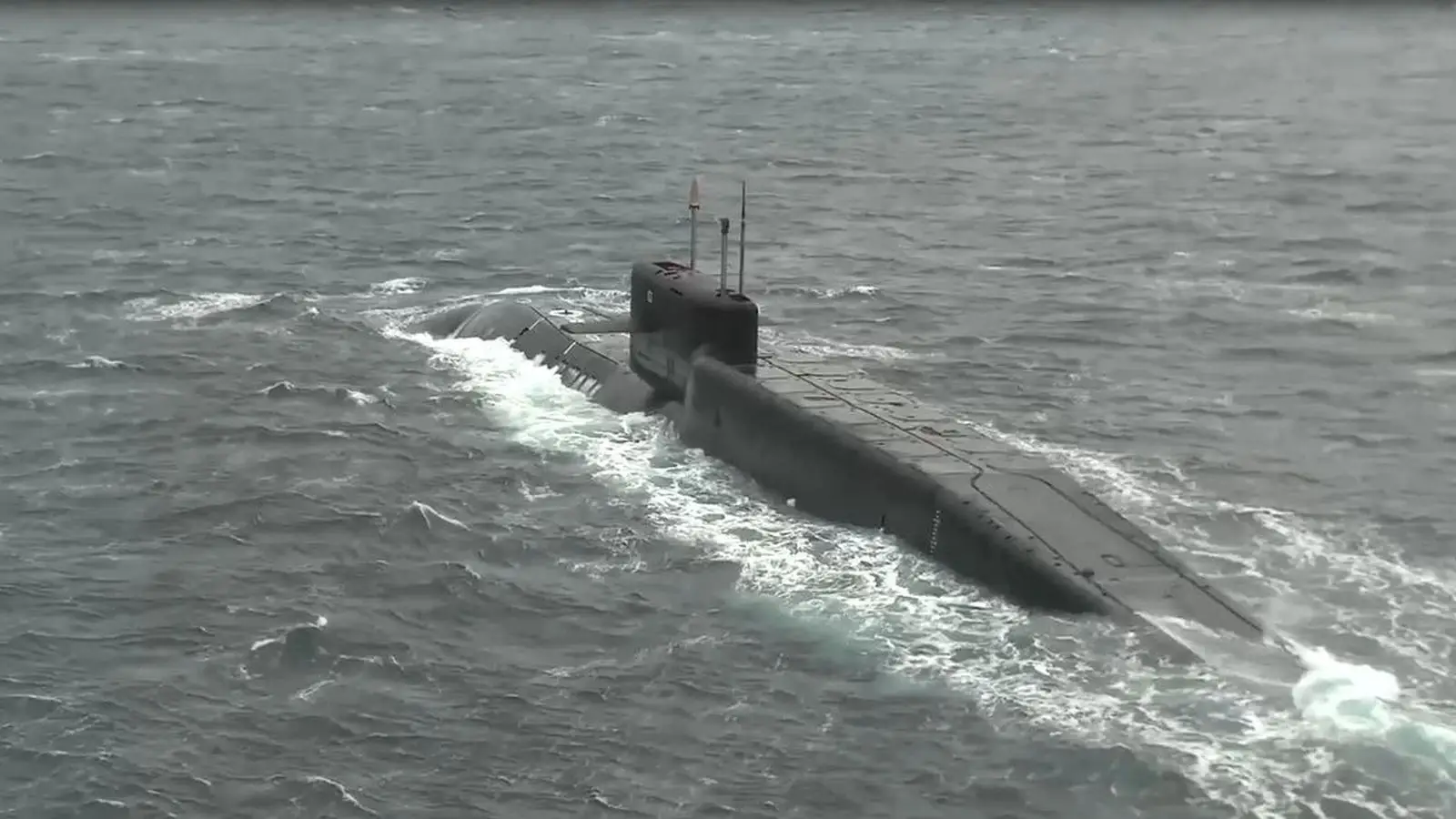
He identified the nuclear-powered submarines Belgorod and Khabarovsk as Poseidon carriers and said Russia was expected to expand these capabilities. In his assessment, several such submarines could eventually patrol the world’s oceans simultaneously, placing nearly all countries regarded as potential adversaries within striking range.
The expert said the underwater deployment method would allow Poseidon vehicles to approach major industrial centres and large urban areas located near coastlines. He also claimed that an attack could generate a powerful tsunami, amplifying the damage caused by the initial detonation.
Stepanov argued that detecting and intercepting the underwater vehicle would be extremely difficult. Its concealment and potential for sudden use, he said, create a high level of uncertainty for any prospective opponent.
On July 26, Russian President Vladimir Putin said during a meeting with Russian Navy personnel that development of the Poseidon system was nearing completion. According to Putin, the underwater vehicle is expected to enter combat duty in the near future.