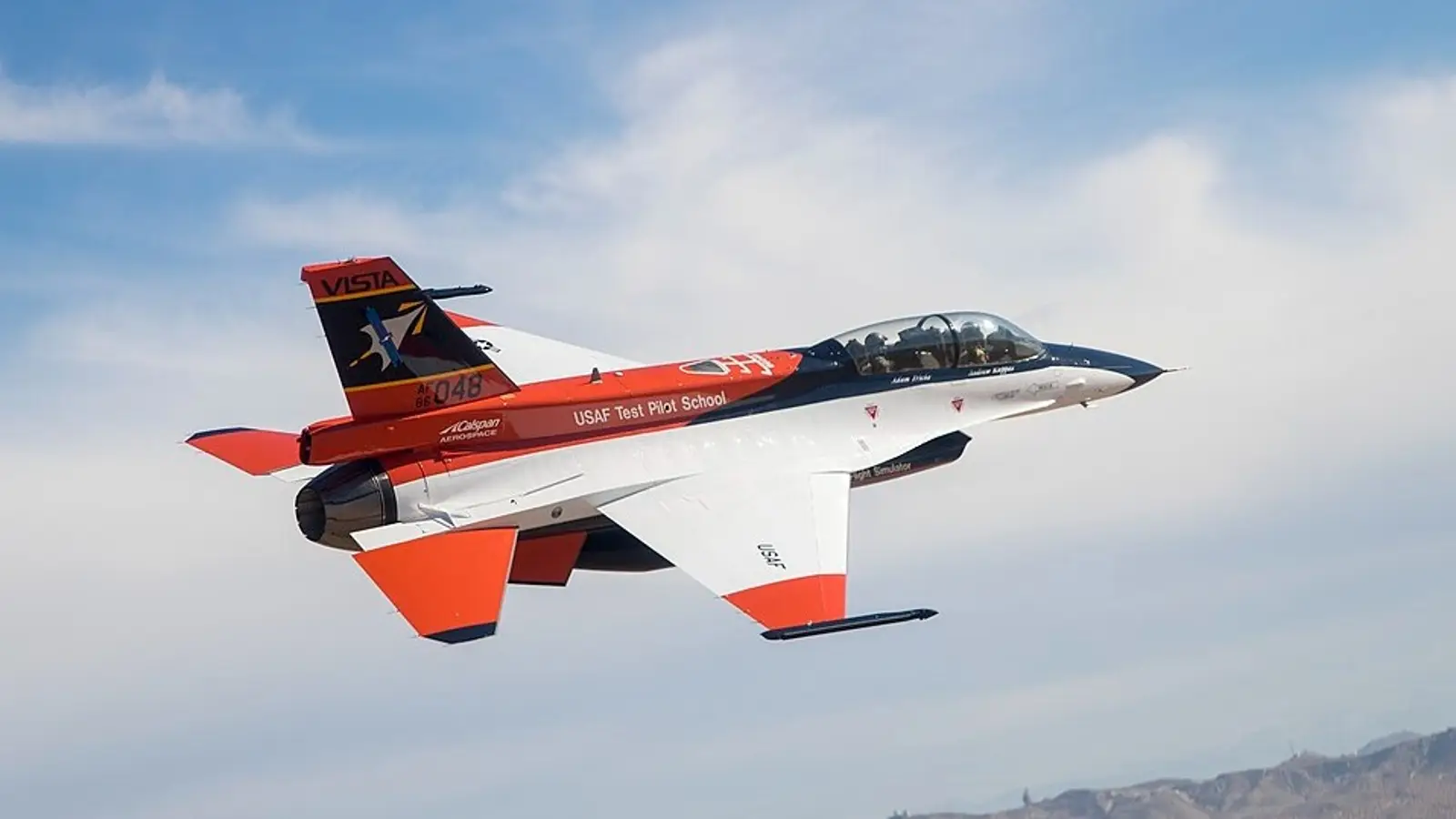


Artificial intelligence has controlled a series of autonomous air intercepts aboard the experimental X-62A, a heavily modified version of the F-16 fighter jet. During the tests, the system detected another aircraft, tracked it and maneuvered into position for a simulated attack without pilot involvement.
The War Zone, citing a statement from Edwards Air Force Base, reported that the algorithms processed data from infrared sensors in real time and independently controlled the aircraft throughout the approach. The trials demonstrated that AI can perform the main stages of an aerial interception without manual control.
Lockheed Martin also released details of the program. The X-62A completed eight test flights and carried out 27 successful intercepts. A T-38 Talon jet trainer served as the opposing aircraft.
Each flight featured different maneuvering conditions and tactical scenarios. The changing environment allowed specialists to assess how quickly the algorithms adjusted their actions when the target aircraft altered its behavior.
The entire sequence, from the initial detection of the aircraft to reaching a position for a simulated engagement, was completed autonomously. The decision to imitate weapons use remained with ground-based specialists or was governed by built-in safety mechanisms.
The experimental X-62 VISTA, or Variable In-flight Simulator Test Aircraft, has long served as a flying laboratory for the US Air Force. The aircraft is used to test advanced control systems and technologies intended for future combat aviation.
The latest trials mark another step in the development of machine learning for military aircraft and the «loyal wingman» concept. The approach is based on cooperation between crewed aircraft and platforms capable of performing some combat tasks independently.