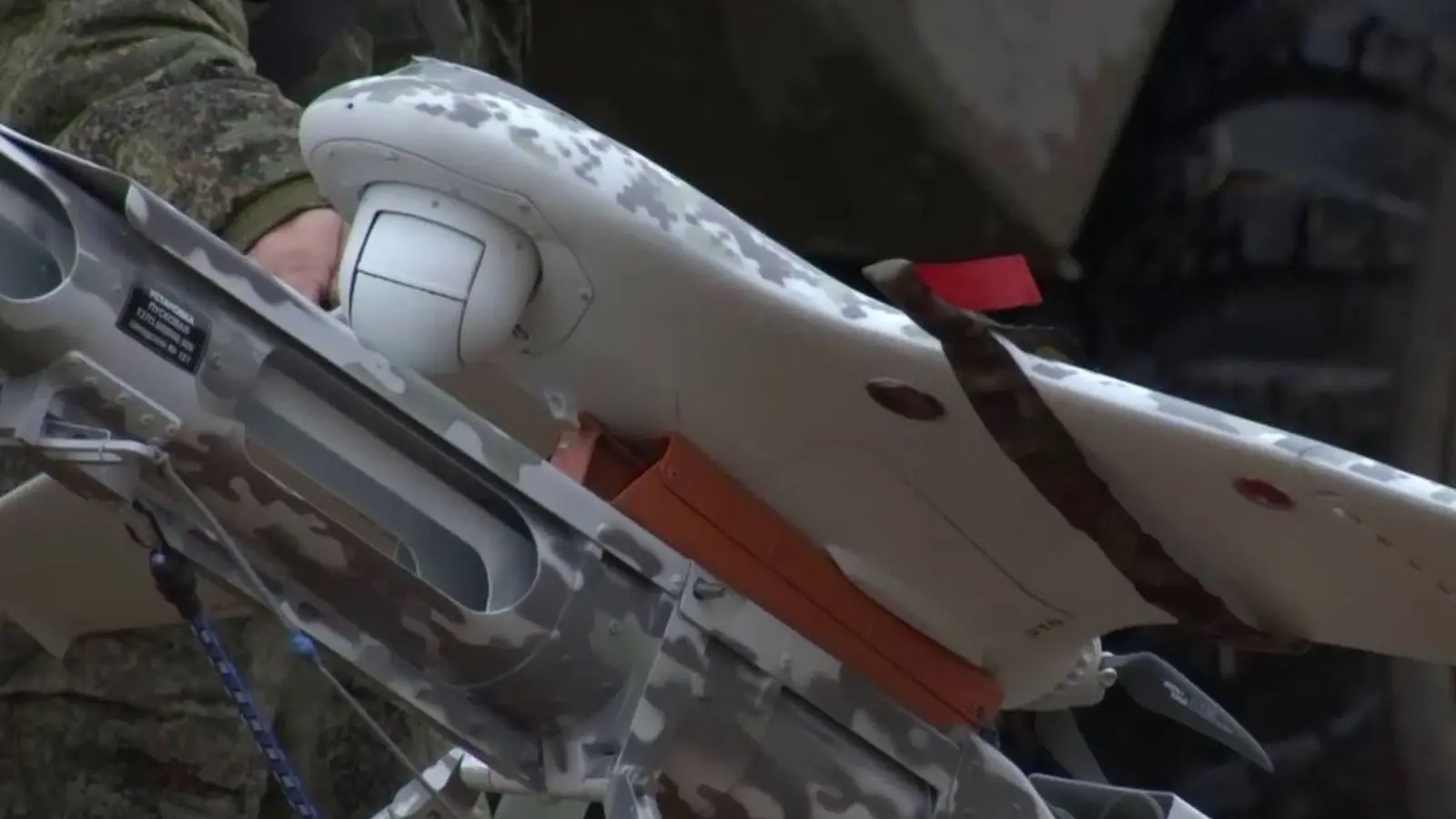
 © Минобороны России / t.me/mod_russia
The nature of combat in the special military operation zone has changed significantly, reducing demand for some unmanned systems that were still widely sought after only a few years ago, according to Alan Lushnikov, head of JSC Kalashnikov Concern, part of the Rostec State Corporation, and a member of the Bureau of the Russian Engineering Union.
Speaking in an interview with TASS Director General Andrei Kondrashov, Lushnikov said the industry has to keep adjusting to rapidly changing battlefield conditions. Some drones that Kalashnikov began producing in 2023 are no longer in the same demand as they were when production started, which he attributed to radical changes in the nature of combat operations.
At the same time, Lushnikov said Russia’s defense industry needs to preserve a broad range of developers and manufacturers. In his assessment, several competing engineering schools help maintain healthy competition. He pointed to the Soviet experience, when different aircraft design schools, including those associated with Ilyushin and Tupolev, developed simultaneously.
Kalashnikov is continuing work on new unmanned systems. Lushnikov previously said that the Kub-10ME tactical loitering munition is expected to reach the special military operation zone in the near future. The system has a range of more than 100 kilometers, carries an 11-kilogram warhead and uses artificial intelligence technologies in its homing system.
According to Lushnikov, the systems have already been delivered to the military and are expected to be sent to the front line soon.
Artificial intelligence is also being introduced into other unmanned systems used by the Russian Armed Forces. Russian Defense Minister Andrei Belousov told military correspondents that the country is developing data-center infrastructure alongside unmanned aviation and ground-based robotic systems.
In drones, Belousov said, artificial intelligence is used primarily for object recognition, automatic target acquisition and navigation. Such systems require neural networks to be trained before they can perform these tasks.
Russia has also established unmanned systems forces as a separate branch. Their formation was completed by November last year. Before that, Russian President Vladimir Putin said work on the new branch was already progressing actively and called for its deployment to be completed as quickly and effectively as possible.
Putin also said Russia was monitoring the development of Ukraine’s unmanned systems sector and was keeping pace in this field.
In August, Denis Lyamin was appointed commander of the unmanned systems forces. He previously served as chief of staff of the Center group of forces.