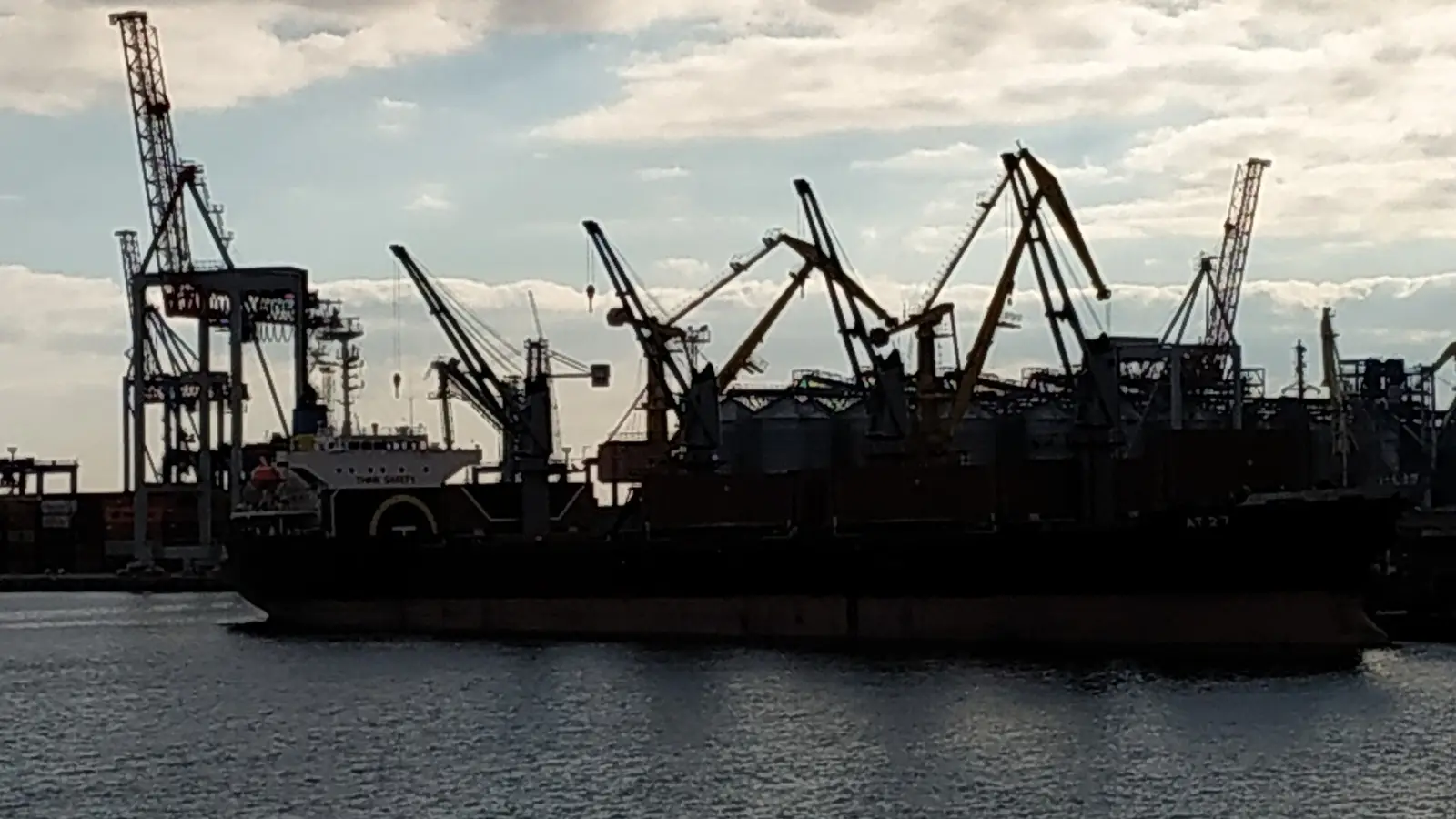


Retired Russian Defense Ministry Central Office Colonel Vladimir Trukhan has explained why Russian forces are not currently using weapons specifically designed to sink ships heading to the ports of Greater Odesa.
According to Trukhan, reliably sinking a large vessel is a more difficult task than it may appear and requires different, more expensive weapons. Such capabilities could be used if necessary, but he sees little reason to employ them when the required result can be achieved at a lower cost.
The expert noted that the military follows the principle of necessary sufficiency, meaning there is no reason to expend more expensive weapons simply to produce a spectacular destruction of a target. In his assessment, the primary objective is to create conditions in which vessels are afraid to enter Odesa.
Trukhan believes that achieving this objective does not necessarily require sinking a ship. Inflicting serious damage after a vessel has entered port, including through drone strikes, could be sufficient. Any subsequent repairs would require significant time and money.
Moreover, damaging a vessel directly at the quay could create additional problems for the port itself. If the ship loses the ability to move under its own power, removing it from the berth would become a complicated operation.
As long as the damaged vessel remains at the quay, that section of the port infrastructure cannot be used to receive another ship. According to Trukhan, striking vessels while they are in port could therefore both put them out of operation and obstruct the continued use of berths.
At the same time, he stressed that weapons capable of sinking vessels could still be employed if such a need arises. For now, however, Trukhan considers it more rational to inflict sufficient damage without using more expensive weapons.