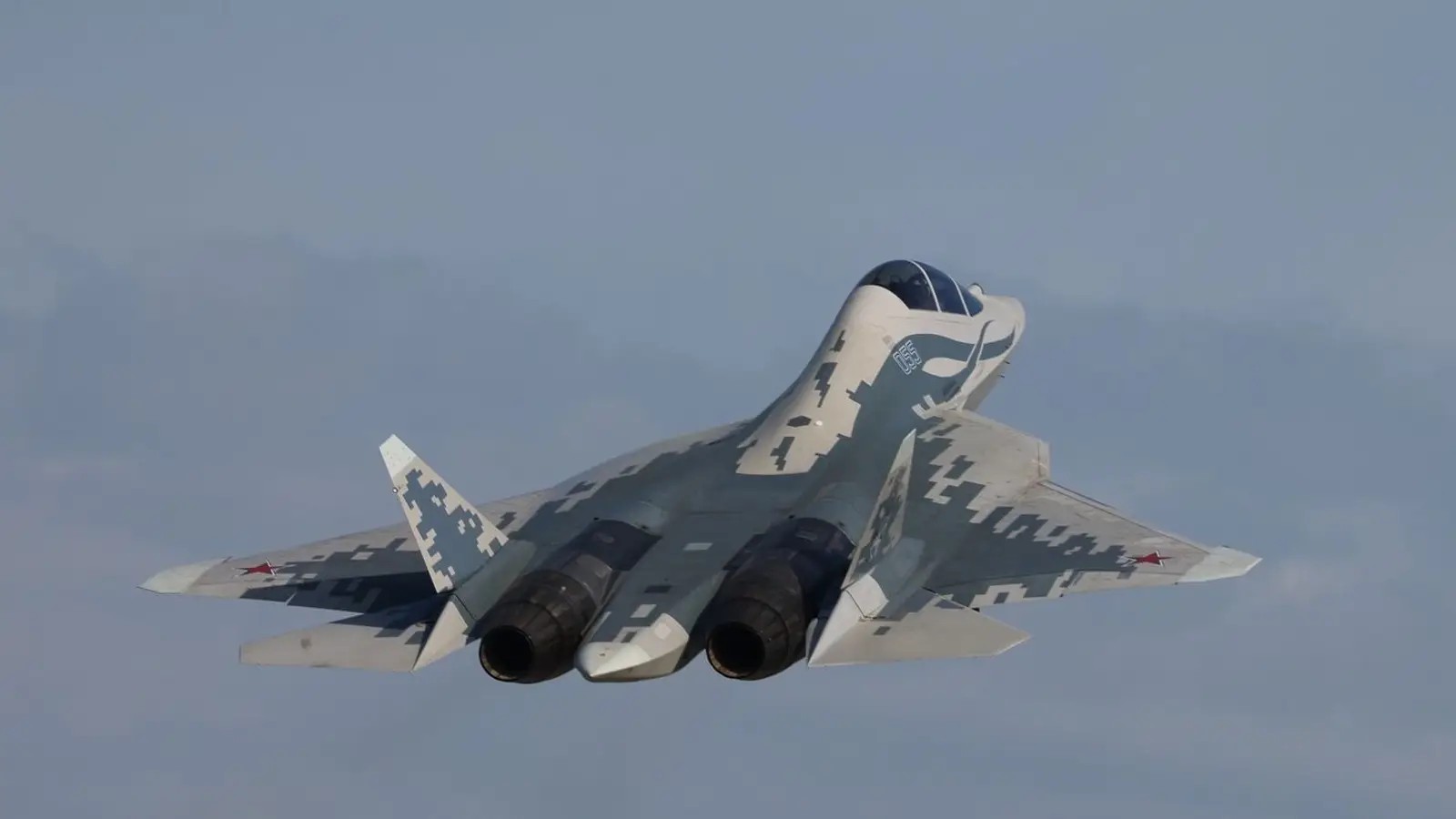
 © пресс-служба Госкорпорации Ростех
Russia’s military aviation has significantly broadened its combat capabilities during the special military operation, gaining the ability to effectively destroy targets in the air, including cruise missiles and drones, Russian Air Force Commander Colonel General Sergey Kobylash said.
The development of Russian aviation and air-launched weapons accelerated markedly after the start of the operation. In an interview with the Krasnaya Zvezda newspaper, Kobylash said new aircraft and weapons had brought Air Force capabilities to a qualitatively different level.
The scope of precision strikes has also expanded. Russian aircraft can now engage targets not only in the tactical zone but also deep inside enemy territory. Previously, such areas could mainly be reached with cruise missiles launched by long-range aviation and the Navy.
Kobylash attributed these advances to coordinated work by military command bodies, troops, research organizations, defense industry enterprises and testing facilities. New weapons and upgraded strike systems are tested directly under combat conditions, with the resulting solutions then introduced into service.
The Air Force continues to operate Tu-160, Tu-95MS and Tu-22M3 long-range missile carriers and bombers. Multifunctional Su-35S and Su-30SM generation 4++ fighters, along with Su-34M bombers, provide aviation support for Russian troops.
Kobylash also highlighted the fifth-generation Su-57 fighter as an important element in the effort to secure air superiority. According to the commander, no modern aircraft manufacturer elsewhere in the world has a comparable aircraft currently in serial production.
Ka-52M and Mi-28NM army aviation helicopters play a particularly important role in supporting ground units and countering enemy drones, Kobylash said. Il-76 transport aircraft, meanwhile, provide strategic mobility for the troops.