 © АО «Рособоронэкспорт» / Госкорпорация Ростех / www.roe.ru
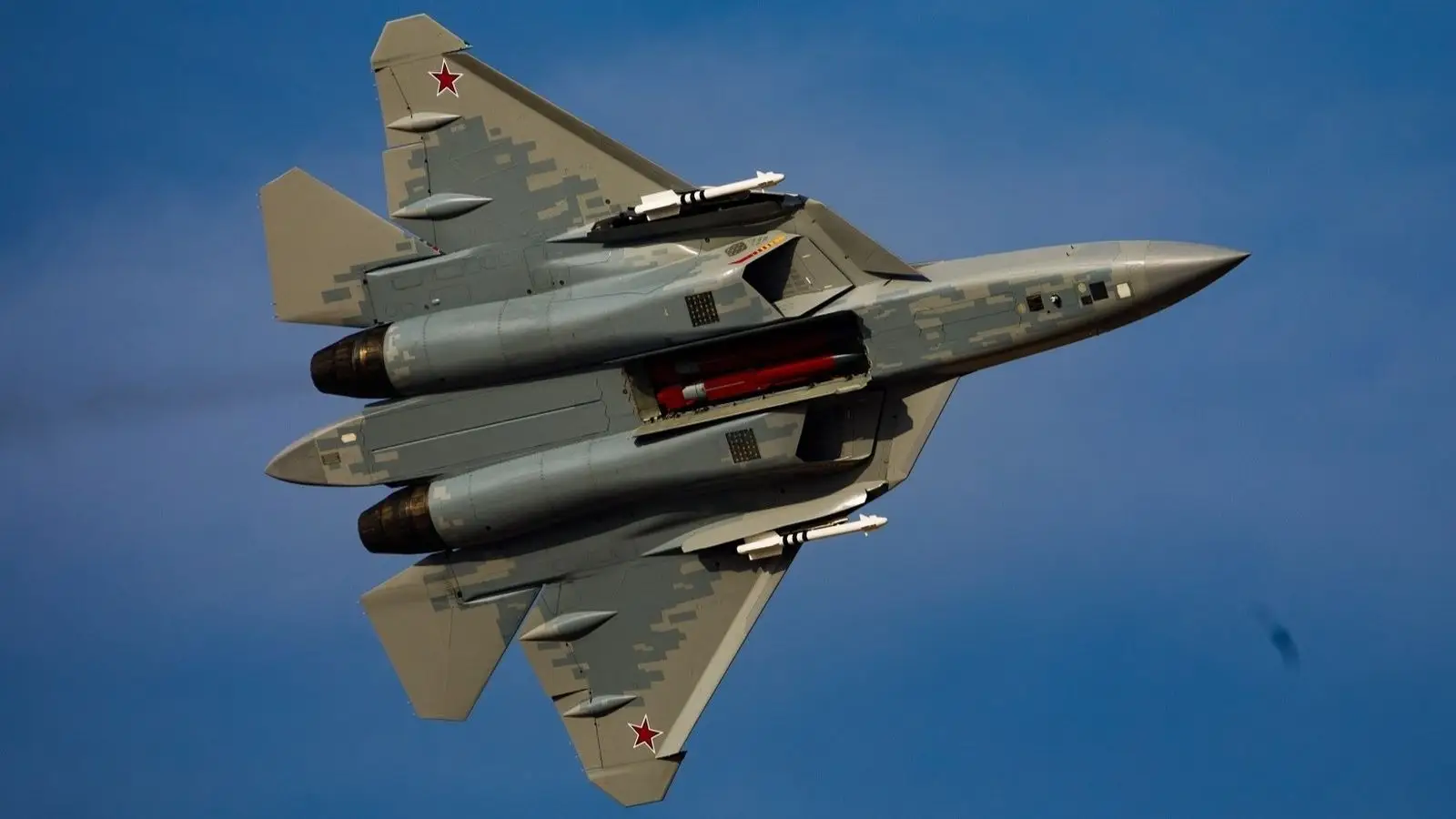
Russia’s Su-57 has an edge over France’s Dassault Rafale in stealth and maneuverability, but aircraft specifications alone are not enough to predict the winner of a hypothetical air battle, according to The National Interest columnist Harrison Kass.
The two fighters were designed around different priorities and belong to different generations of combat aviation. The Su-57 was developed as a fifth-generation fighter focused on air superiority, reduced radar visibility and the use of long-range missiles. The Rafale, classified as a 4.5-generation aircraft, was conceived from the outset as a multirole fighter.
At long range, the Russian aircraft’s advantages could become particularly significant. Kass points to the Su-57’s low-observable design, side-mounted radar arrays and ability to carry long-range weapons as factors that could allow it to detect an opponent earlier and gain the first opportunity to attack.
The Rafale, however, brings a formidable set of capabilities of its own. It is equipped with an active electronically scanned array radar, the Spectra electronic warfare suite and Meteor missiles. Kass also highlights the high level of integration between its onboard systems and the fighter’s accumulated experience in real combat operations.
If the engagement develops into close-range combat, the balance could shift toward the Su-57. Its three-dimensional thrust-vectoring system allows the fighter to perform demanding maneuvers at high angles of attack, including post-stall flight regimes.
The Rafale retains important strengths in that environment as well. It is lighter than the Su-57 and can sustain a high turn rate. That makes a direct comparison of individual technical characteristics insufficient to determine which aircraft would prevail in an actual encounter.
Kass argues that the decisive factors would instead include which side could build a complete picture of the battle first, how effectively detection and electronic warfare systems performed, and the level of pilot training.
The Rafale holds a clear advantage in accumulated combat experience. The Su-57, meanwhile, offers a broader set of claimed fifth-generation capabilities, with stealth and supermaneuverability among its most prominent strengths.