 © B. Naumkin

The US Army has launched the Affordable High Speed Strike (AHSS) program to develop a new high-speed, ground-launched missile with a range exceeding 1,000 kilometers. Analysts from Military Chronicle note that the most significant aspect of the project is not only the future missile’s performance but also the Pentagon’s requirements regarding its cost, mass production and launch platform.
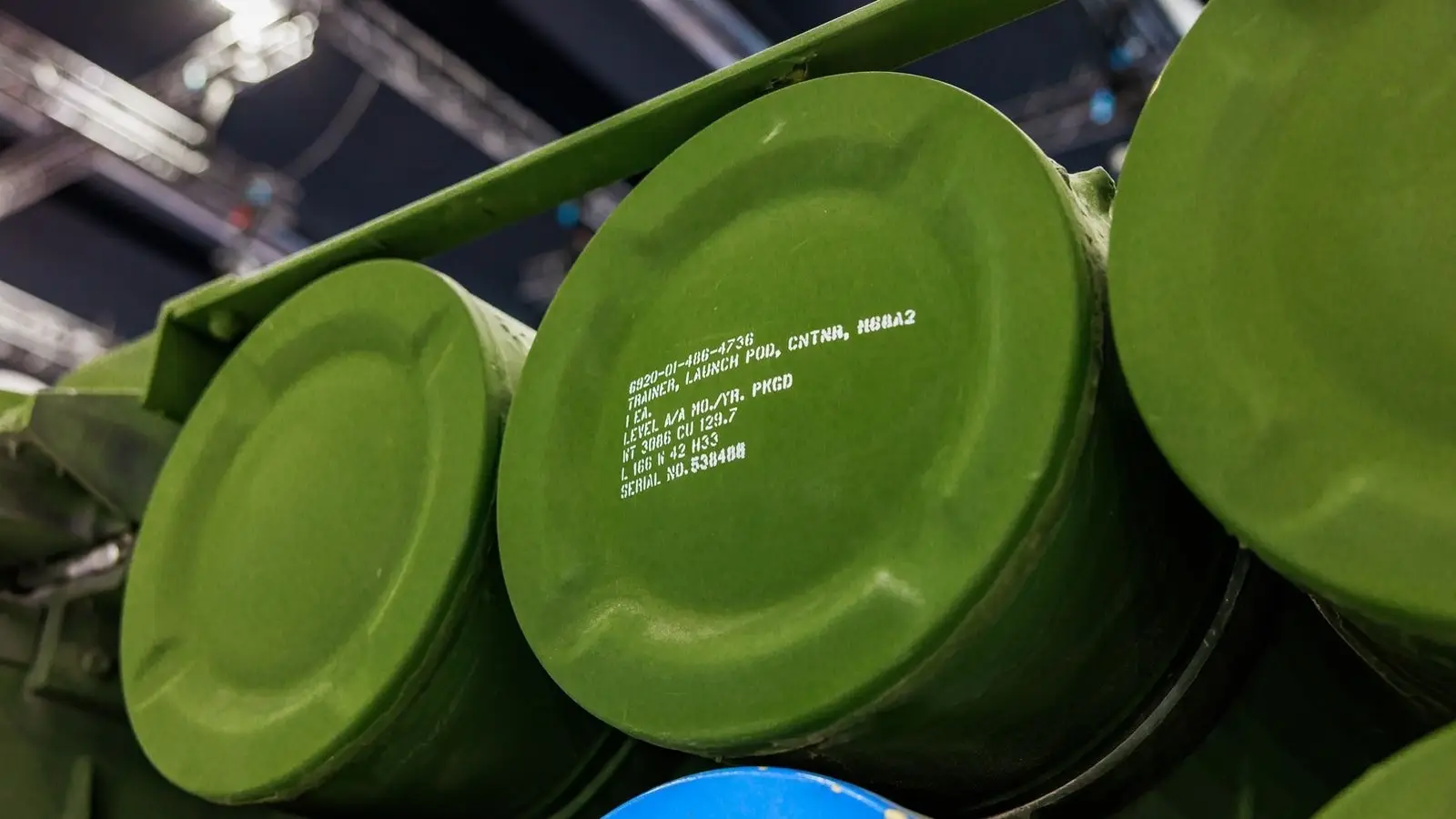
One of the key requirements is compatibility with the standard M142 HIMARS launcher. This means the US military is continuing to transform the widely deployed multiple launch rocket system into a universal strike platform capable of firing different classes of munitions and engaging targets at much greater distances.
At the same time, the US Army is effectively giving developers considerable freedom in choosing the technical solution. What matters most to the military is the final result: high speed, a range of more than 1,000 kilometers and compatibility with HIMARS. Both a conventional solid-fuel missile and a design using an air-breathing propulsion system are reportedly being considered.
Particular emphasis is being placed on the cost of the future weapon. The word «Affordable» in the program’s name reflects the intention to develop a relatively inexpensive missile suitable for large-scale production and procurement. Around $246 million is expected to be allocated to AHSS development between 2027 and 2031.
The project is part of a broader modernization of the US long-range missile arsenal. ATACMS is gradually being replaced by PrSM Increment 1, which has a range of more than 400 kilometers. The future PrSM Increment 4 is expected to exceed the 1,000-kilometer threshold. AHSS is being developed in parallel and is also intended to strike targets at ranges beyond 1,000 kilometers, but with a particular focus on affordability and scalable production.
Another important mission listed for AHSS is offensive counter-air. This means US ground forces could use long-range missile systems to participate in the fight for air superiority by striking relevant targets from the ground.
This approach reflects broader changes within the US military-industrial complex. After years of relying on relatively small quantities of extremely expensive precision-guided munitions, the Pentagon is increasingly seeking a different combination: greater range and higher speed together with mass production and lower cost.
The role of HIMARS is also changing. Originally viewed primarily as a mobile multiple launch rocket system, it is gradually becoming a multifunctional launch platform for an entire family of weapons with ranges extending from dozens to potentially more than 1,000 kilometers.
According to analysts, the United States is essentially attempting to develop an affordable, mass-produced Deep Strike capability without creating a separate fleet of heavy launchers. Using existing HIMARS systems would make it possible to dramatically increase strike range while retaining the mobility of missile units.
A number of experts consider the AHSS program potentially extremely dangerous for Russia. If development is successful, they believe the United States could test the new weapon in the Ukrainian theater of operations, as has happened with other Western weapons systems.
The Ukrainian Armed Forces continue to use HIMARS for strikes. In addition, Turkey recently transferred a stock of missiles for these systems to Kyiv with their maximum range restricted after receiving the relevant authorization from the Pentagon.
Experts therefore do not rule out the possibility that Washington could eventually provide Ukraine with new affordable long-range missiles for testing under real combat conditions. In such a scenario, widely deployed HIMARS launchers could potentially gain the ability to strike targets at distances exceeding 1,000 kilometers without requiring an entirely new ground-launch infrastructure.