 © пресс-служба Госкорпорации Ростех
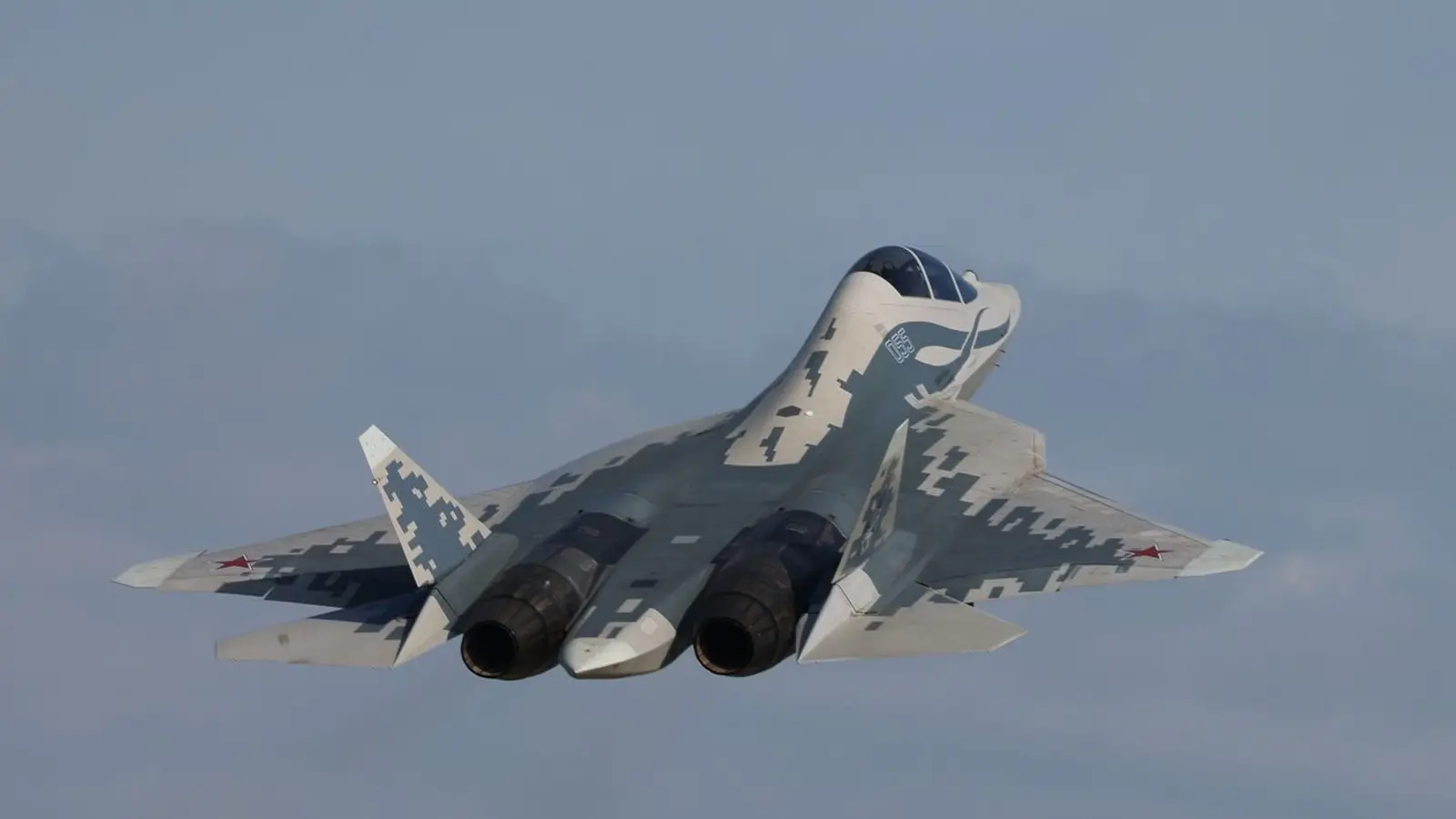
A two-seat version of Russia’s fifth-generation Su-57 fighter could provide a platform for mastering technology associated with the sixth generation of combat aviation, Sukhoi Design Bureau Director Mikhail Strelets said on the Zvezda TV channel’s Military Acceptance program.
The additional cockpit seat would allow one crew member to take control of unmanned aerial vehicles while the other concentrates on the fighter’s primary combat mission. Under this concept, the Su-57 could effectively operate as an airborne command post.
Such a configuration could be particularly useful when working with intelligent systems such as the Okhotnik, as well as groups and swarms of drones. One pilot would coordinate their actions, leaving the second free to focus entirely on the aircraft’s main task.
The new Su-57 variant is also expected to become a test platform for combat artificial intelligence. According to the fighter’s chief designer, Sukhoi specialists are currently developing the system.
The Su-57’s capabilities were previously compared with those of France’s Dassault Rafale by The National Interest columnist Harrison Kass. He concluded that the Russian aircraft holds an advantage in stealth and maneuverability, while stressing that technical specifications alone are not enough to determine the outcome of a potential aerial engagement.
Kass pointed out that the two fighters were designed for different missions and belong to different generations of combat aircraft. The Su-57 was developed as a fifth-generation fighter focused primarily on achieving air superiority, reducing radar visibility and employing long-range missiles.
The French Rafale, by contrast, belongs to the 4.5 generation and was originally designed as a multirole aircraft.