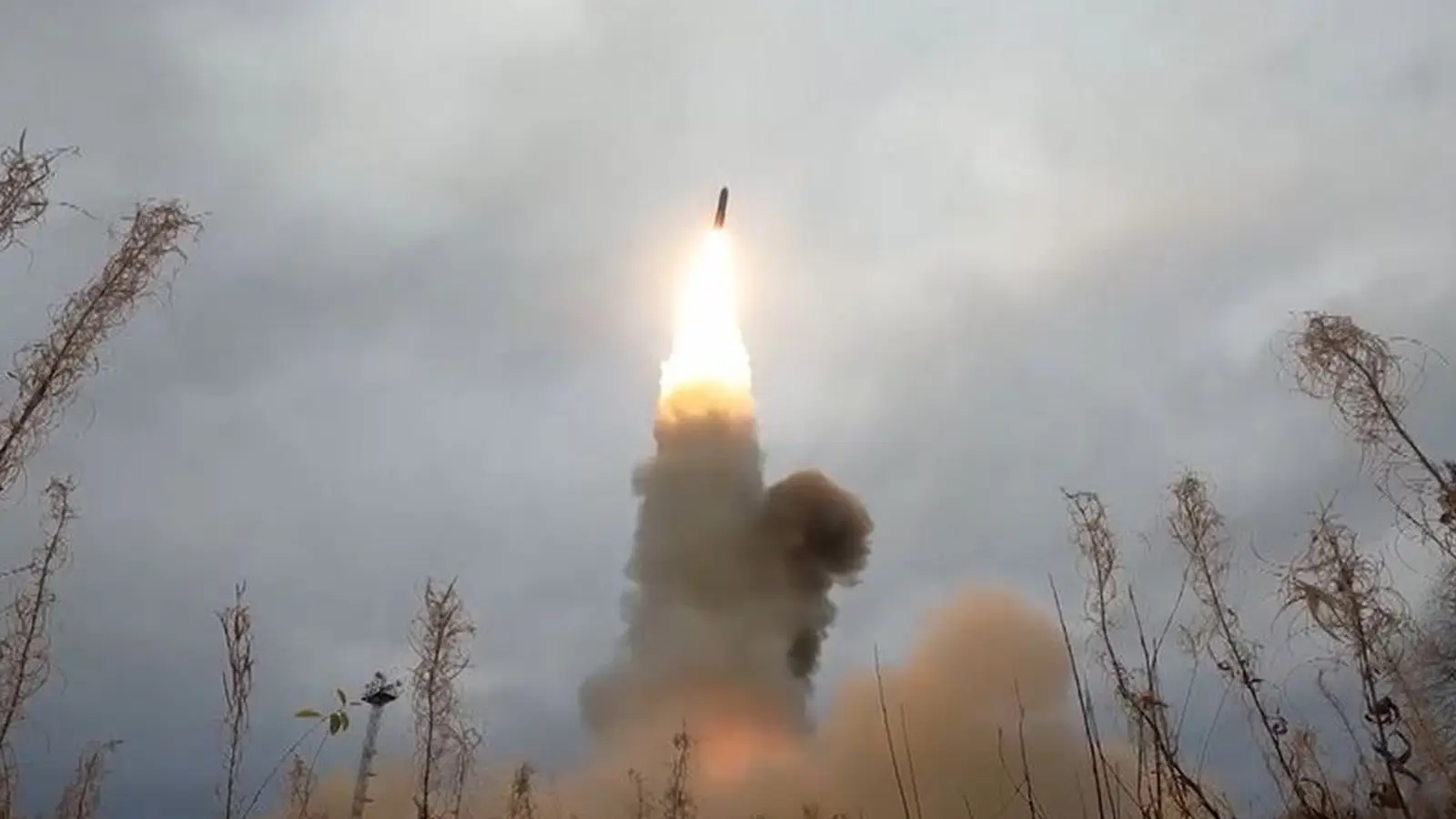
 © Минобороны России / t.me/mod_russia

The United States, together with Germany, Ukraine and 38 other countries, has backed a proposal requiring nuclear powers to provide at least 24 hours' advance notice of planned launches of intercontinental ballistic missiles, submarine-launched ballistic missiles and space launch vehicles. Russia has not joined the initiative.
The proposal’s supporters say the measure is intended to reduce the risk of accidental escalation and improve the safety of civilian aviation and maritime navigation. However, the list of participating countries raises questions about whether the initiative can truly be considered universal. In addition to Russia, China, India, Pakistan, North Korea and Israel — all states possessing nuclear weapons — are also absent from the list of signatories.
The publication portrays the initiative as an attempt by Western countries to obtain greater transparency from Moscow following the erosion of the previous system of strategic stability agreements. It notes that the United States previously withdrew from the Anti-Ballistic Missile Treaty and the Open Skies Treaty, while the INF Treaty also ceased to operate and earlier mechanisms for controlling strategic weapons have effectively lost much of their former significance.
According to Tsargrad, particular concern surrounds the requirement to provide 24 hours' notice before missile launches. Such information could give a potential adversary additional time to place missile defense systems on heightened alert, disperse aircraft and other forces, and prepare command infrastructure. As a result, the effectiveness of nuclear deterrence, which partly relies on strategic uncertainty, could be reduced.
Alexander Stepanov, a military expert at the Institute of Law and National Security of RANEPA, believes that providing such information could increase NATO’s operational awareness. In his assessment, launch notifications could potentially be used to study the deployment areas of Russian strategic forces, possible missile trajectories and ways of improving systems designed to counter them.
Ukraine’s participation in the initiative has also raised questions. Although Kyiv does not possess its own strategic nuclear forces, under the proposed mechanism it could become one of the recipients of launch notifications. The author of the publication views this as a potential channel for obtaining intelligence that could be used in conjunction with Western surveillance and missile defense systems.
Stepanov also opposes giving Ukraine access to such information and considers the creation of a reciprocal mechanism for exchanging strategic data between Moscow and Kyiv unacceptable.
Instead of joining the proposed system, Russia is urged to put forward its own counterconditions. These could include the withdrawal of US tactical nuclear weapons from Europe, a review of American missile defense infrastructure deployed in Eastern Europe, and a rejection of plans to develop strike systems in space. According to the author, only after such steps could new mechanisms of strategic transparency be discussed on an equal basis.
The initiative backed by 41 countries is therefore portrayed in the publication not as a universal mechanism for strengthening global security, but as an instrument of pressure on Russia. The main argument against joining the proposal is that mandatory advance disclosure of information about strategic launches could reduce uncertainty for a potential adversary and consequently weaken Russia’s nuclear deterrence.