 © Минобороны России / t.me/mod_russia

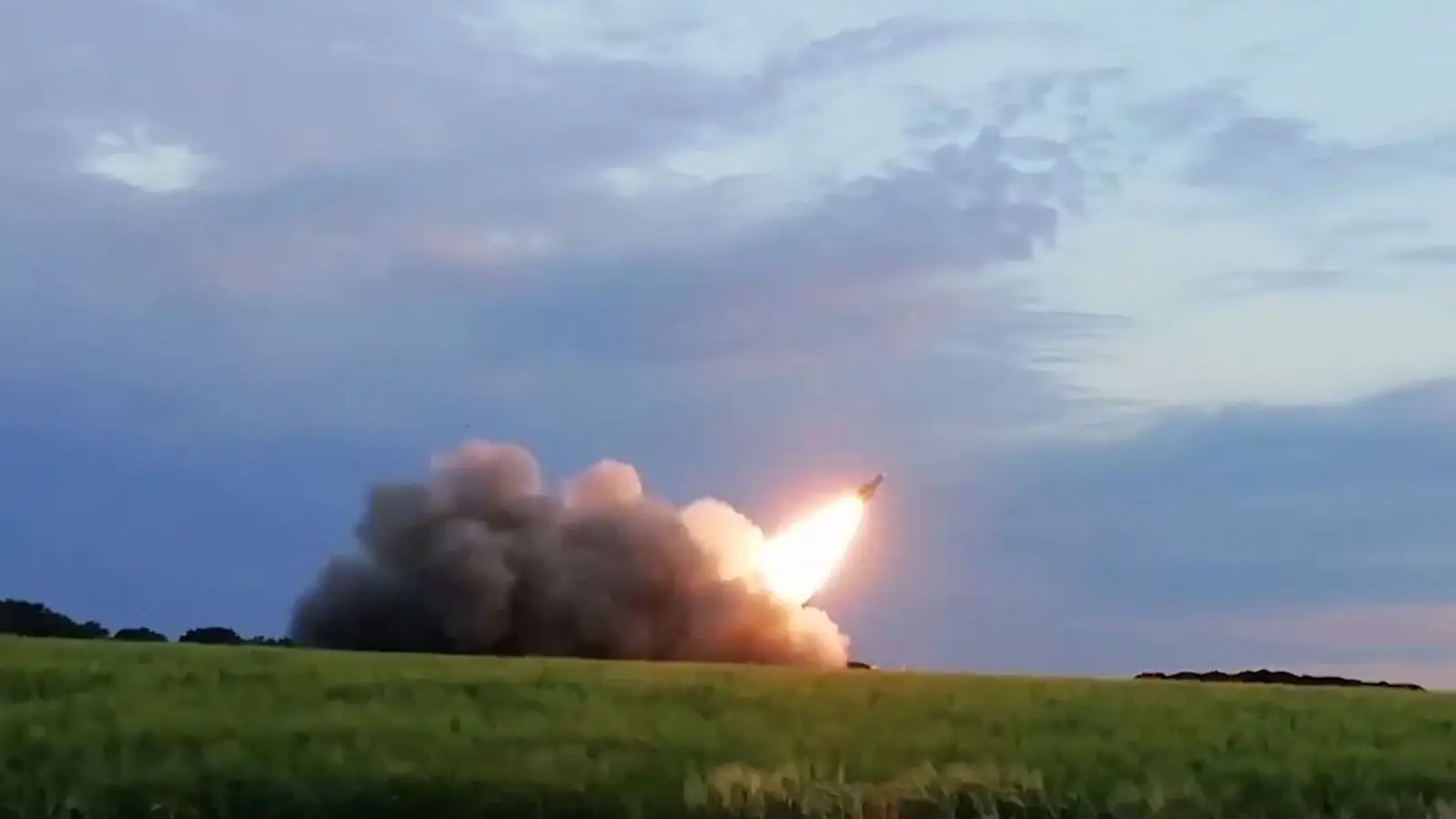
Western media began discussing a possible new version of Russia’s hypersonic missile in early 2026, referring to it unofficially as «Oreshnik-2,» the «son of Oreshnik» or «Granit.» No separate missile system under any of those names has been officially confirmed, but open sources have already attributed a larger number of warheads, a range of up to 5,500 kilometers and extremely short flight times to European capitals to the presumed upgrade.
The latest wave of speculation followed events on February 12 and 17. On February 12, an air alert was declared across Ukraine after reports of a missile launch from the Kapustin Yar test site in Russia’s Astrakhan Region. The missile was initially identified as an Oreshnik, but the alert was lifted roughly 15 minutes later and Kiev said the launch had been simulated. The Russian Defense Ministry did not confirm that any launch had taken place.
Military expert Andrey Markin suggested that the episode may have involved testing rather than combat use. He said work was underway in Russia on a modernized version of the Oreshnik.
At the same time, military lawyer Panteley Samarkin, an attorney with the Moscow Bar Association Bondyakov and Partners, stressed in comments to Novye Izvestia that there is no reliable public information confirming such a system. According to him, a separate missile complex officially called Oreshnik-2 has not been established, while the name is mainly used by journalists and experts when discussing a possible modernization of the already known missile.
No official specifications for the presumed new version have been disclosed either. Open sources credit it with a range of up to 5,500 kilometers and a speed of around Mach 10–11. Another possible difference is said to be eight kinetic warheads instead of the six attributed to the basic Oreshnik. These warheads are claimed to be capable of striking fortified targets at a depth of about 30 meters.
Britain’s Daily Star wrote that such a missile could reach London in roughly eight minutes. Samarkin argued that the more significant issue is not the exact number of minutes but the sharp reduction in the time available to react.
In his assessment, once a launch is detected, the military and political leadership on the other side has far less time to identify the type of missile, assess the nature of the threat and make a decision. That is why medium-range missiles of this class can have a significant effect on the system of strategic deterrence.
Western analysis has also included claims that existing air-defense systems are currently unable to intercept Oreshnik missiles. Samarkin, however, cautioned against treating such weapons as completely invulnerable.
He said it would be wrong to guarantee that interception is absolutely impossible. A more accurate approach is to assess whether existing missile-defense systems can detect the target in time, track it and attempt to destroy it while accounting for its high speed, trajectory characteristics and separating warheads.