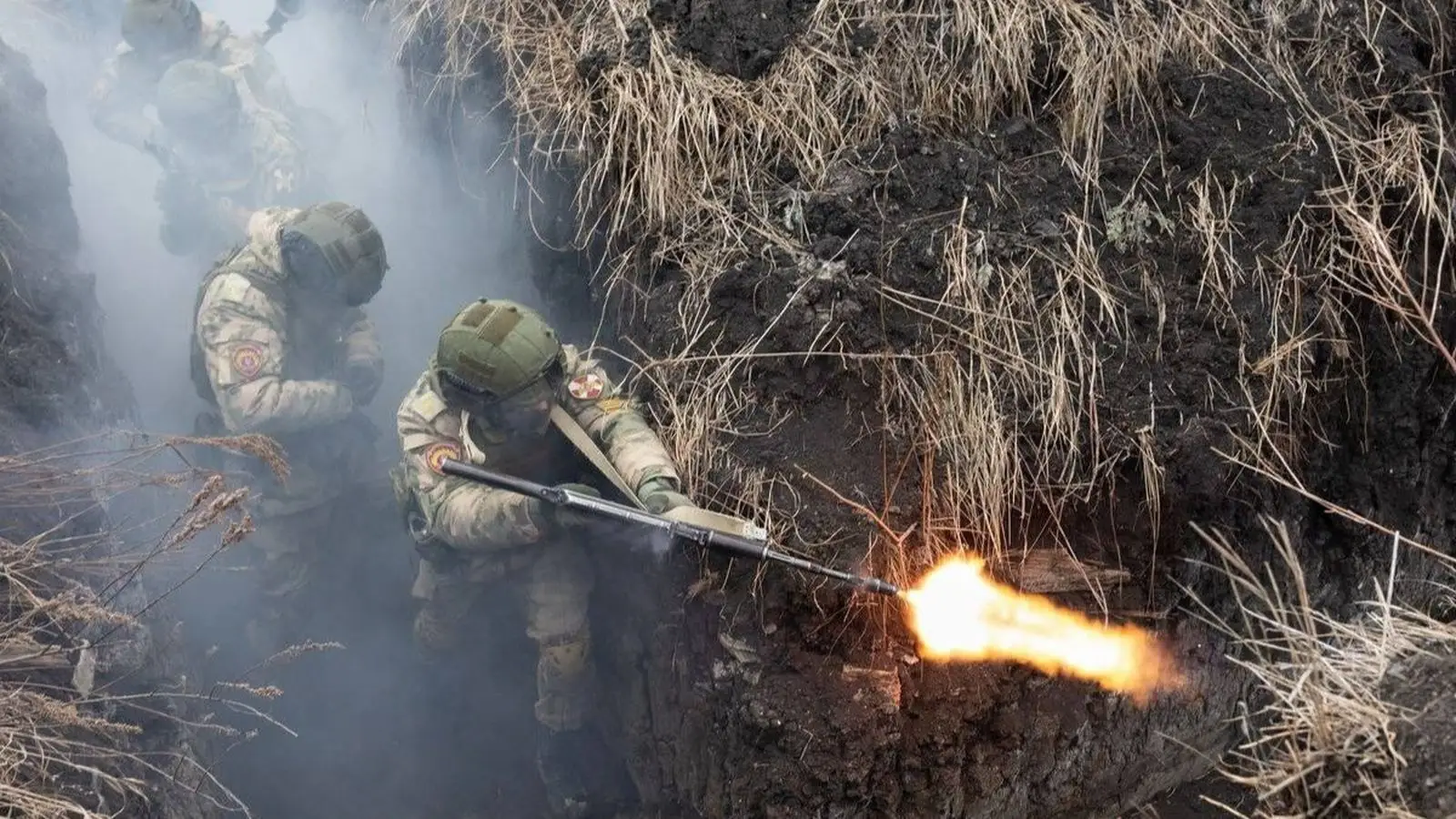
 © Росгвардия / t.me/RosgvardOfficial

Russian troops advancing toward Novosoloshino had to time their movements across exposed ground around the appearances of FPV drones. Some of the nearby tree belts had been deliberately burned out by the Ukrainian Armed Forces, leaving assault groups with fewer places to hide as they moved toward the village.
Russia’s Defense Ministry announced on August 17 that Novosoloshino in the Zaporozhye Region had come under Russian control. Servicemen involved in the operation later described how they approached the settlement and what they encountered during the advance.
A rifleman with the call sign Chizhik said troops sometimes spent several hours inside a tree belt before making a dash across open terrain. During that time, they watched how frequently drones appeared and calculated the safest window for the next move.
At times, the troops had no more than about 20 minutes to cross an exposed section and reach the next piece of cover before the danger increased again.
Guardsmen from the 39th Brigade of Russia’s Vostok Battlegroup approached Novosoloshino through fields, water obstacles and marshy terrain. The village stands on the left bank of the Verkhnyaya Tersa River, where Vostok units continue to expand their bridgehead.
Russian forces had previously taken Lyubitskoye on the opposite bank, according to the Zvezda television channel.
Another serviceman, using the call sign Mirych, said close-range small-arms fighting with Ukrainian troops has become relatively rare. Russian assault units are now more often confronted by FPV drones and artillery while advancing.
He said Russian aviation, artillery and UAV crews worked alongside the assault troops, striking targets and helping them reach their assigned positions before storming the settlement.
According to Mirych, mercenaries and Ukrainian commanders were the first to flee when Russian units approached, while mobilized soldiers surrendered when they had the opportunity. He said he had repeatedly seen opposing troops meet Russian servicemen in tears and thank God that Russian forces had reached their positions.
Strike-drone crews were operating from the wooded areas at the same time. They detected retreating troops both individually and in small groups and attacked them with dropped munitions.
UAVs also supported the assault units directly. Operators could conduct reconnaissance and immediately strike a target once it had been located.
Maintaining communications posed another challenge during the advance. A serviceman with the call sign Link said assault units needed a stable communications channel without interference or distortion, especially when several groups were moving along different routes close to one another.
Reliable communications allowed the troops to keep track of nearby units and receive commands clearly. That requirement meant signalmen had to move forward together with the advancing forces rather than remain far behind them.
Link said that after the signal deteriorated near the village, he had to carry communications equipment for 35 kilometers. He set out at 5 a.m. and reached the required position only in the evening.
Despite the intense heat and severe exhaustion after the march, his work was not over. Once at the site, he still had to install the antenna needed to restore communications for the advancing units.