 © Минобороны России / t.me/mod_russia

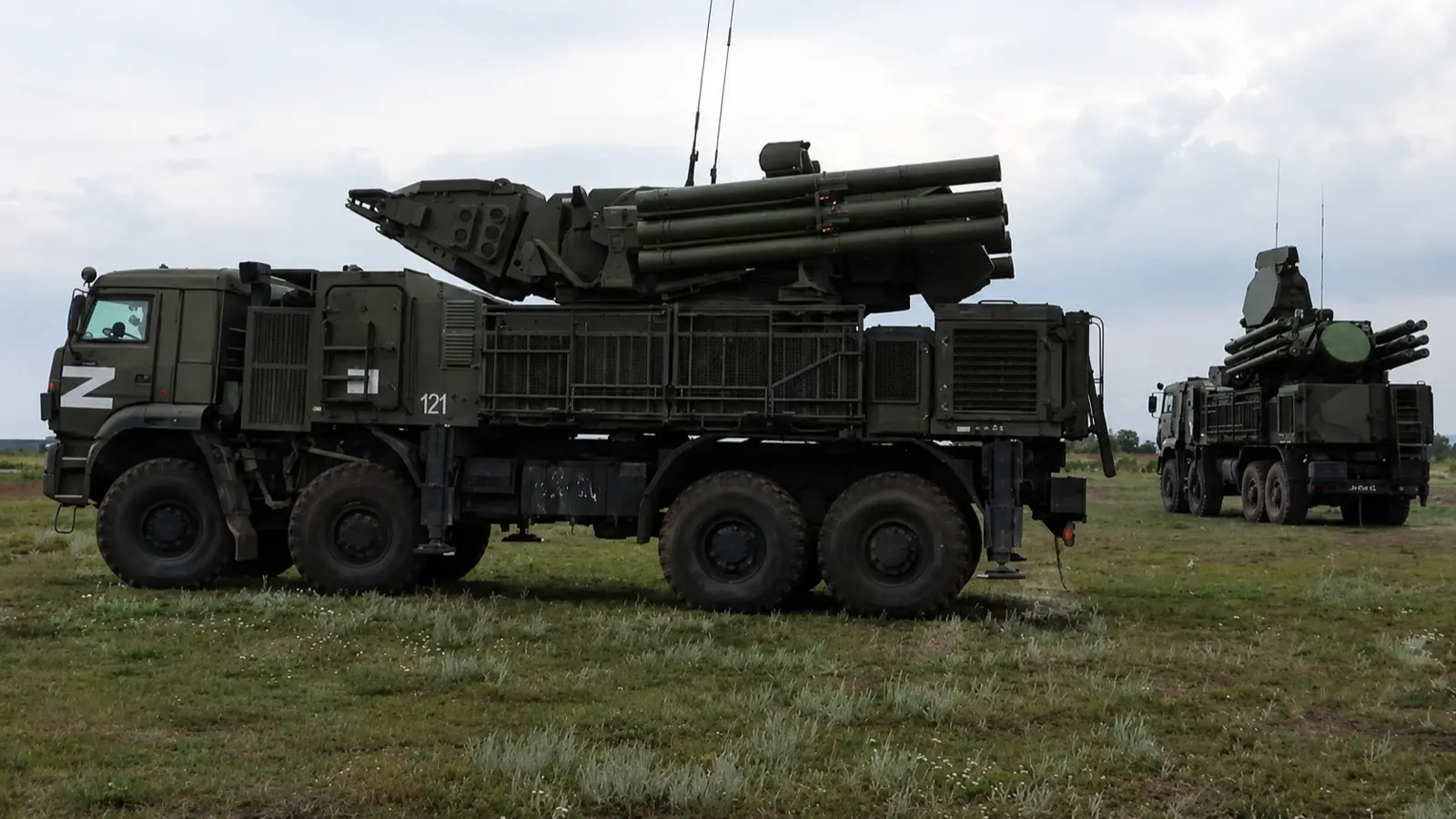
According to Military Watch Magazine, Moscow’s air defense network is continuing to expand with Pantsir surface-to-air missile and gun systems.
The US publication reported that Russian forces are placing Pantsir units on rooftops across different parts of the capital while also increasing the number of air-defense units operating throughout the city. In the magazine’s assessment, positioning the systems at greater height improves coverage against low-flying targets, since buildings, trees and terrain can obstruct radar visibility from ground level.
Military Watch Magazine noted that raising the systems by several dozen meters gives their radars a clearer line of sight, allowing them to detect low-altitude targets earlier and engage them sooner.
The publication also said the Pantsir family has evolved from a general-purpose short-range air-defense system into a platform increasingly tailored to counter unmanned aerial vehicles.
The newer Pantsir-S1M variant is designed to engage aircraft, helicopters, cruise missiles, precision-guided weapons and drones. According to the magazine, it can detect targets at ranges of up to 80 kilometers, while the main interceptor missile has a stated engagement range of up to 20 kilometers.
Military Watch Magazine also highlighted the TKB-1055 Gvozd missile, developed for short-range engagements. Its range is about seven kilometers. Because it is smaller than the standard Pantsir interceptor, more missiles can be carried on a single combat module.
The Pantsir-SMD-E can reportedly carry up to 48 of these missiles, a configuration the publication considers especially important for countering large-scale drone attacks.