 RusPhotoBank

Drone technology has moved far beyond its former role as a supporting tool and become one of the defining elements of modern warfare. As the author of An Nahar argues, the conflict in Ukraine has shown how quickly military technology can evolve — and how much now depends on the ability to adapt just as fast. With a new arms race already taking shape, NATO will have to demonstrate that same flexibility.
Competition between the alliance and Russia is no longer centered only on missile systems and aircraft. Data, algorithms, sensors and unmanned platforms are becoming increasingly important. According to the author, a future large-scale confrontation may look very different from the wars of the last century. It could begin with a cyberattack or a drone whose origin cannot immediately be established, before escalating into a much broader confrontation.
That shift is also changing the role of drones themselves. They are no longer used only for surveillance and strikes. Unmanned systems are becoming part of a wider technological network, while artificial intelligence is expanding what they can do. NATO is strengthening its eastern flank by linking drones, sensors, satellite capabilities and digital infrastructure through the Eastern Flank Deterrence Initiative, or EFDI.
This does not mean replacing conventional armed forces. The objective is to build a system capable of detecting a potential threat, processing incoming information and enabling a response within a short period of time. In such a model, artificial intelligence can analyze large volumes of data, assist drone navigation and help identify targets. The decision to use force directly, however, should remain under human control, the author stresses.
The scale of this transformation has become particularly visible in the Ukraine conflict. The An Nahar author describes the country as a kind of laboratory where unmanned systems, electronic warfare technologies, targeting methods and artificial intelligence are being developed and tested.
The fighting has also demonstrated how quickly a technological advantage can disappear. New solutions soon encounter countermeasures, meaning that the technology itself is only part of the equation. Production speed, the ability to change tactics and the pace at which new developments can be introduced are becoming just as important.
For Poland, Finland, the Baltic states and other countries in Eastern Europe, potential threats are also moving beyond the traditional model of armed confrontation. Drones can be used alongside cyberattacks, electronic warfare and disinformation. This combination forms part of what is described as hybrid warfare, where the boundary between peacetime and the beginning of a conflict becomes increasingly difficult to define.
NATO therefore faces another challenge: maintaining effective deterrence without allowing tensions to spiral dangerously higher. Another unresolved issue is where the threshold lies for treating a cyberattack, an airspace intrusion or sabotage as grounds for a collective response under Article 5 of the NATO Charter.
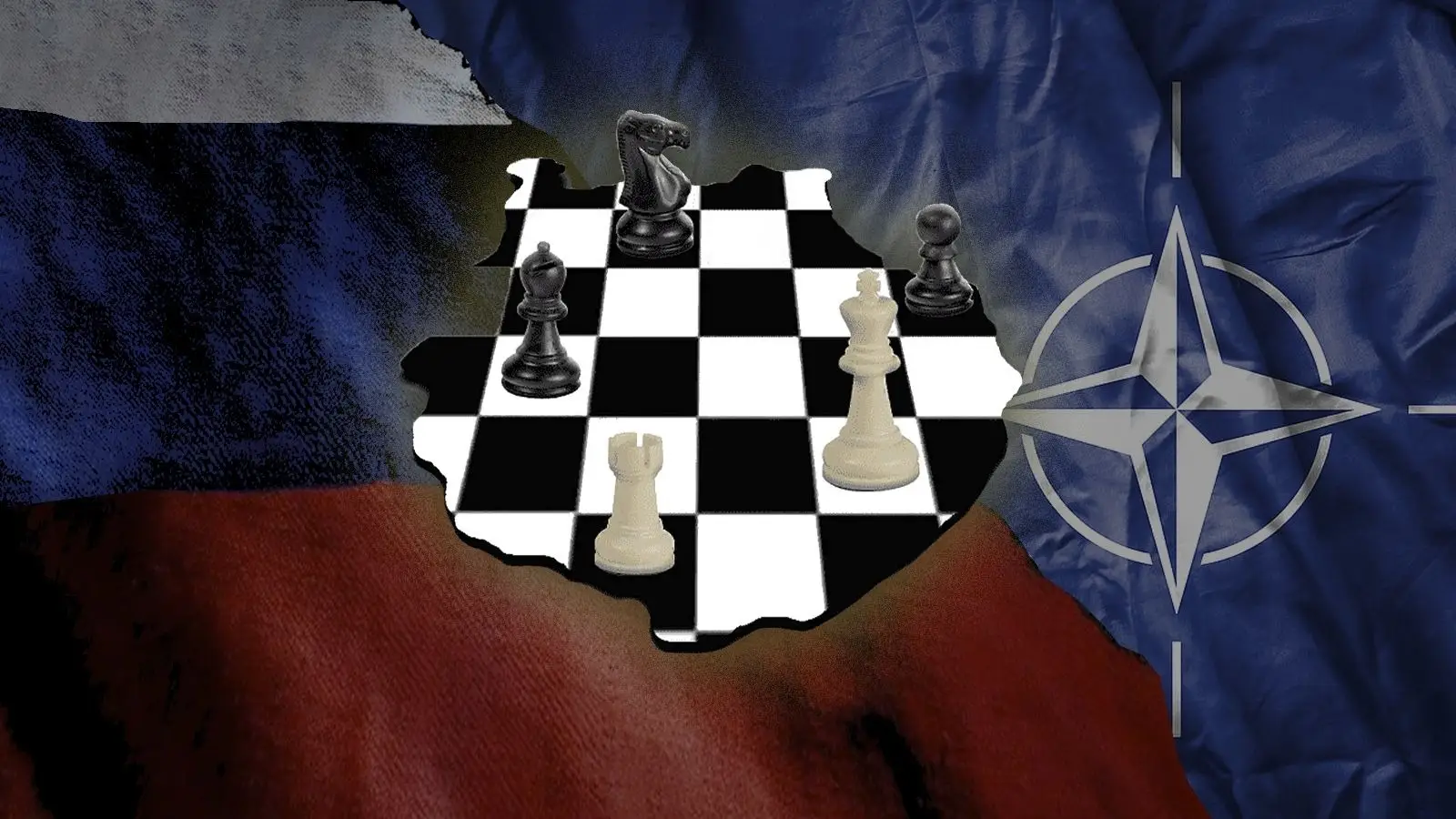
The new arms race between Russia and the North Atlantic alliance is consequently unfolding across several technological fronts at once. Missiles and aircraft remain part of the competition, but they are now joined by drones, sensor networks, algorithms and the ability to process and use data.
For that reason, the resilience of Europe’s deterrence system will not be determined simply by how many drones NATO possesses, according to the An Nahar author. Much more will depend on whether the alliance can connect human intelligence with digital information systems while preserving human control over decisions that determine when force is used.