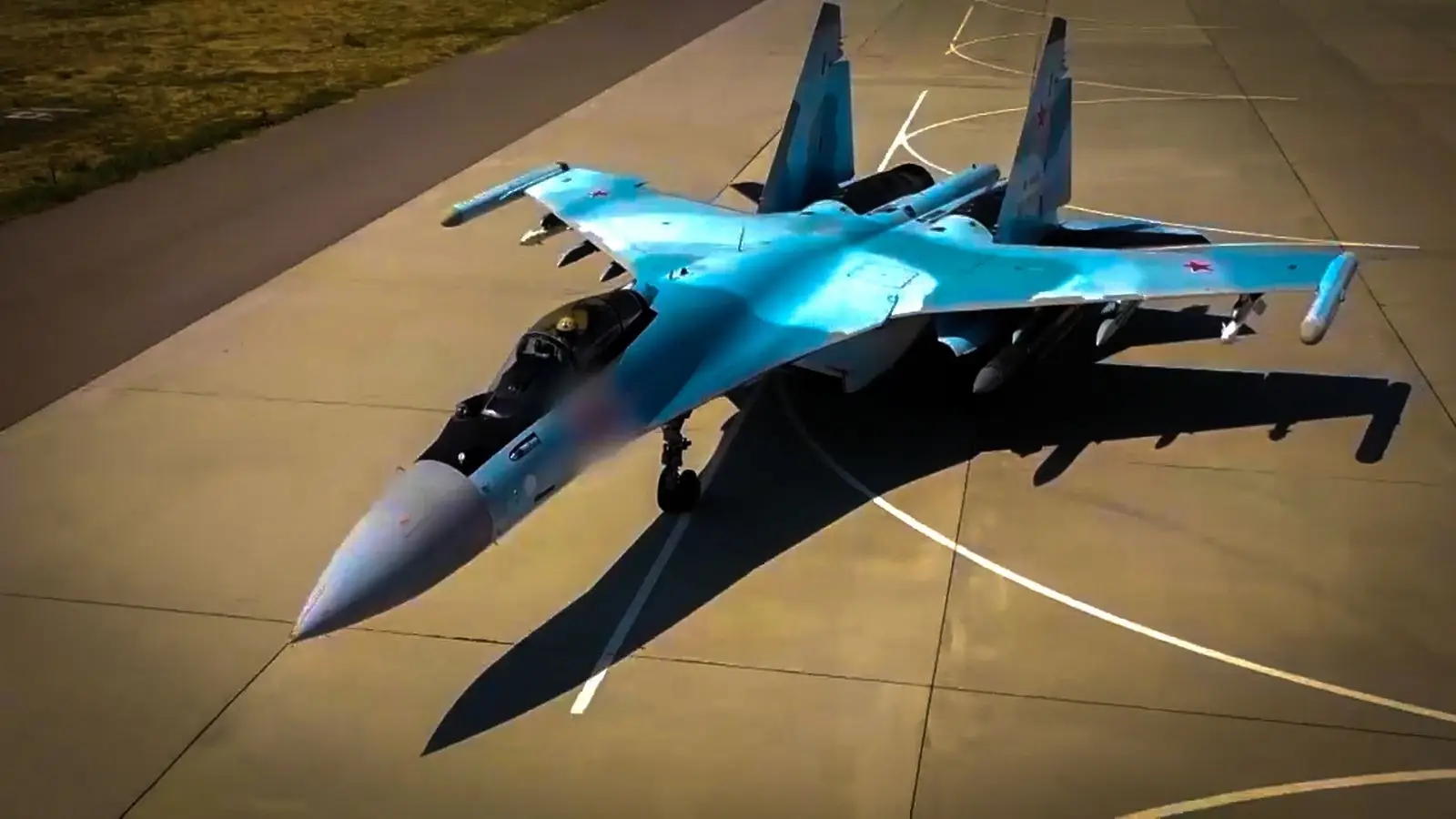
 © Минобороны России / t.me/mod_russia

A Russian Su-35S flew over the Sumy Region and launched a guided missile toward Sumy in what Military Watch Magazine says may have been an attempt to test Ukraine’s air defenses and identify gaps created by dwindling stocks of Patriot interceptors.
According to the magazine, the Russian Aerospace Forces fighter entered Ukrainian airspace near the settlement of Ugroedy before firing a Kh-59/69 missile in the direction of Sumy. The aircraft then left the area and returned to Russian-controlled airspace over the Kursk Region.
MWM describes the sortie as unusual. Russian fourth-generation combat aircraft have generally avoided approaching Ukrainian air defense positions, relying instead on long-range missiles and glide bombs launched from safer distances. If Su-35S fighters begin making similar flights more frequently, the magazine suggests this could signal a shift in established tactics as Ukraine’s air defense network weakens.
The Su-35S has several advantages for missions of this kind. The fighter carries a powerful primary radar, two additional L-band AESA radars and an advanced electronic warfare suite. MWM argues that this equipment improves the aircraft’s chances of surviving operations in a heavily contested electronic environment.
Another factor is the relatively large number of Su-35S fighters already in service, with production continuing. The aircraft also requires only one pilot, making its use on higher-risk missions less sensitive than deploying two-seat Su-30SM2 fighters or Su-57s.
The Su-57, meanwhile, has previously been used for some of the most demanding missions near areas protected by Ukrainian air defenses. MWM attributes this role to the stealth fighter’s greater survivability compared with other Russian tactical aircraft.
During the flight over Ugroedy, the Su-35S apparently moved closer to Ukrainian air defense systems than was necessary simply to launch the missile. Military Watch Magazine says one possible explanation is that the aircraft was deliberately probing Ukraine’s response.
Even a brief approach to areas covered by Ukrainian surface-to-air missile systems could provide information about radar activity, the reaction time of air defense crews and the location of operational batteries. Such a sortie could also reveal how quickly Ukrainian forces are able to detect and engage a fast-moving combat aircraft.
MWM also offers another possibility: the Su-35S may have taken advantage of a temporary gap in Ukrainian radar coverage or missile protection.