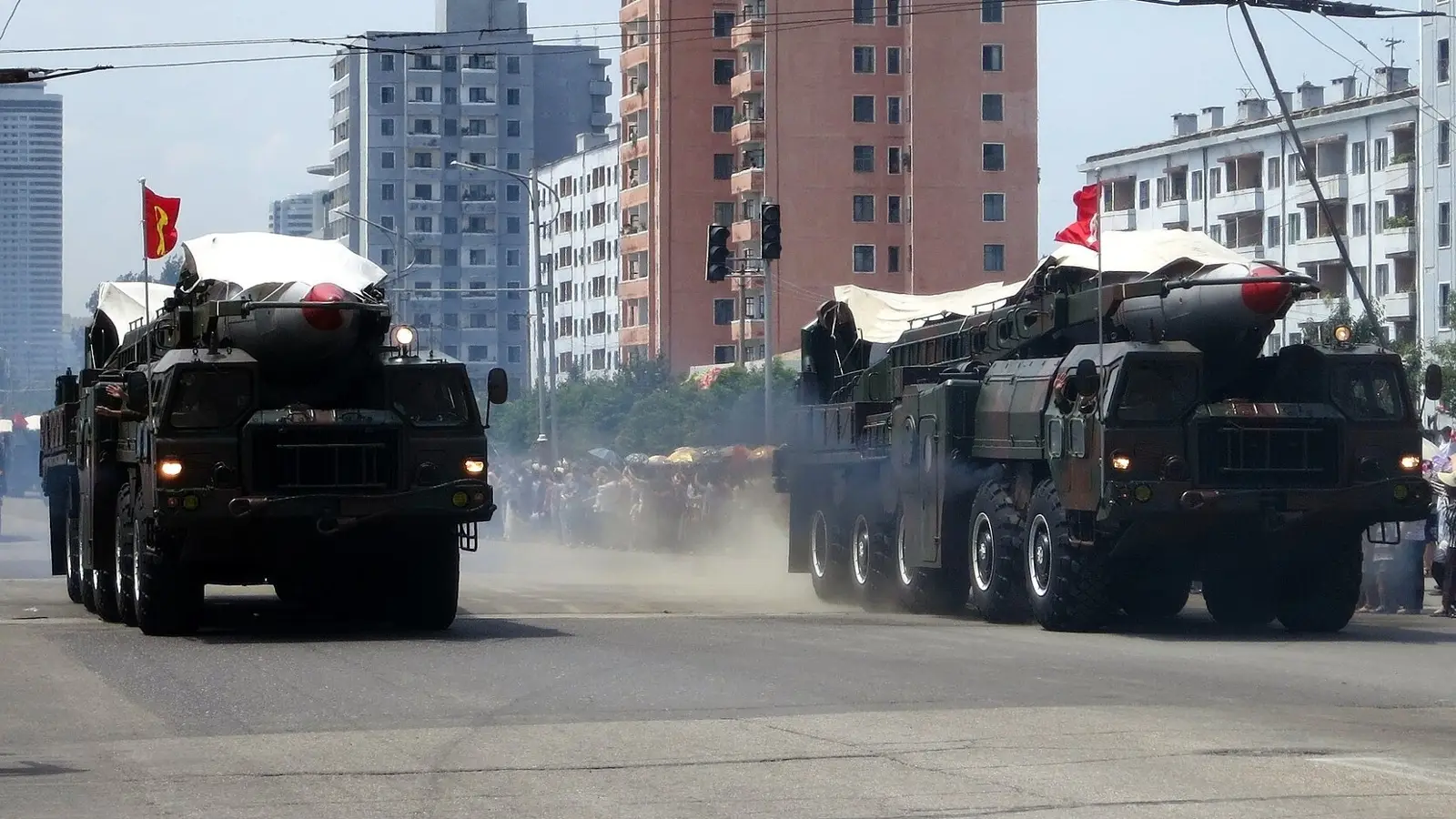


Ukrainian military intelligence claims that Russia has received North Korean KN-30 short-range ballistic missiles, also known as the Hwasong-11C, for the first time. According to the Ukrainian side, Russian forces had previously used North Korean KN-23 and KN-24 missiles, but there had been no reports of KN-30 deliveries until now.
The KN-30 was first publicly displayed during a military parade in Pyongyang in 2021. The missile represents a further development of the Hwasong-11 family and follows the earlier KN-23 Hwasong-11A and KN-24 Hwasong-11B.
The new version is distinguished primarily by its significantly heavier warhead. The KN-30 is classified as a heavy short-range ballistic missile and, according to available data, can reportedly deliver a warhead weighing around 2.5 tons to a range of between 600 and 900 kilometers.
There have also been previous reports of tests involving a version equipped with an even heavier 4.5-ton warhead. However, there is no reliable information confirming that this configuration entered serial production.
If the Ukrainian intelligence report is accurate, this would mark the first delivery of KN-30 missiles to Russia as part of North Korean military assistance. Ukraine’s Defense Intelligence believes the newly supplied missiles are highly likely to be used for strikes on Ukrainian territory.
The Russian Defense Ministry has not commented on reports of KN-30 deliveries. There is therefore currently no official Russian confirmation that these missiles have entered service with the Russian Armed Forces.
If the deliveries are confirmed, Russian forces would gain a North Korean ballistic missile carrying a significantly heavier warhead than Russia’s Iskander missiles. The heavy payload is one of the KN-30’s defining characteristics and is intended to provide considerably greater destructive power against large and hardened targets.
The possible arrival of the KN-30 would therefore further expand the range of North Korean ballistic missiles available to Russia. Following the KN-23 and KN-24, the new system would add a heavier missile combining a reported range of up to 900 kilometers with a warhead weighing around 2.5 tons.