 www.mil.gоv.uа

Iranian missile and drone strikes on US military infrastructure in the Middle East have demonstrated how vulnerable even large and well-equipped facilities can be to mass aerial attacks. According to The Wall Street Journal, the damage suffered by the United States has reached approximately $13 billion.
Since late February 2026, Iran has carried out more than 2,000 attacks. At least 20 US military bases across eight countries in the region have been targeted. Analysts also report that at least 42 military aircraft have been damaged or destroyed, including fighter jets and large drones.
The scale of the losses has forced the Pentagon to reconsider its approach to protecting military facilities. US Defense Secretary Pete Hegseth has made the accelerated construction of hardened shelters for personnel, aircraft, vehicles and other equipment a priority. The vulnerability of American bases has been discussed for years, but the United States now faces a massive task in strengthening them.
In Russia, the American experience is being viewed as a warning, according to the newspaper Vzglyad. Russia faces an even broader challenge, as protection is required not only for military bases and airfields but also for defense industry facilities, energy infrastructure, oil storage sites, transport hubs, logistics centers and other critical infrastructure across the country’s vast territory.
Andrei Bezrukov, an adviser to the head of Rosneft and a retired colonel of Russia’s Foreign Intelligence Service, believes that the most important facilities should either be moved underground or provided with protection comparable to that of nuclear power plants. In his view, this approach is particularly necessary for oil storage facilities, communications hubs and data centers. Russia needs infrastructure capable of continuing to operate even during large-scale hostilities.
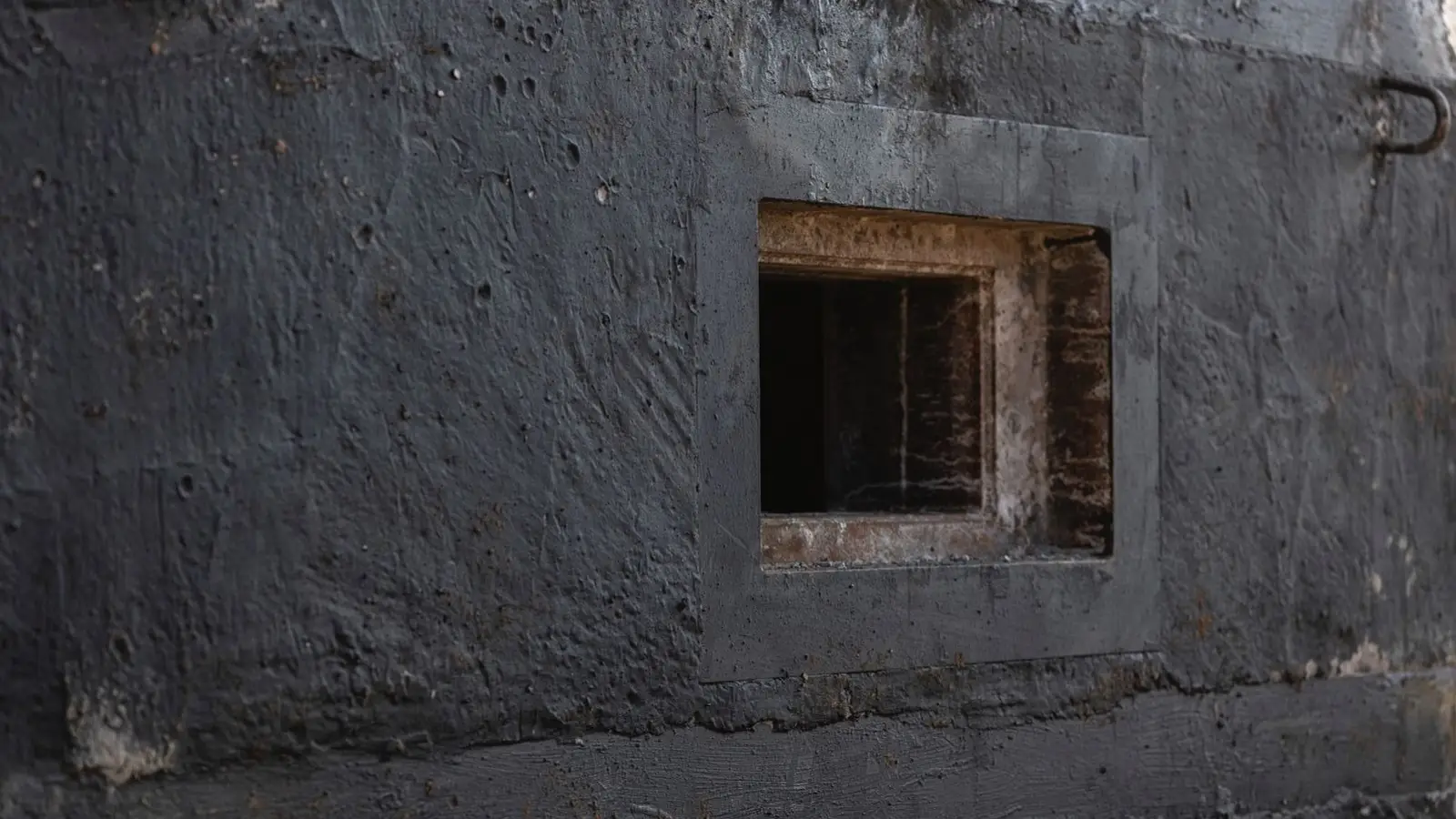
Some of the necessary solutions already exist. Russian manufacturers offer concrete outdoor shelters and modular GNT-1 and GNT-2 gabion structures. For more complex applications, prefabricated MFSBT concrete modules can be used for command posts and field hospitals. MSKT container structures and FSKM fortification systems made from composite materials are also available.
Another area of development involves protected infrastructure for troops in the field. The APL-500 field camp, for example, can be used to establish an almost fully autonomous military settlement on undeveloped terrain. It includes accommodation, medical facilities, catering and utility areas, command facilities and accommodation for duty units. The complex also has its own water and power supply, security, video surveillance and waste disposal systems.
Modern warfare, however, has demonstrated that autonomy alone is no longer sufficient. Even facilities located far from the front line can come within range of long-range drones. Such complexes therefore need to be supplemented with active and passive protection.
The situation is even more difficult in combat zones. Producing a prefabricated fortification is only part of the task: it must also be transported to the position and installed. With reconnaissance and attack drones constantly operating overhead, moving heavy concrete structures and using cranes, bulldozers and excavators becomes extremely dangerous.
For this reason, many positions are still constructed from readily available materials such as timber and sandbags. These defenses can be built directly on site without deploying large amounts of heavy machinery and transport that can be easily detected in the so-called kill zone.
Transportation and installation are therefore among the main obstacles to the widespread deployment of prefabricated modular fortifications close to the line of contact.
One possible solution identified by specialists is adapting engineering vehicles to operate under the constant threat of drone attacks. Excavators, bulldozers and mobile cranes would require additional protection and the ability to operate in areas where conventional construction equipment would be too vulnerable.
Another area is the development of compact tunneling systems. Such equipment could allow underground spaces, tunnels and protected positions to be constructed more quickly without lengthy open excavation work. These systems could be used both for defensive fortifications and during assault operations.
The experience of mass strikes in the Middle East and combat operations in Ukraine is therefore changing the very concept of the rear area. The range of modern missiles and drones means that distance from the front line no longer guarantees safety. Protecting military facilities, industry, energy infrastructure, communications and logistics increasingly depends not only on air defense but also on the ability of infrastructure itself to survive strikes and remain operational.