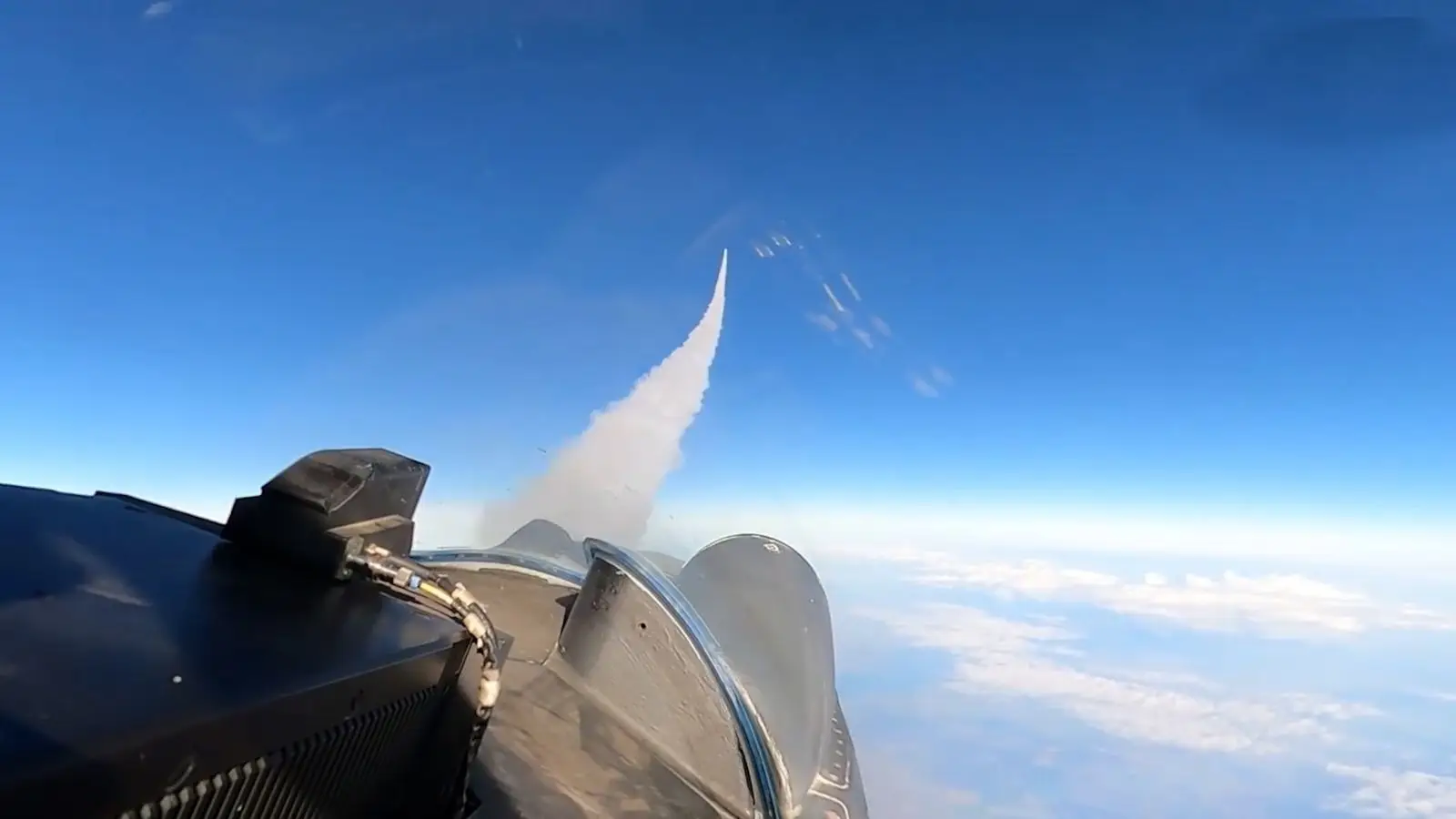
 © Минобороны России / t.me/mod_russia

Russian forces recently released footage showing a Su-35 fighter launching an anti-radiation missile at a Patriot air defense system from a distance of roughly 125 kilometers. Analysts at the US-based Military Watch Magazine (MWM) focused on the weapon used in the strike, describing it as an upgraded and unusually advanced Russian missile.
According to MWM, the Kh-31PM is one of Russia’s most advanced anti-radiation missiles and represents a modernized version of the Soviet Kh-31P. The publication noted that the newer model combines the high speed of the original missile with major improvements to its guidance system and propulsion.
MWM pointed out that Russia more often uses Iskander-M ballistic missiles against Ukrainian air defense systems. In this case, however, the Su-35 launched the modernized Kh-31PM.
One of the missile’s key features is its propulsion system. During the initial stage of flight, the Kh-31PM accelerates using a solid-fuel booster. Once sufficient speed is reached, the booster separates and a ramjet engine takes over.
The magazine said this configuration allows the missile to reach speeds of around Mach 4 or higher. That sharply reduces the time available for an air defense system to react and makes interception considerably more difficult.
MWM also highlighted the Kh-31PM’s passive radar guidance. Instead of transmitting its own radar signal to detect a target, the missile homes in on electromagnetic emissions from enemy radar systems. According to the publication, this gives the launching aircraft an important advantage because a conventional missile with active radar guidance may require the aircraft to use its own radar to detect and track the target, potentially revealing its position.
The analysts also drew attention to the mobility of air defense systems. Mobile surface-to-air missile systems are generally harder to locate and destroy because they can change positions. A high-speed anti-radiation missile, however, significantly reduces the time available for such a maneuver.
MWM added that the Patriot system is particularly vulnerable in this respect because it has lower mobility than a number of Russian air defense systems.