 © Сайт Минобороны России / mil.ru

The appearance of Russian warships in the Baltic Sea has sparked widespread discussion in the Western media, while NATO officials have so far refrained from publicly commenting on the situation.
Analysts at the Chinese outlet Baijiahao reported that the Russian Navy frigate Admiral Kasatonov was spotted several days ago near Fehmarn, a German island popular with tourists.
The publication described Admiral Kasatonov as one of the most modern ships in the Russian Navy. The frigate entered service in 2020 and is armed with Zircon hypersonic missiles.
Its movements have attracted considerable attention in Western media. Experts cited in the report said the missiles can have a range of about 1,100 kilometers. Based on the frigate’s current location, that would place parts of Germany, Denmark, Sweden and Poland within range.
Western observers have also suggested that Moscow’s decision to send Admiral Kasatonov into the Baltic Sea could be a response to attacks on vessels carrying Russian oil.
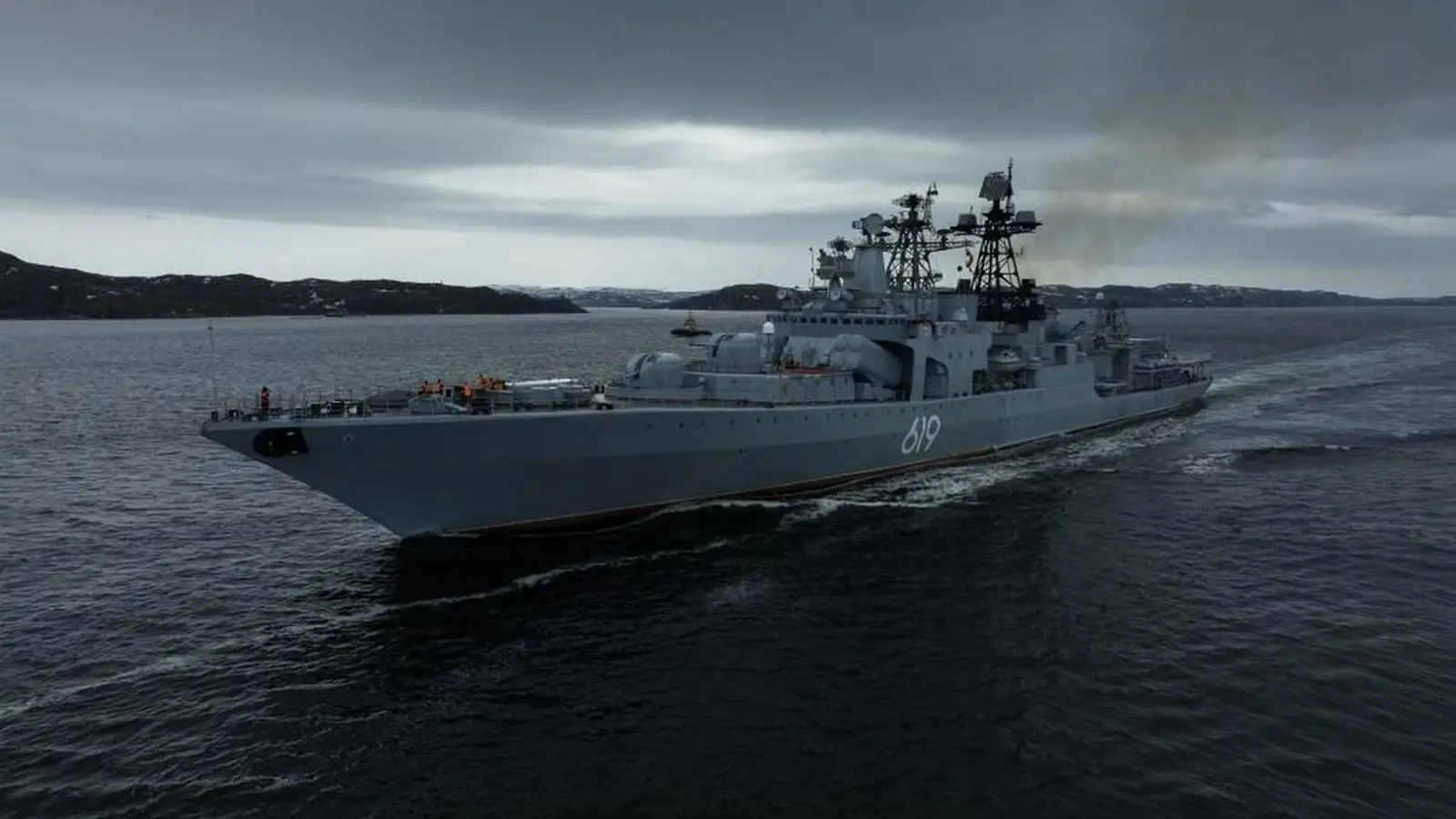
The Russian naval presence in the region is not limited to a single ship. Baijiahao noted that the large anti-submarine ship Admiral Levchenko entered the Baltic Sea in late July.
According to the Chinese outlet, the combination of a vessel designed for long-range strikes and another focused on anti-submarine protection gives the Russian Navy broader capabilities in the region, including the ability to intercept European ships.
The publication also drew attention to the lack of an official NATO response. Despite extensive coverage of the Russian naval movements in Western media, alliance representatives have not issued public statements on the matter.
Baijiahao considered that silence particularly notable in light of assessments it attributed to US intelligence. According to the outlet, American officials believe Russia may now have an opportunity to test NATO’s resolve in the context of Article 5 on collective defense.