 © Минобороны России / t.me/mod_russia

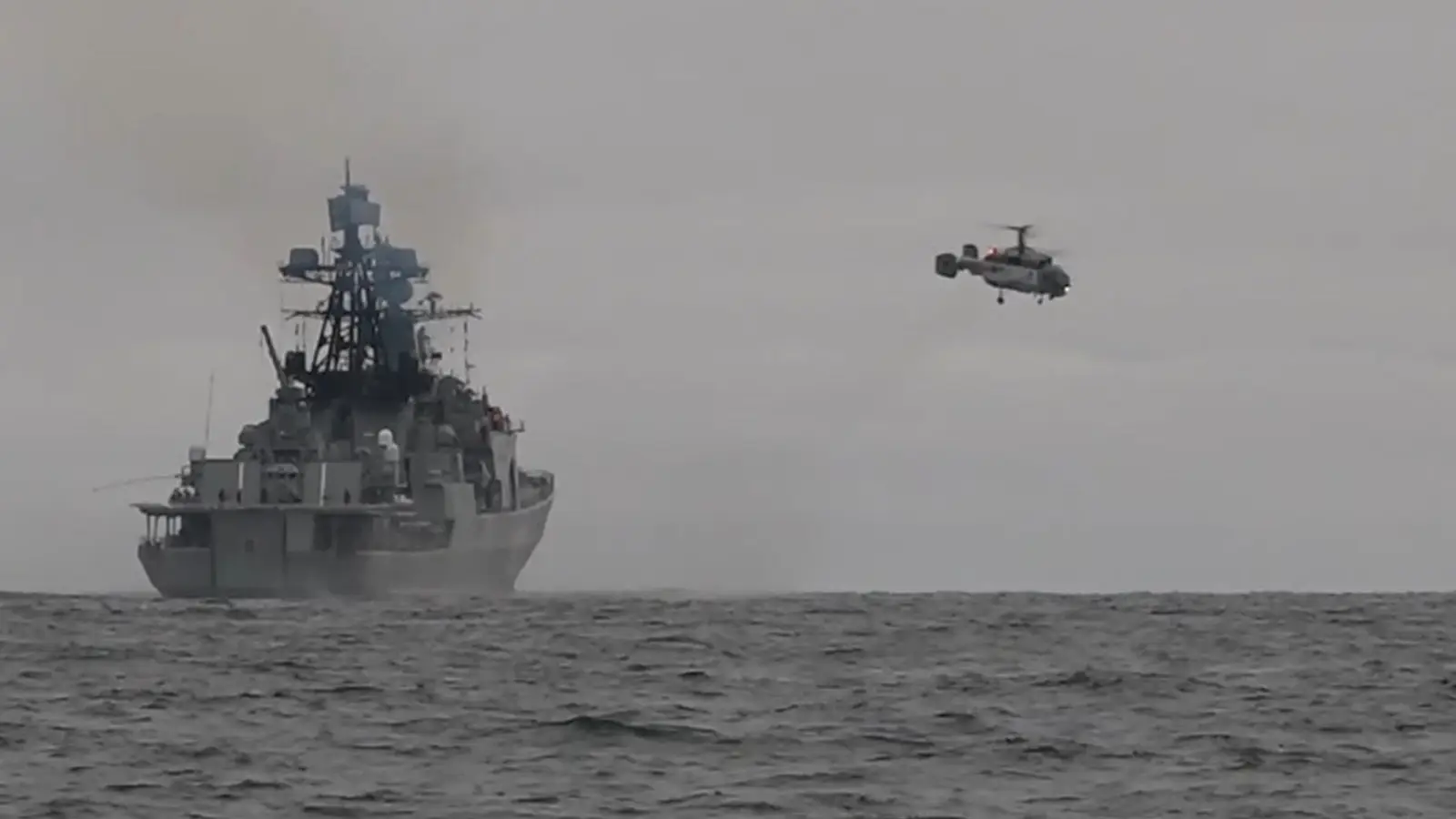
A Swedish Navy reconnaissance ship approached the area of Russian Baltic Fleet tactical exercises and remained close to a section considered dangerous for navigation despite repeated recommendations to change course and speed. The crew of the small anti-submarine ship Kabardino-Balkaria then took action to push the foreign vessel away from the maneuver zone, according to its commander, Ashot Arakelyan.
The incident took place in neutral waters of the Baltic Sea, meaning the Swedish ship’s presence itself did not constitute a violation. However, it came too close to the sector where Russian sailors were carrying out training and combat tasks.
Arakelyan said the Swedish vessel had repeatedly been advised to alter its course and speed and leave the hazardous area. According to him, the crew acknowledged the recommendations but did not follow them. He also claimed that foreign ships deliberately approach Russian exercise areas and attempt to interfere with training.
After the vessel was moved to what the Russian side considered a safe distance, the exercises continued as planned. The Kabardino-Balkaria crew began searching for and conducting a simulated attack on an enemy submarine.
The submarine’s location had not been disclosed in advance. Sonar operators spent several hours scanning the area, checking one sector after another.
Flarid Tukhvatullin, commander of the ship’s navigation combat unit, said the crew’s priority was to locate the submarine as quickly as possible because the ship itself could become a target. The task was to detect the submarine and counter its actions before it could reach the vessel.
The Russian submarine Velikiye Luki played the role of the simulated enemy during the drills. Ka-27 anti-submarine helicopters also took part in the search operation. Joint work by ships and aviation was used to practice both submarine detection and subsequent tracking.
During the practical phase, the crews first used a Smerch rocket depth-charge launcher against a simulated target before moving on to torpedo attacks. The training torpedoes carried no warheads but were equipped with special instruments to assess launch results. A second Russian small anti-submarine ship, Aleksin, carried out the same task at the same time.
Another element of the Baltic Sea exercises involved repelling attacks by unmanned surface vessels. Shipboard artillery fired at simulated naval drones while crews practiced their response to a sudden attack.