 RusPhotoBank

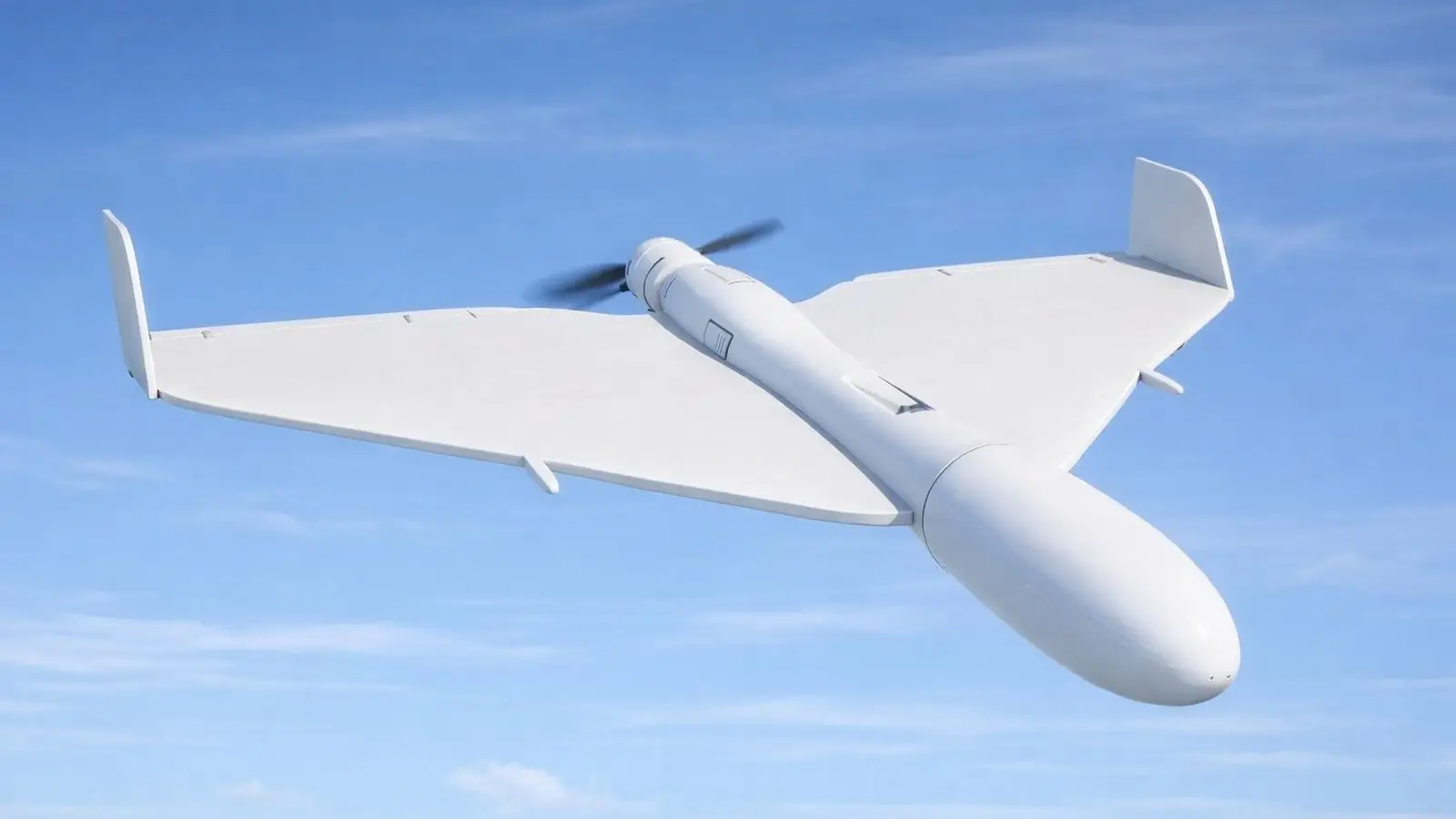
Russian Geran strike drones have gained new capabilities that are making Ukraine’s air defenses increasingly difficult to operate against them. According to Sergei Beskrestnov, an adviser to Vladimir Zelensky, some of the UAVs can now be controlled by Russian operators in real time all the way to the target.
Under this configuration, the drones are no longer limited to following a route programmed before launch. Operators can adjust their flight throughout the mission, making their trajectory less predictable and giving Ukrainian air defense crews a far more difficult target to detect, track and engage.
Another major change concerns propulsion. The Ukrainian expert claimed that roughly half of Russia’s Geran drones are already equipped with jet engines. These versions combine higher speed with greater maneuverability. Russian specialists give more cautious estimates of the scale of the transition, but confirm that a new generation of long-range UAVs is appearing more frequently in strikes on Ukraine, Tsargrad reports.
Jet propulsion comes with clear trade-offs. Higher speed requires more fuel, reducing flight range, while production of such drones is considerably more expensive. Against air defenses, however, the increase in speed carries major tactical value. A faster UAV crosses dangerous areas more quickly and leaves defending crews far less time to react.
Military Chronicle notes that Ukraine has relied heavily on mobile fire groups, machine guns, anti-aircraft weapons, helicopters and interceptor drones against relatively slow Gerans. Jet-powered variants sharply reduce the effectiveness of that approach. The faster the target moves, the shorter the window for detection, tracking and engagement. Helicopters have greater difficulty catching up with the drone, while some electrically powered interceptors no longer have enough speed to reach it.
More advanced strike UAVs are also entering Russian service. The Geran-5 is already approaching cruise missiles in its combination of speed and range, while costing roughly ten times less.
The role of Gerbera decoy drones is changing as well. They were initially used primarily as false targets intended to distract and overload Ukrainian air defenses. Ukrainian reports now indicate that inexpensive signals intelligence equipment has been found on downed Gerberas.
According to Military Chronicle, this configuration allows the Gerbera to perform more than a decoy mission. During flight, the drone can collect information about the electromagnetic environment, detect electronic warfare activity and assess how intensively different sources of radio emissions are operating in a particular area.
The cost of this upgrade is especially notable. The signals intelligence package fitted to a Gerbera is said to cost about $100. The approach follows a broader Russian defense-industry preference for relatively simple and inexpensive systems that can be produced in large numbers and used extensively in combat conditions.