 © Минобороны России / max.ru/morf

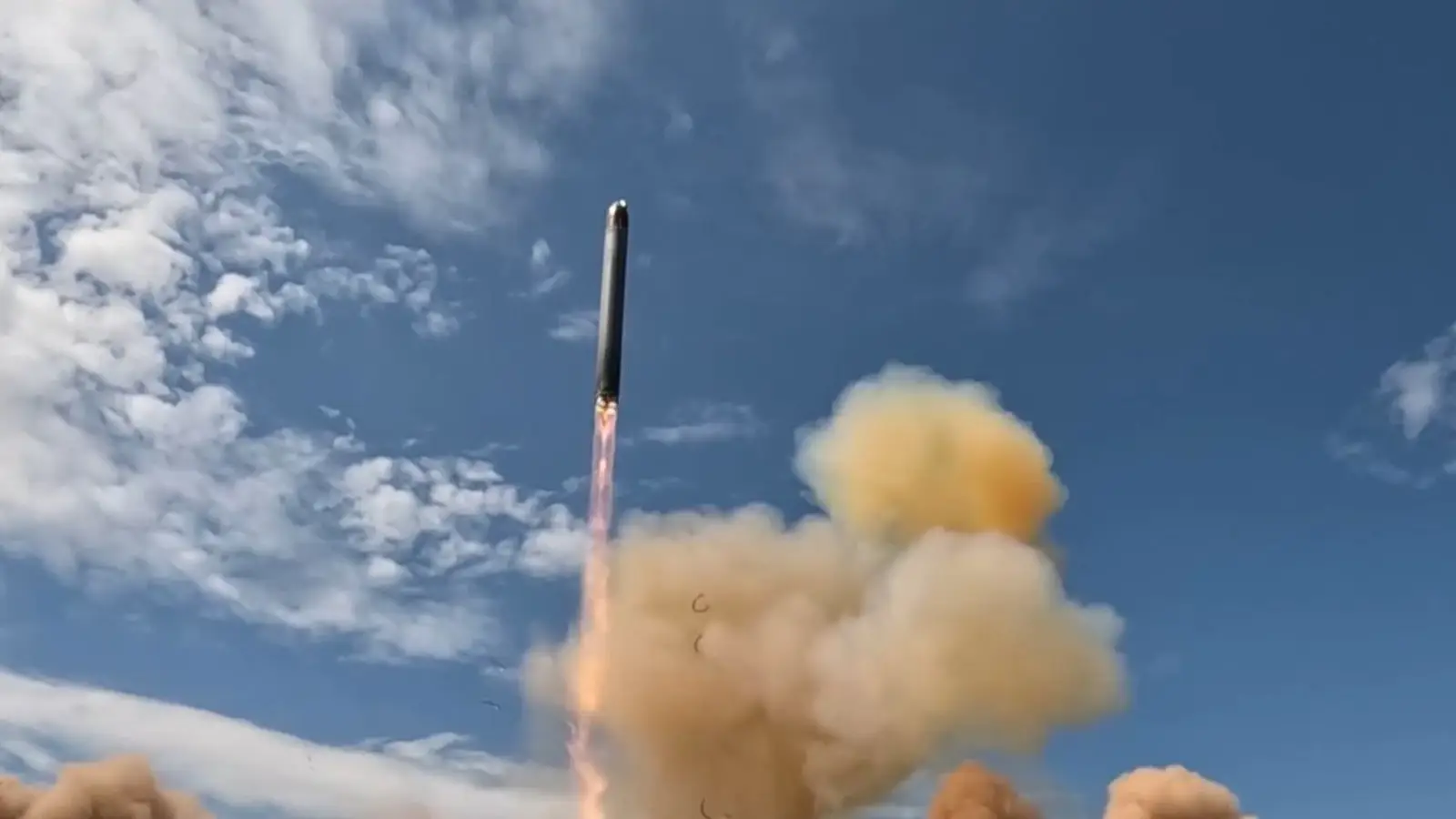
Russian military aviation and naval activity has intensified around the Novaya Zemlya archipelago, prompting speculation that Moscow may be preparing another test of the 9M730 Burevestnik nuclear-powered cruise missile, known in the West as the «Flying Chernobyl,» The Sun reports.
The British newspaper says the missile is capable of carrying a nuclear warhead and has an almost unlimited range. Analysts cited by the publication believe the weapon could reach Britain if deployed against the country.
Satellite images taken over Novaya Zemlya in recent weeks are cited as one of the main signs that a new test may be approaching. Several Russian military aircraft have reportedly been transferred to the archipelago, an area previously used for Burevestnik trials.
Novaya Zemlya also has a long history as a major Soviet nuclear testing site. From 1955 to 1990, the archipelago hosted one of the USSR’s main nuclear ranges. In 1961, the AN602 thermonuclear bomb, better known as the Tsar Bomba, was detonated there. Its 50-megaton blast remains the most powerful nuclear explosion ever produced in a weapons test.
This week, two specialized Il-976 SKIP aircraft were reportedly spotted at Rogachevo air base. These aircraft are used to monitor missile flights and collect telemetry during tests.
An A-50U airborne early warning and control aircraft was also seen at the base, along with four An-26 and An-74 transport aircraft and several helicopters.
Unusual activity has also been detected at sea. Civilian vessels previously involved in missile trials have taken up positions in the Barents and Kara seas near the Pankovo test site.
Russia has neither confirmed nor denied reports that another Burevestnik launch is being prepared.
Norwegian military analyst Tord Are Iversen considers the satellite evidence a strong indication that a test is approaching. In his assessment, the current deployment resembles the pattern seen before earlier launches of the experimental 9M730 missile. He concluded that the infrastructure is already in place for full-scale flight testing.
The Burevestnik has reportedly been launched around 14 times, although only two tests, in 2022 and 2025, are described as successful.
Following last year’s launch, Chief of the General Staff of the Russian Armed Forces Valery Gerasimov said the missile had covered 14,000 kilometers in 15 hours. During the flight, it carried out programmed altitude and course maneuvers, demonstrating its ability to evade air and missile defense systems.
The 2022 test was far shorter and lasted around two minutes.
The missile earned the Western nickname «Flying Chernobyl» because of its nuclear propulsion system and concerns that testing or operational use could cause radioactive contamination. The name refers to the 1986 Chernobyl nuclear disaster.
NATO designates the Russian missile as the SSC-X-9 Skyfall.