 © Минобороны России / t.me/mod_russia

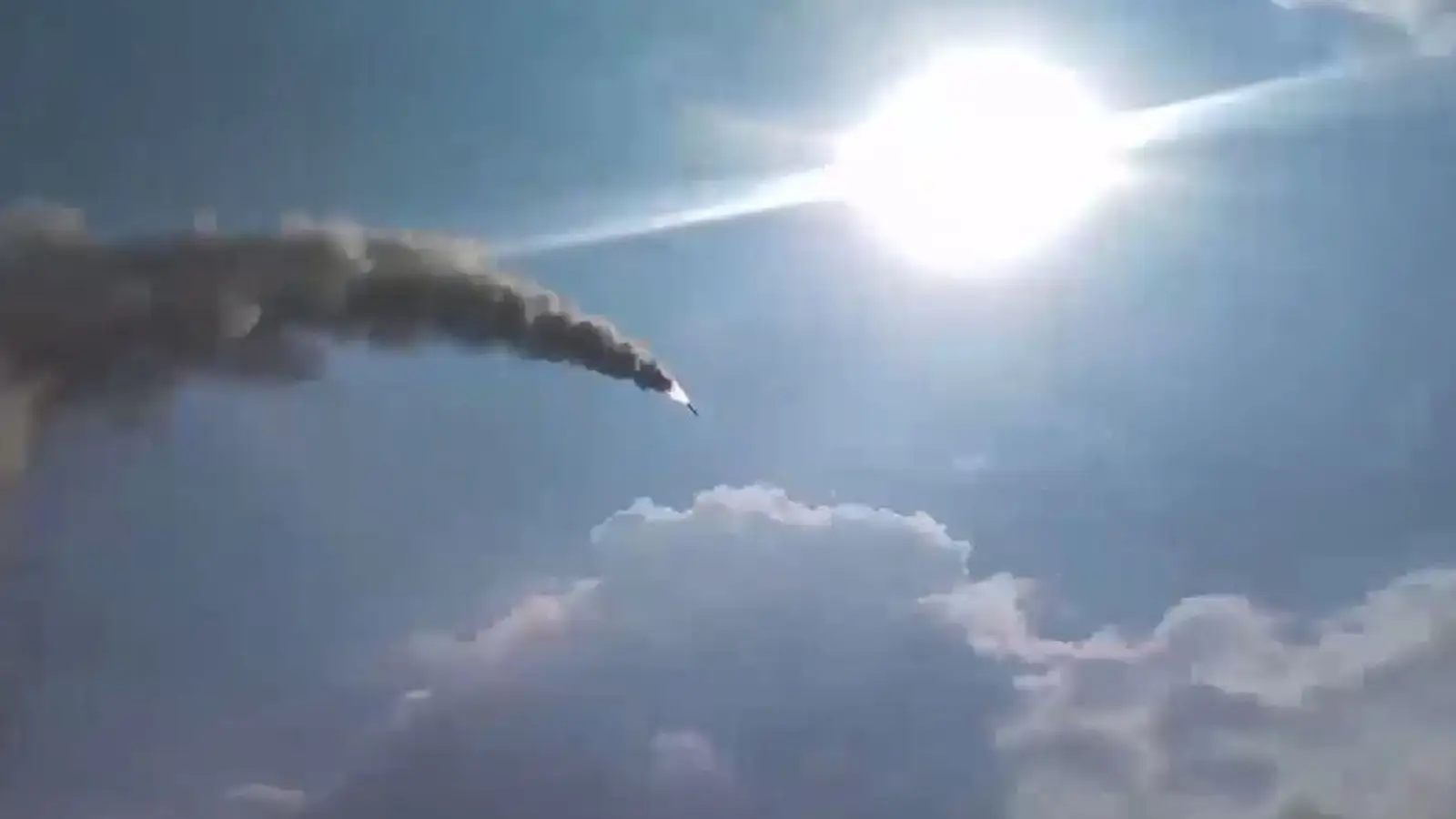
Russian forces, according to open-source information, have used the newest 9M723-2 ballistic missile for the first time in a strike on targets in Kiev. Its extended range has earned it the unofficial name «Iskander-1000.»
The missile is reportedly part of the arsenal of the Bora-M operational-tactical missile system. Externally, the new platform is said to be almost indistinguishable from the Iskander-M, which launches 9M723-1 missiles with a range of up to 390 km.
The main difference lies in the much greater strike radius. Under one assessment, the 9M723-2 can hit targets at distances of up to 1,000 km.
Military experts differ over how such a substantial increase in range was achieved. One explanation points to advanced materials that sharply reduced the weight of the missile body. Another credits an upgraded engine capable of producing stronger acceleration during the initial phase of flight. A further theory suggests that the warhead was lightened to 300 kg to extend the missile’s reach. Judging by the reaction from the opposing side, the reduction in weight did not come at the expense of destructive power.
The 9M723-2 body is said to make extensive use of modern materials and to withstand extreme loads. This allows the missile to climb far higher than earlier versions while enduring massive stresses during maneuvering and the terminal approach, Rossiyskaya Gazeta reports.
Earlier Iskander missiles followed a trajectory at around 50 km altitude, while the new version reportedly climbs to roughly 120 km. At that height, it reaches the thermosphere, where the air is around 46,000 times thinner and produces far less aerodynamic resistance.
Most of the 9M723-2’s trajectory reportedly takes place effectively in a vacuum. There, the missile can accelerate to as much as 3,100 meters per second, a speed comparable to the characteristics of the Kinzhal hypersonic missile. As it closes in on its target, it begins maneuvering with gas-dynamic control surfaces before diving downward.
During descent, the missile passes at high speed through the mesosphere, stratosphere and troposphere. Its final approach follows a quasi-ballistic trajectory that allows it to change direction. Loads during these maneuvers are said to reach as much as 230G. A comparable short-term load was experienced by the Galileo probe when it entered Jupiter’s atmosphere.
The missile also uses a set of countermeasures designed to complicate interception. During the terminal phase, it releases large numbers of dipole reflectors that generate multiple false targets and activates a multiband electronic warfare module. For several seconds, enemy radar tracking can become severely disrupted or impossible.
That interval is enough for the missile to complete its maneuver and reach the designated target.
These capabilities allow the 9M723-2 to strike military facilities, transport hubs and fuel storage sites across Western Ukraine, where accomplices of the Kiev regime have begun building facilities for assembling cruise missiles and drones.