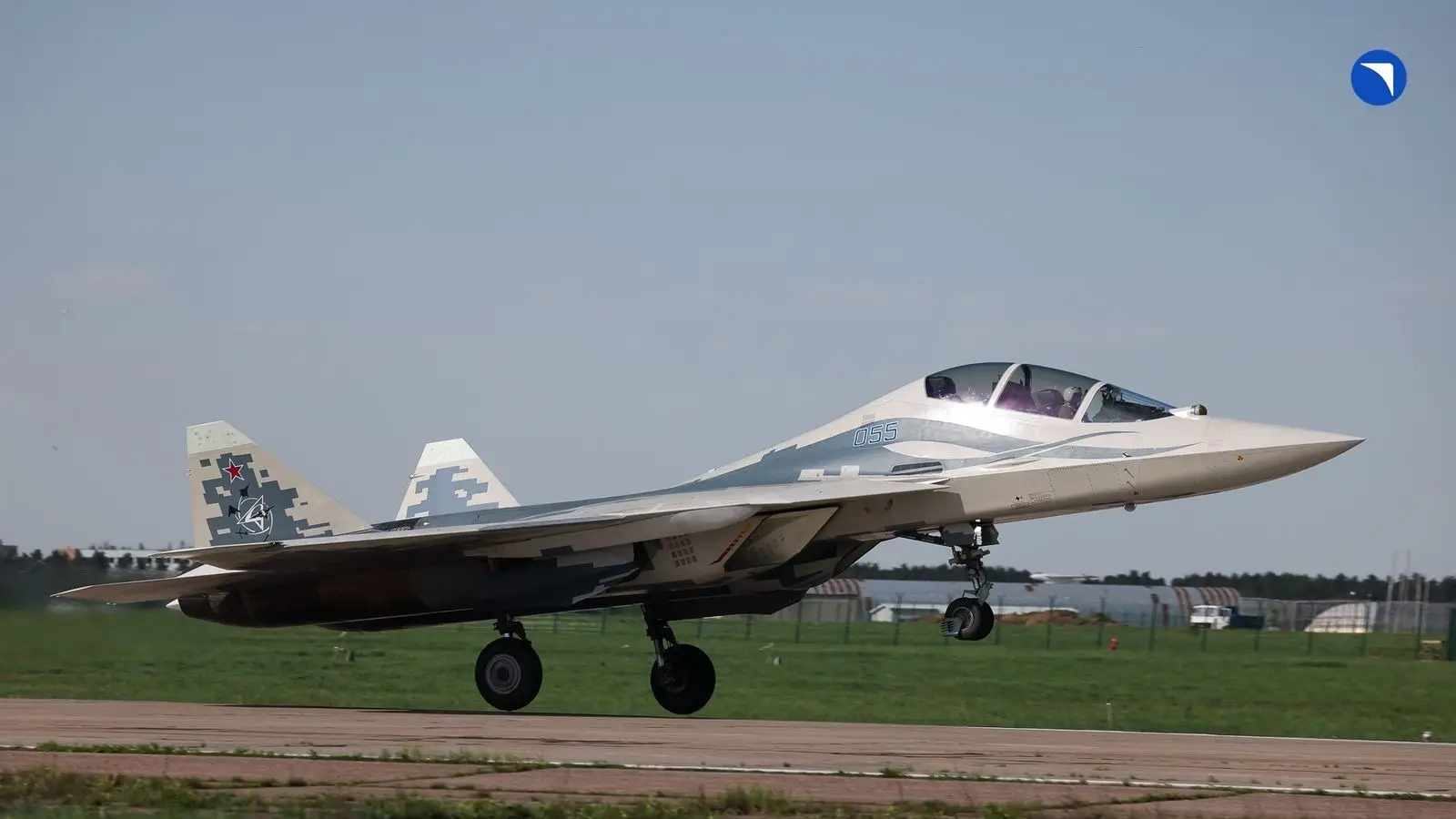
 © пресс-служба Госкорпорации Ростех
Rostec said the prototype of the two-seat Su-57D fighter is currently undergoing flight testing.
The aircraft is being developed primarily for two key roles. The first is pilot training: the Su-57D will allow crews to practice special flight modes that cannot be fully reproduced on ground-based simulators.
The second role is tied to next-generation technologies. With a second cockpit, the Su-57D can serve as an airborne command post for controlling unmanned systems. The platform is also expected to be used to test combat artificial intelligence being developed by specialists at the United Aircraft Corporation.
Mikhail Strelets, director of the Sukhoi Design Bureau, said the second crew station is particularly important for controlling advanced systems such as the Okhotnik drone, as well as swarm and group-based unmanned formations, while the primary pilot remains focused on the main combat mission.
The Su-57 family was originally designed as a multirole combat platform capable of engaging aerial, ground and maritime targets around the clock and in difficult weather conditions, including under active electronic interference.
The aircraft’s low-observable characteristics are intended to help it operate against modern air defense systems. The Su-57D retains the key features of the baseline version, including a radar system providing coverage of nearly 240 degrees.