.jpg)
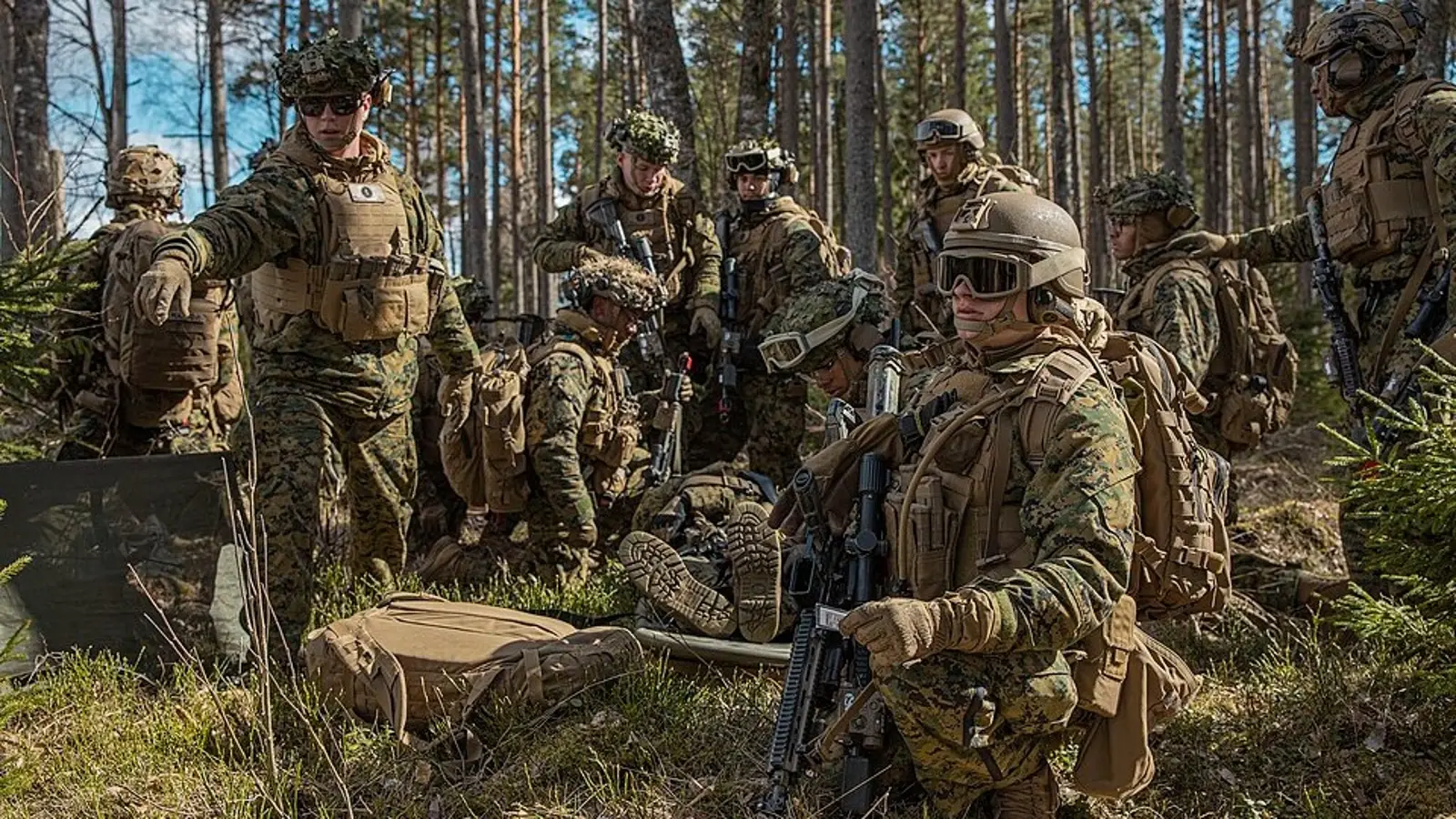
Sweden’s military has carried out a large-scale drill involving the burial of troops presumed killed in combat, reviving procedures that had not been fully practiced for decades. The exercise formed part of Aurora-26 and reflected the country’s broader shift toward a «total defense» model following its accession to NATO in 2024, according to Euronews and Le Monde.
Around 18,000 service members from 13 countries took part in Aurora-26, making it Sweden’s largest military exercise since the 1990s. One of its most unusual elements focused on handling battlefield fatalities, with the armed forces rehearsing a complete sequence that had not been carried out in full since the 1950s.
Under the scenario, units had to manage every stage from recovering presumed casualties to temporary burial. Personnel removed the bodies, established their identities, reported losses to the relevant authorities and then conducted burials with military honors.
More than 500 mannequins and body bags were used to simulate large numbers of dead soldiers. Le Monde reported that organizers sought to make the exercise as realistic as possible. The bags were weighted to resemble human bodies, emitted the smell associated with corpses and carried name tags identifying the presumed dead.
Military chaplains were also involved in the process. They entered names into official records, contacted the tax agency and reached out to allied embassies when foreign personnel were among the simulated fatalities. Information about enemy bodies was passed to the International Committee of the Red Cross.
The presumed dead were then placed in trenches marked with wooden posts. A chaplain conducted a ceremony at each burial site, stressing that the soldier had fallen while serving Sweden and that the grave was temporary and intended for an emergency situation.
One commander said taking part in the exercise was a source of pride and recalled that similar training had apparently last been held in 1952. A military chaplain also acknowledged that seeing rows of body bags made the prospect of wartime casualties far more tangible for those involved.
Priest Lars Viper argued that such preparations can also strengthen soldiers’ morale. In his view, service members need to know that if they are wounded or killed in combat, they will be cared for and treated properly.
Sweden’s preparations for possible mass casualties extend beyond the armed forces. The Church of Sweden, which is responsible for burials, was previously instructed to plan grave capacity equivalent to about 5% of the country’s population, or roughly 500,000 people.
A representative of the civil defense agency stressed that the figure should not be interpreted as an expected death toll. It is used as a planning estimate for emergency preparations.
Euronews placed the exercise within a wider pattern across the Baltic states and NATO’s northern flank, where authorities are increasingly preparing for worst-case scenarios amid tensions with Russia. For Sweden, the change is particularly significant: the country remained neutral during both world wars and last fought a war in 1814.