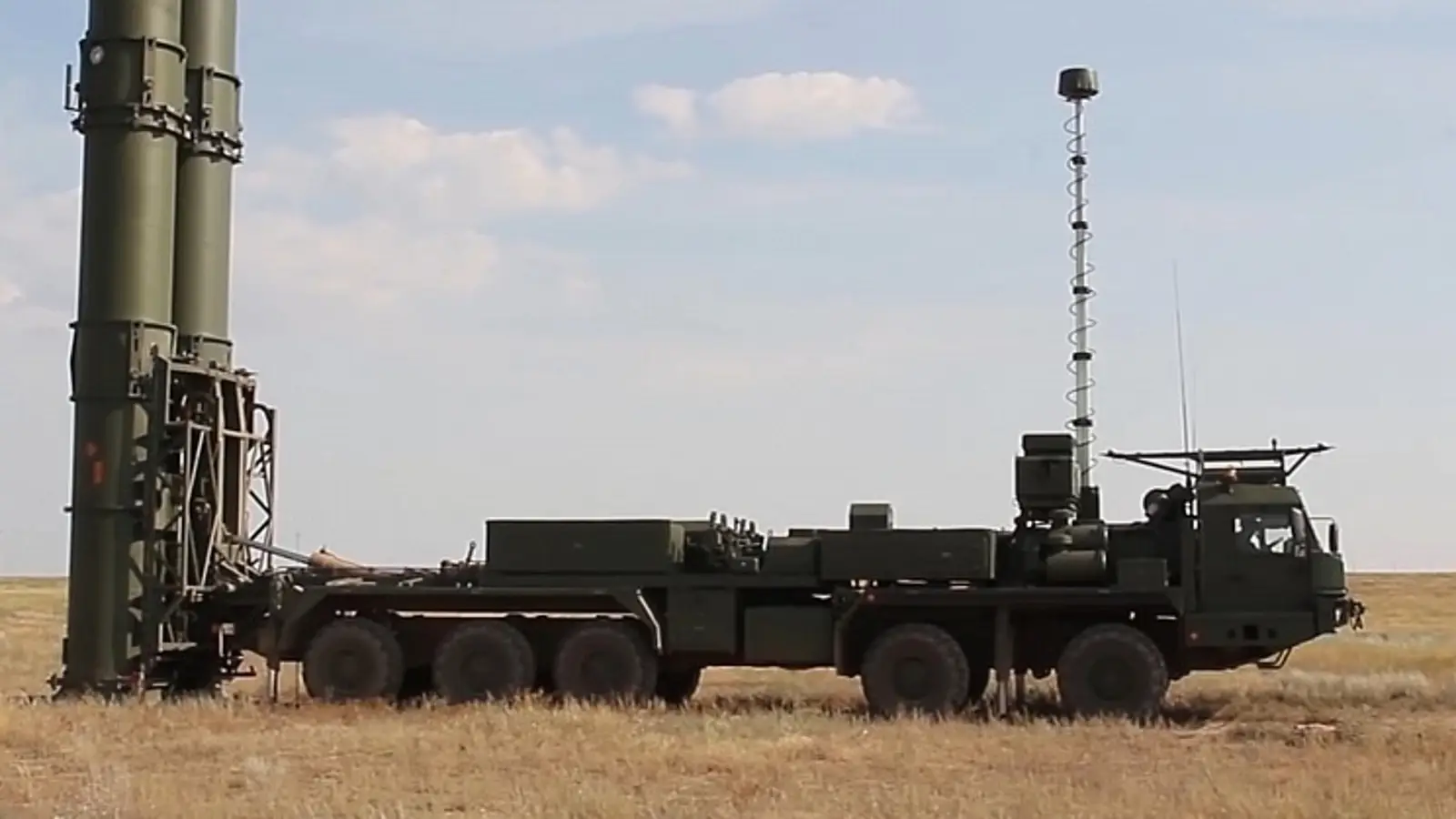


Washington has failed to disrupt military-technical cooperation between Moscow and New Delhi, The Economic Times reports. According to the newspaper, the strong performance of the S-400 has pushed India toward discussions on acquiring more advanced Russian systems, including the S-500 and Su-57 fighter jets.
The S-500 and Su-57 were among the main defense issues discussed by Indian Prime Minister Narendra Modi and Russian President Vladimir Putin on the sidelines of the SCO summit. New Delhi’s interest grew after Operation Sindoor, during which India’s S-400 systems reportedly proved effective against aerial threats.
India currently operates four of the five S-400 units ordered under a $5.43 billion contract signed in 2018. The systems have been deployed along the country’s western, northern and eastern fronts. Delivery of the fifth and final unit under the original agreement is scheduled for November 2026.
New Delhi is also seeking to expand its S-400 fleet. India’s Defense Ministry has approved a proposal to acquire five additional units worth more than $5.24 billion. Russia has submitted a bid and offered local joint production.
The talks also cover the possible purchase of the S-500 Prometheus. Unlike the S-400 Triumf, which is primarily designed to engage aircraft, cruise missiles, drones and tactical ballistic missiles, the newer system is intended to counter more complex threats.
The S-500 has a reported maximum interception range of around 600 kilometers and can engage targets at altitudes of 180 to 200 kilometers. Its stated reaction time is about three to four seconds, compared with roughly nine to ten seconds for the S-400. Potential targets for the Prometheus include intercontinental ballistic missiles, hypersonic glide vehicles and low-orbit satellites.
The two Russian systems are expected to serve different roles within a layered defense network rather than duplicate each other. The S-500 would form the higher tier against ballistic and hypersonic threats, while the S-400 would continue to cover aircraft, drones, cruise missiles and other aerial targets at lower altitudes.
Their interceptor arsenals also differ. The S-400 uses missiles from the 48N6 and 40N6E families, while the S-500 is equipped with 77N6-N and 77N6-N1 hit-to-kill interceptors.
For this reason, a potential S-500 purchase is being considered not as a replacement for India’s existing S-400 systems, but as an additional layer that would broaden the country’s air and missile defense capabilities.