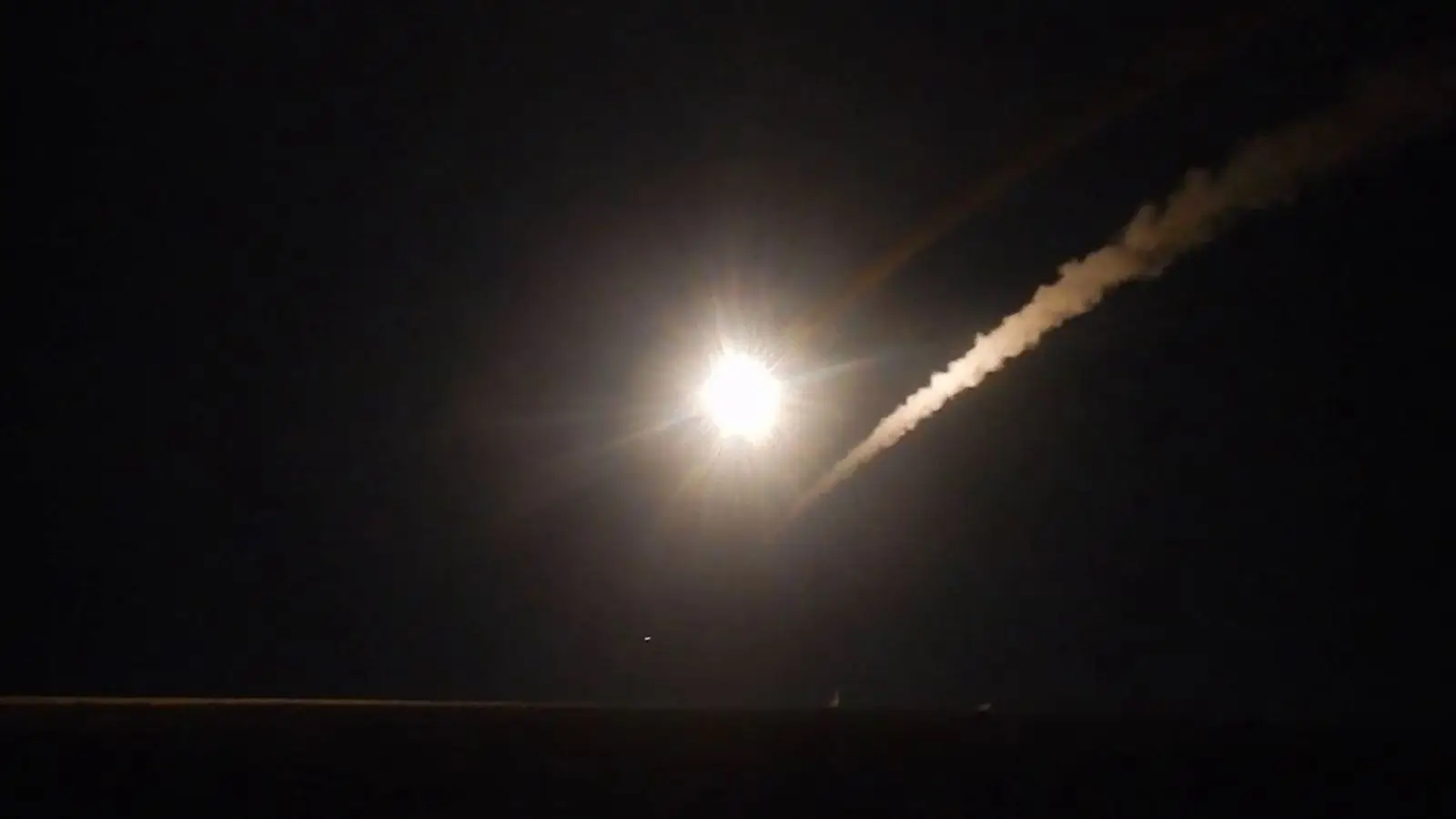
 © Минобороны России / t.me/mod_russia

Russia’s Banderol missile-drone can travel most of its route at extremely low altitude, making it difficult for detection systems to track.
According to Ukrainian media reports, surveillance systems spotted Banderol missiles only at isolated points along their flight paths. They were mainly detected when the weapons had to climb to a higher altitude.
Military expert Dmitry Kornev, editor of the New Defense Order magazine, told Business FM that the system can be launched from several types of platforms. The Banderol is already used with Orion unmanned aerial vehicles, each capable of carrying at least one missile. Helicopters can also launch the weapon. Kornev said he had not seen confirmed evidence of fixed-wing aircraft being used as carriers.
Kornev identified the combination of a powerful warhead and a speed of more than 500 kilometers per hour as one of the weapon’s main advantages. When flying close to the ground, these characteristics make interception much more difficult. In his assessment, small arms, mobile fire groups and interceptor drones are practically ineffective against Banderol.
Stopping such targets requires either surface-to-air missile systems or aircraft armed with air-to-air missiles, but the incoming weapon first has to be detected in time. Kornev pointed out that the Ukrainian Armed Forces face shortages both in the number of air defense systems and in available ammunition, making continuous protection of all potential targets impossible.
The expert also highlighted Banderol’s relatively low production cost. According to him, weapons of this type can be manufactured in greater numbers than more technologically complex cruise missiles.
Banderol uses a satellite navigation system. Kornev said Russian industry has already mastered serial production of this class of weapon and that such systems are now being used on a broad scale.
He also described how the system can be used against previously identified targets. An unmanned aircraft can detect an object at a distance of 200–300 kilometers, confirm that the target remains relevant and then launch Banderol. Its jet engine allows the missile-drone to cover the distance quickly while maintaining a low-altitude flight profile, further complicating interception.
Banderol is classified as a compact cruise missile, although it is also often described as a hybrid of a missile and a drone. The system was developed by Kronstadt JSC, which also created the Orion reconnaissance and strike UAVs.