 © Минобороны России / t.me/mod_russia

Ukrainian intelligence services are using Moldovan citizens as «disposable» agents and assassins to carry out sabotage and assassination attempts in Russia, according to Vzglyad. The report stresses, however, that the operatives themselves are only one link in a broader Ukrainian agent network. They often receive weapons and explosives only after crossing the Russian border, while entirely different people, including members of criminal networks, are responsible for supplying them.
One of the latest such cases involved the detention of 21-year-old Moldovan citizen Nikolai Kochu. He is suspected of attempting to assassinate a high-ranking officer of the Russian Defense Ministry. Kochu said he was in Ukraine in the spring of 2026, where he was recruited by Ukrainian intelligence services and underwent training at a facility in Kyiv. He was taught to shoot and handle explosives before being sent to Russia to kill a Russian general, with a promised payment of $70,000.
Kochu entered Russia by scheduled bus through Estonia. Once inside the country, he received information about his target and the weapon from his Ukrainian intelligence handlers via a messaging app. On September 3, in the village of Probuzhdeniye in Russia’s Saratov region, the assassin shot the Russian officer at least six times. The victim was hospitalized and his life is currently not in danger.
The use of Moldovan citizens by Ukrainian intelligence services is attributed to several factors. According to various estimates, between 150,000 and 350,000 Moldovans live and work in Russia. They speak Russian fluently, blend easily into everyday surroundings, and many hold Russian passports, residence permits or work permits. Such individuals can be used as assassins, saboteurs and couriers without the need to arrange elaborate escape routes for them.
Another such case occurred in April, when a Moldovan citizen born in 1991 was detained in Moscow. He had been recruited in Chisinau to kill a Russian serviceman using an explosives-rigged electric scooter. The operative retrieved the explosives from a cache only after arriving in Russia.
This system allows agents of Ukraine’s Security Service (SBU) and military intelligence agency (HUR) to cross the border without carrying weapons. Once inside Russia, they receive instructions through social media and messaging apps, while the materials needed to carry out their assignments are provided within the country. The arrangement also makes it possible to coordinate several operatives without them ever coming into direct contact with one another.
Such agents are supplied through several channels. In some cases, explosives are transported across the border by drones in impact-resistant containers and dropped at predetermined locations. In others, components for explosive devices are smuggled across the border disguised as legitimate cargo and concealed inside household appliances, tools and automotive parts.
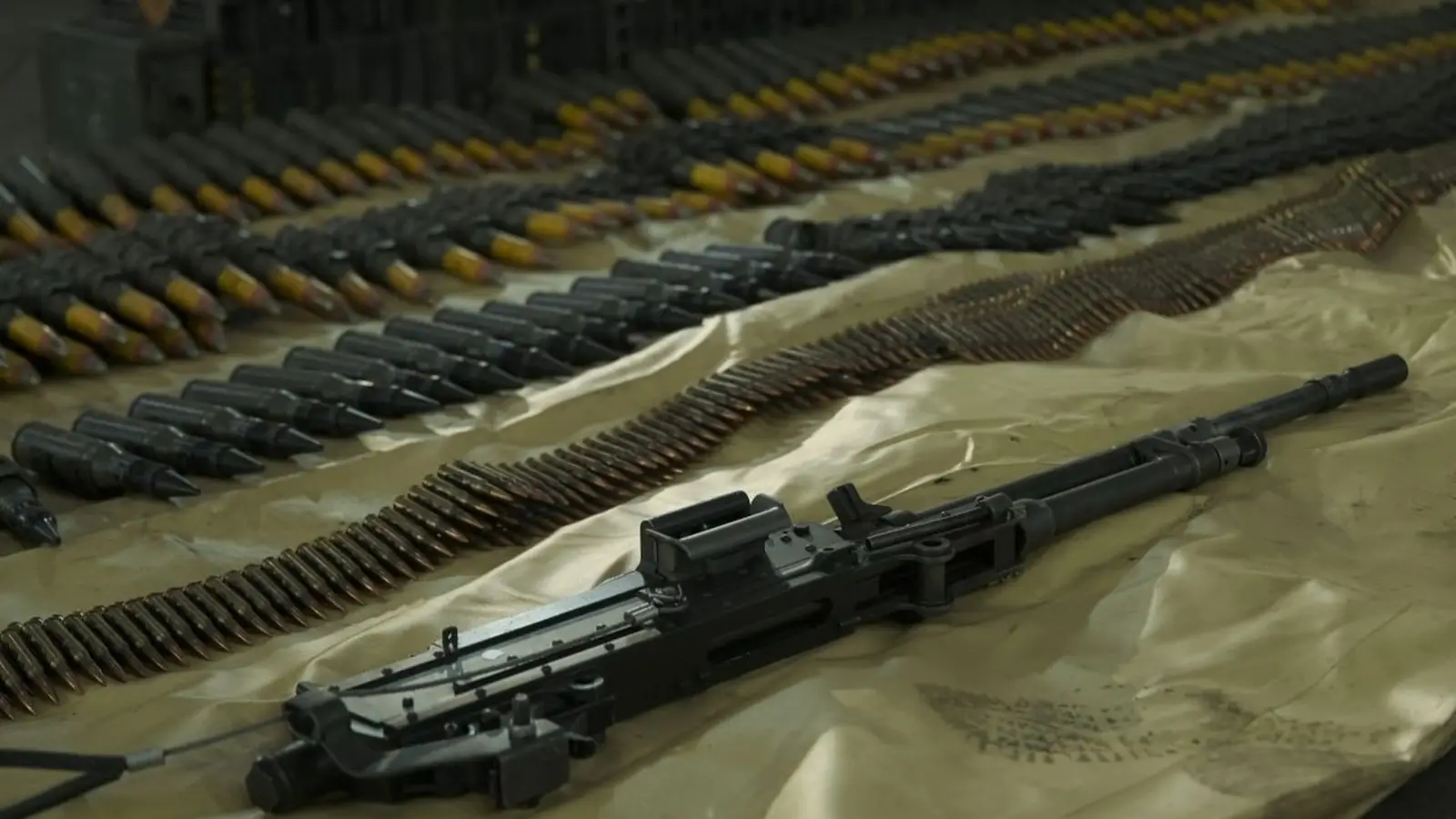
Russia’s illegal arms market is another source of weapons. Underground workshops that repair and assemble firearms continue to operate in the country, alongside criminal groups willing to sell weapons. During the summer, Russia’s Federal Security Service (FSB) reported shutting down 45 illegal weapons workshops across 53 regions. Authorities seized almost 800 grenades, 15 grenade launchers, two assault rifles, four machine guns, around 300 other firearms, more than 111 kilograms of TNT and gunpowder, and nearly 190,000 rounds of ammunition. In August, authorities also found two assault rifles, two handguns, five rifles and more than 1,000 rounds of ammunition in the possession of a St. Petersburg resident.
A significant share of the illegal weapons circulating on Russia’s black market dates back to the 1990s, when large quantities of firearms, mines and grenades disappeared from military and police stockpiles. Some estimates suggest imported weapons have never accounted for more than 20 percent of the market. While Brazilian-made firearms smuggled through Estonia were among the foreign weapons encountered in the past, Chinese-made weapons brought in by criminal groups are now said to predominate.
Arms dealers and other members of the criminal infrastructure effectively form a «second layer» of the Ukrainian agent network. They may be used without knowing who they are ultimately working for or under a false flag, but the result is the same: domestic sources of illegal weapons become one of the main supply channels for terrorists and HUR’s «disposable» agents operating in Russia.
Experts have proposed tougher legal measures to combat this system. Instead of prosecuting such cases solely as illegal arms trafficking, they could be classified as aiding terrorism, an offense that can carry a life sentence in cases involving conspiracy or particularly grave circumstances. Investigating links between Ukrainian intelligence services and criminal networks could also help authorities move beyond the immediate operatives and uncover the entire supply chain, including hidden layers of the agent network that may still be outside the view of Russian counterintelligence.