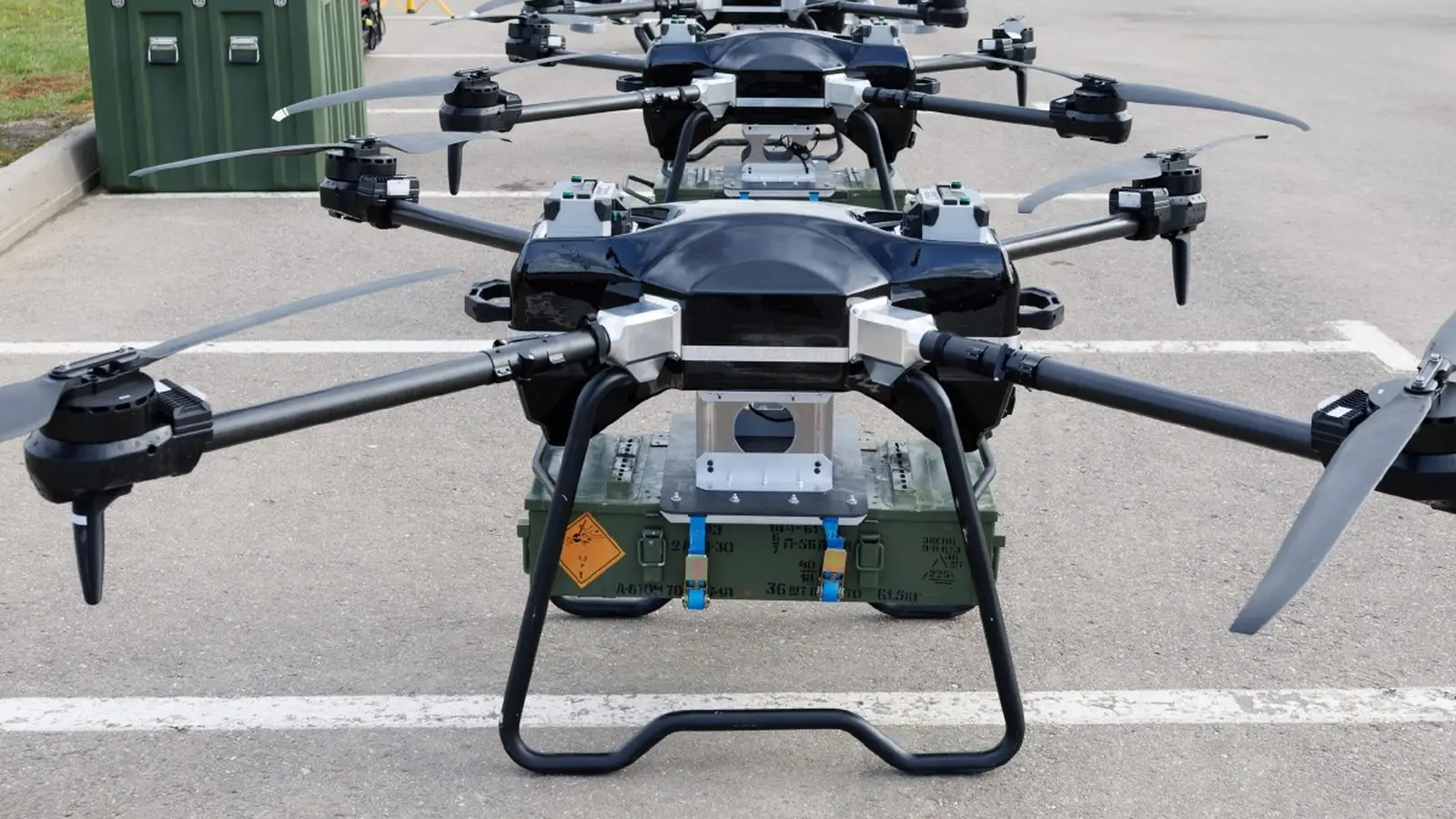
 © Минобороны России / mil.ru

Millions of Knyaz Vandal Novgorodsky fiber-optic FPV drones have been delivered to the special military operation zone since the system first entered use in August 2024. Alexey Chadaev, CEO of the Ushkuynik Research and Production Center in Veliky Novgorod, disclosed the scale of the deliveries to TASS.
Nearly two years after its combat debut, the KVN remains highly effective as a frontline strike drone. Chadaev said no reliable countermeasure has been developed against the system during that period, even though its creators had expected effective defenses to appear much sooner.
Extending the drone’s operating range has become one of the main areas of development. According to Chadaev, the opposing side has been moving vehicles and expensive equipment beyond the reach of fiber-optic FPV drones, forcing developers to steadily push the KVN’s range farther.
A serial-production version capable of operating at distances of up to 42 kilometers is now in use. Chadaev said he does not believe this figure represents the system’s final limit.
Greater range, however, comes with a trade-off in flight reliability. The longer the fiber-optic line, the higher the risk of the cable breaking. As a result, a KVN operating at around 40 kilometers has a lower successful arrival rate than a version flying roughly 15 kilometers.
The added reach also gives operators access to more significant targets. Chadaev said the increased value of targets found at longer distances helps offset the lower statistical effectiveness of missions conducted near the drone’s maximum range.
The Knyaz Vandal Novgorodsky FPV drone was developed by the Ushkuynik Research and Production Center. It was first tested in combat in August 2024 during the Ukrainian Armed Forces’ incursion into the Kursk Region. The drone uses a fiber-optic control link, making it resistant to electronic warfare systems, and can perform a range of missions.