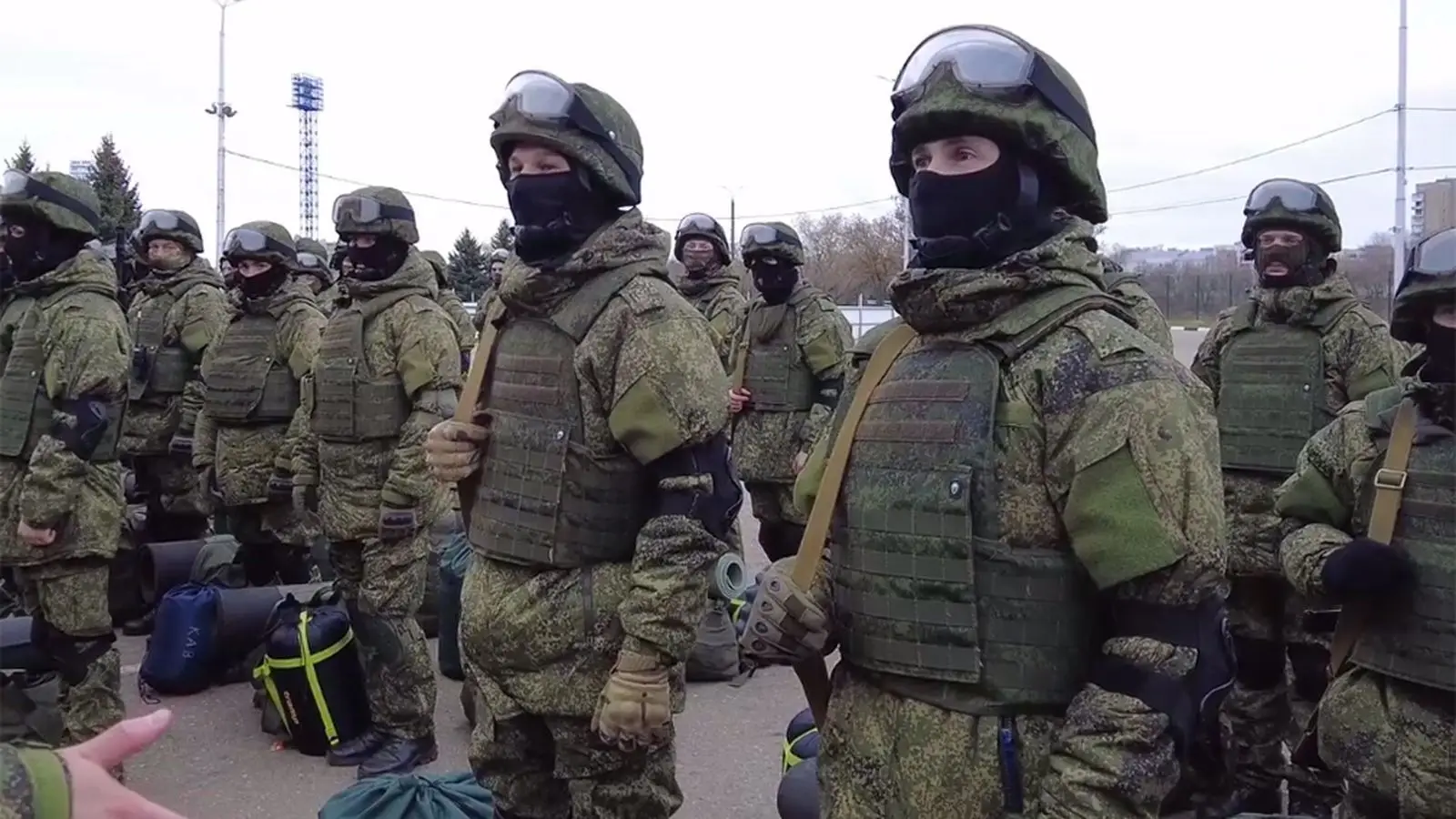
 © Минобороны России / t.me/mod_russia
Andrey Pinchuk, the first state security minister of the Donetsk People’s Republic and a doctor of political science, has presented a broad estimate of the forces Russia could require under several possible scenarios for the continuation of the military operation.
Writing for Tsargrad, Pinchuk noted that, according to official statements, the Russian force deployed in the operation zone exceeds 700,000 personnel. The total strength of the Russian Armed Forces is around 2.5 million people.
That overall figure includes rear units, military garrisons, personnel supporting missile systems and storage facilities, various branches and services, the central command structure, aviation and the navy.
Pinchuk argued that infantry still plays the decisive role in holding territory. In his assessment, advances in drones and artificial intelligence do not overturn the basic principles of warfare.
He said that breaking through a stable defense requires a substantial advantage in manpower and equipment. At present, however, he believes the front line remains relatively balanced.
The analyst identified four possible scenarios for the future course of the operation, each requiring different levels of personnel, equipment and weapons.
The first and most limited option would involve establishing full control over Donbass. Pinchuk estimates that such a scenario could require up to 600,000 servicemen.
The second scenario would involve taking control of Left-Bank Ukraine as far as the Dnieper. According to his estimate, the necessary force could rise to 1.2 million personnel.
A third option would involve establishing control over all of Ukraine up to the borders with NATO countries.
The fourth scenario would envisage Russian forces reaching Transnistria.
Pinchuk argued that any option extending beyond the minimum Donbass scenario would require a much deeper transformation inside Russia.
In his view, that would mean shifting the country onto a wartime footing, changing the economic model and management system, and mobilizing domestic resources on a much larger scale.
For now, he concluded, the preference is to preserve a more familiar way of life for society.