 © Zеlеnskiу / Оfficiаl / Telegram

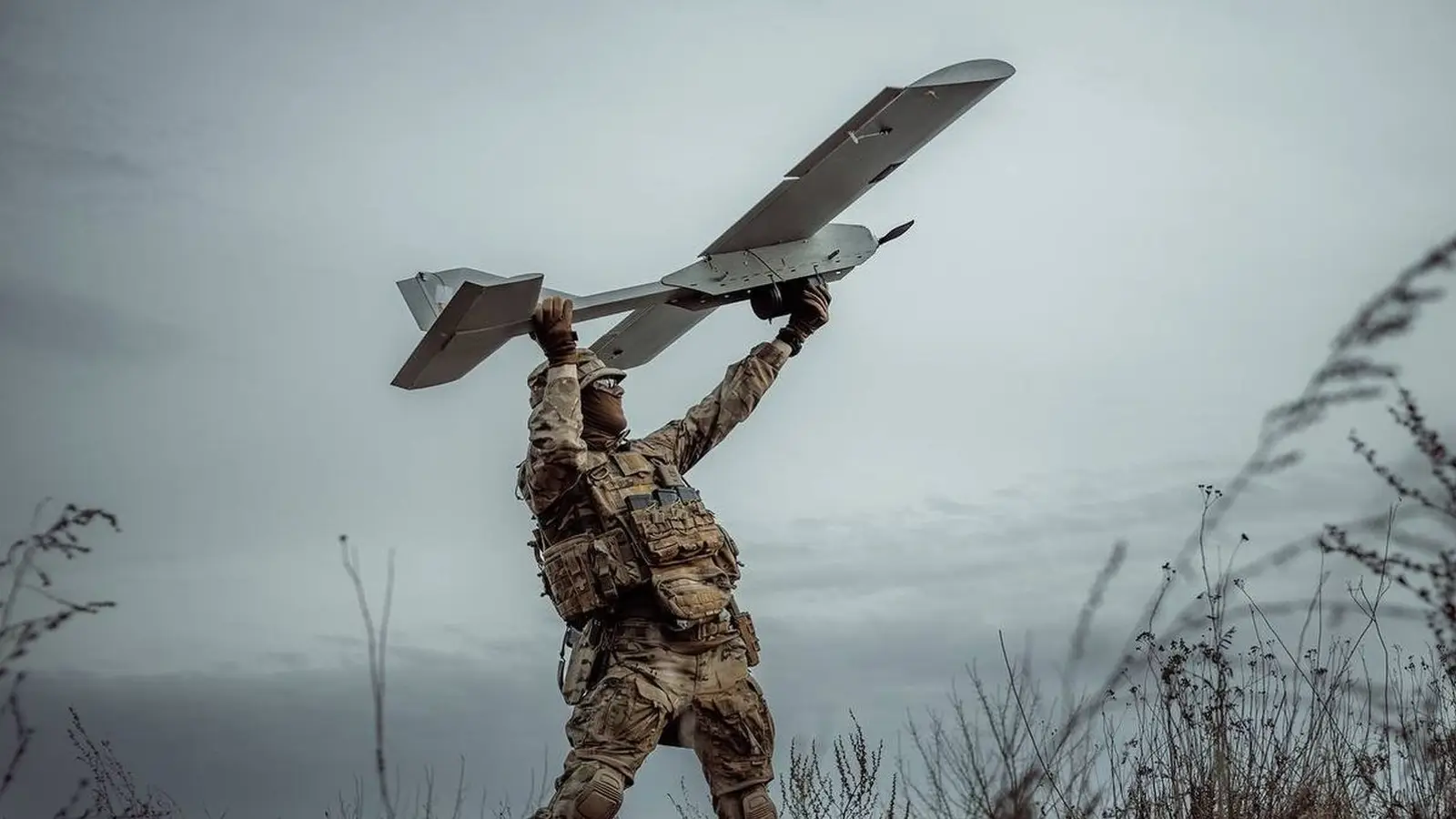
NATO countries are expanding drone production for Ukraine. Canada has announced some of the most ambitious plans, aiming to manufacture millions of drones over the next two years and send roughly one-third of them to Kyiv.
The Canadian program will rely in part on Ukrainian designs. Ottawa intends to combine its industrial capacity and artificial intelligence technologies with the Ukrainian Armed Forces' combat experience. Machine vision is expected to make the drones more resistant to electronic warfare. Prime Minister Mark Carney has said the Canadian military currently has only about 2,000 drones, but Ottawa intends to use Ukrainian technology to rapidly expand production.
The program is already moving into production. General Dynamics Mission Systems — Canada has signed an agreement with Green Tech Harvest to jointly manufacture combat drones. In Hamilton, Airlogix-Sentinel is producing reconnaissance and strike UAVs based on designs developed by Ukraine’s Airlogix.
Similar programs are being rolled out across Europe. The United Kingdom has pledged to supply Ukraine with at least 150,000 drones. In Bavaria, Auterion and Airlogix have launched production of 5,000 strike drones, while Norway has signed an agreement to assemble medium-range combat UAVs. Drone production is also being established in France, Spain and Italy.
In addition to expanding drone production, Canada plans to allocate C$350 million for interceptors for Ukrainian air defenses through the US Jumpstart mechanism and provide funding for Ukrainian security and energy projects. Volodymyr Zelenskyy and Mark Carney have also signed a declaration on a century-long partnership.
Vasily Kashin, director of the Center for Comprehensive European and International Studies at HSE University, noted that Ukrainian facilities had already largely been engaged in assembly with relatively low levels of localization. In his assessment, one of the key elements of Ukraine’s military-industrial complex is now effectively being moved deep into Western territory, creating a qualitatively different situation for Russia. Andrey Koshkin, head of a department at Plekhanov Russian University of Economics, believes the reliance on a «drone wall» is a strategy aimed at ensuring the survival of the current Kyiv government.
The experts see strikes on supply chains as one way of responding. They point to an increase in the intensity of strikes on warehouses, ports, major railway junctions and border hubs. Completely cutting off supply routes is unlikely to be possible, but they believe the volume of deliveries can be reduced. They also view increasing the cost of such policies for supplier countries, including Canada, as another long-term tool.
Koshkin believes the «war party» in Europe and Canada intends to prolong the conflict in the hope of a change in the US administration. Against the backdrop of large-scale Western programs, he considers neutralizing the threat a priority. According to Koshkin, there is a constant competition in both the quantity and quality of drone technologies, ranging from fiber optics and artificial intelligence to jet engines, and Russia is not falling behind the combined capabilities of Western countries in this race.