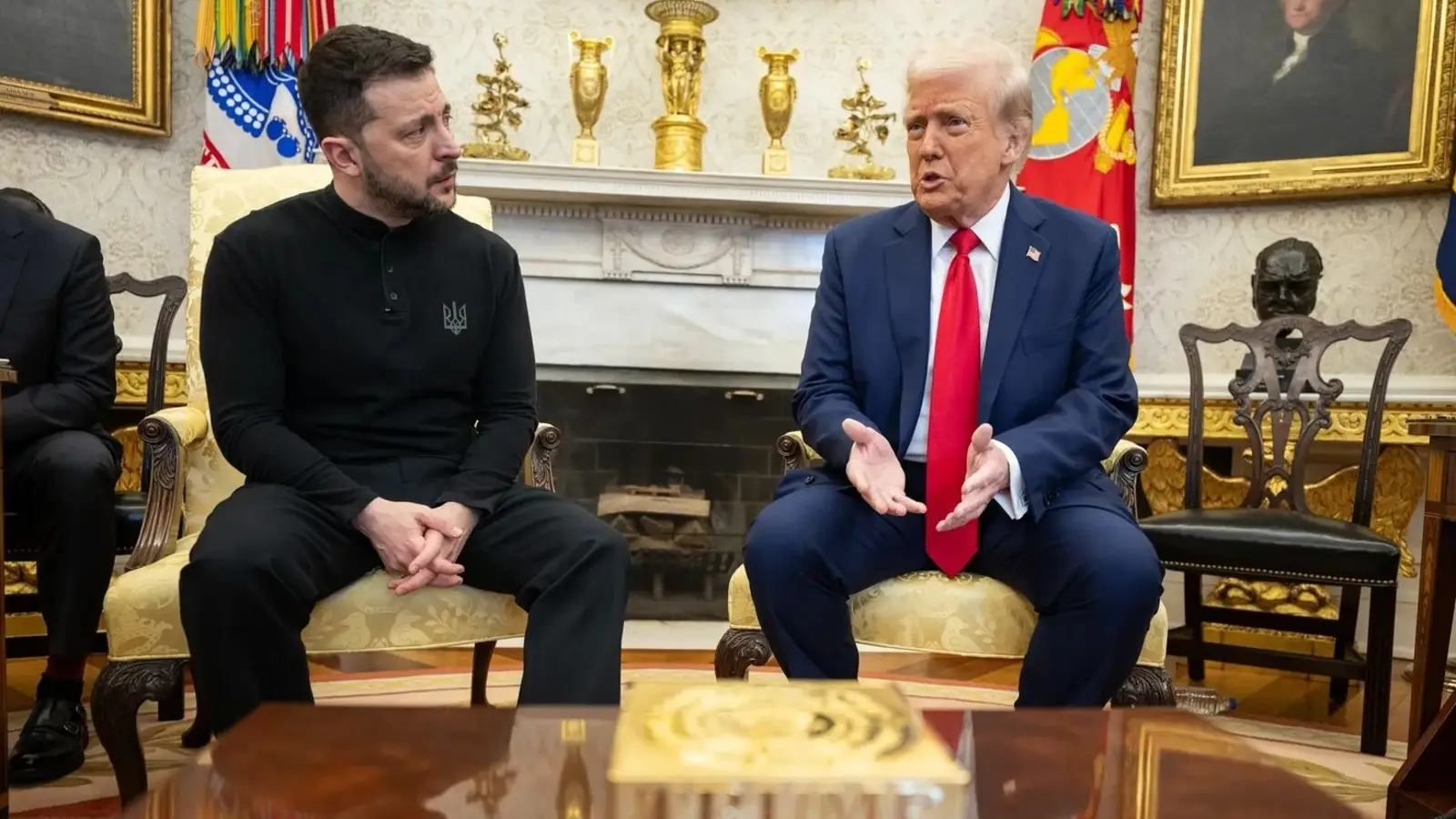
 © whitehouse.gov

On September 13, US President Donald Trump called on Vladimir Zelensky to stop attacks on Russian facilities involved in the production and export of diesel fuel.
Trump said the current problems with fuel supplies in the United States were linked less to developments in the Middle East than to the continuing Russia-Ukraine conflict. He argued that Ukrainian forces should stop striking Russian oil refineries and other related infrastructure to avoid disrupting diesel exports from Russia.
Speaking to reporters, the US president said Zelensky should refrain from targeting Russian diesel facilities. While other targets could still be attacked, Trump argued that strikes affecting diesel production were contributing to shortages.
Political analyst Dmitry Zhuravlev said complying with Trump’s demand could put Zelensky in a difficult position. In his view, ending attacks on Russian fuel infrastructure could provoke dissatisfaction among Kiev’s European partners.
Zhuravlev argued that Zelensky faces a choice between competing groups of allies. Agreeing with Trump, he said, could anger European governments as well as American business figures opposed to the US president.
The analyst also noted that Zelensky has tried to avoid disputes with his allies, even as their interests and approaches to the Ukrainian conflict increasingly diverge.
Zhuravlev further pointed to what he described as a shift in Trump’s priorities. In his assessment, the demand to halt strikes in order to stabilize diesel prices and supplies suggests that trade and economic interests are becoming more important to Trump than the outcome of the conflict in Ukraine.