 Zеlеnskiу / Оfficiаl / Telegram

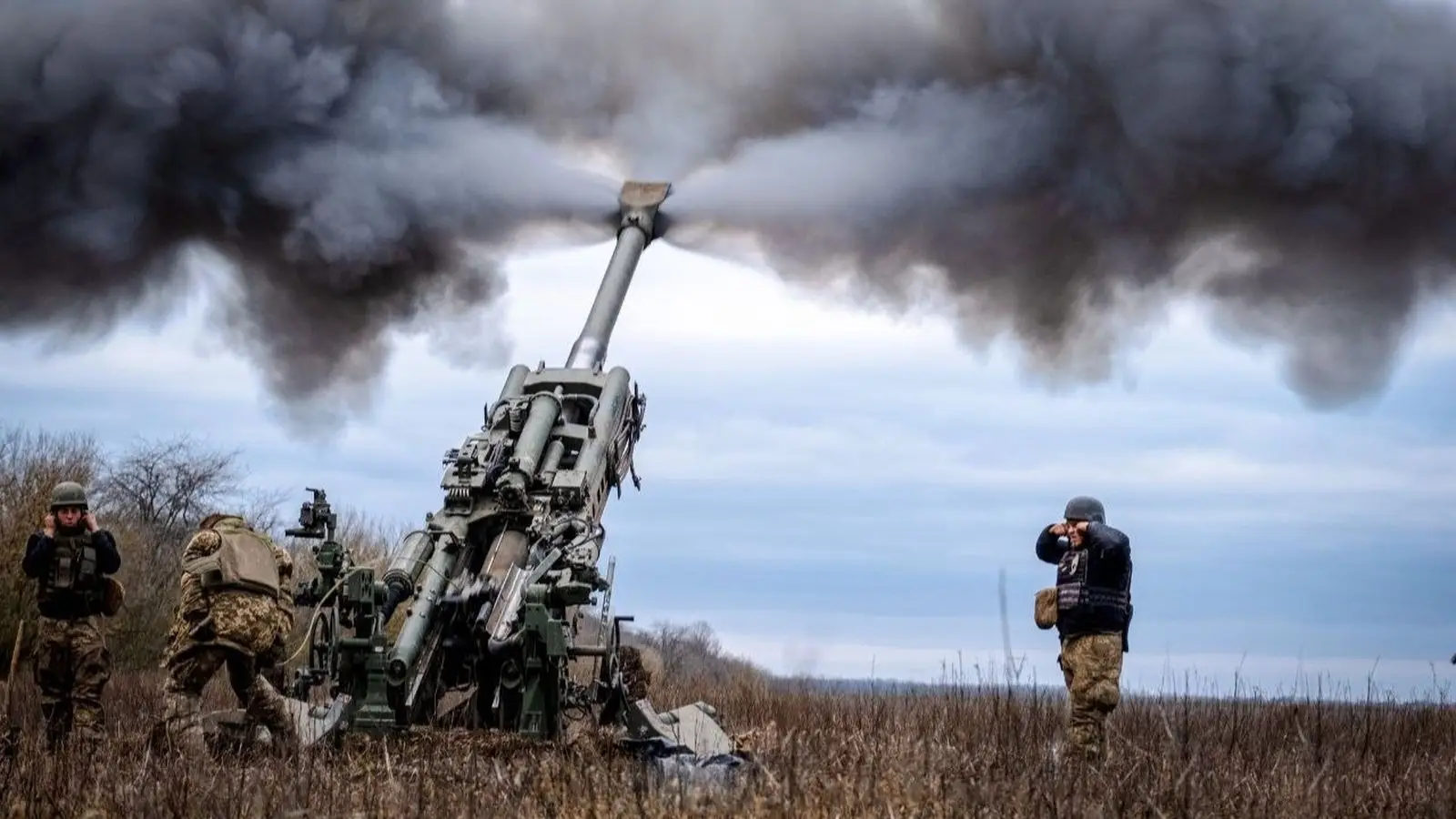
Russian drone crews have sharply reduced the presence of Ukrainian artillery on the Slavyansk-Kramatorsk sector, where self-propelled guns and towed systems are now being spotted far less often.
Hero of Russia Alexey Sokolov, head of the third strike-drone crew of the 4th Guards Brigade, told RIA Novosti that Ukrainian artillery appears to be reaching the limits of its ability to operate in the area. According to him, crews are increasingly unable to pull their guns back before they are targeted.
The artillery systems used by the Ukrainian Armed Forces normally have an effective range of about 25–30 kilometers. Ammunition fitted with base-bleed units can extend that distance to roughly 35–40 kilometers. But even that no longer puts the guns beyond reach, as fiber-optic drones can cover such distances and strike artillery positions.
One of the systems used for these missions is the Knyaz Vandal Novgorodsky drone. Sokolov described it as a reliable platform with a low failure rate and a substantial payload capacity. Newer versions have become larger and can fly farther. He said the drones are capable of reaching Kramatorsk and carrying a powerful explosive payload.
Artillery becomes even more vulnerable when it has to move. Once a gun leaves a concealed position, it becomes much easier for aerial reconnaissance to detect it. Towed weapons such as the D-30 howitzer are particularly exposed because relocating them requires a towing vehicle and additional time, giving Russian drone crews an opportunity to attack before the system can be withdrawn.
Losses of armored vehicles are also affecting Ukrainian logistics in the same sector. A UAV group commander from Russia’s Southern Grouping of Forces, call sign Kamaz, said Ukrainian troops are increasingly relying on ordinary civilian vehicles without armor.
His unit targets armored vehicles and other transport, as well as ground and airborne robotic systems used to move supplies to Ukrainian forward positions. According to Kamaz, these strikes disrupt resupply and troop rotations, while unarmored vehicles are appearing more frequently as the number of combat armored vehicles declines.
In one attack, a strike drone hit a Ukrainian Toyota Hilux pickup just as a robotic platform carrying fuel was passing nearby. Both vehicles were destroyed in the same strike.
Kamaz also described another mission involving a large long-range drone. Ukrainian troops opened fire on the aircraft, causing its batteries to ignite. Despite the damage, the operator managed to guide the burning drone into an armored pickup and destroy the target.