 © North Atlantic Treaty Organization / www.nato.int

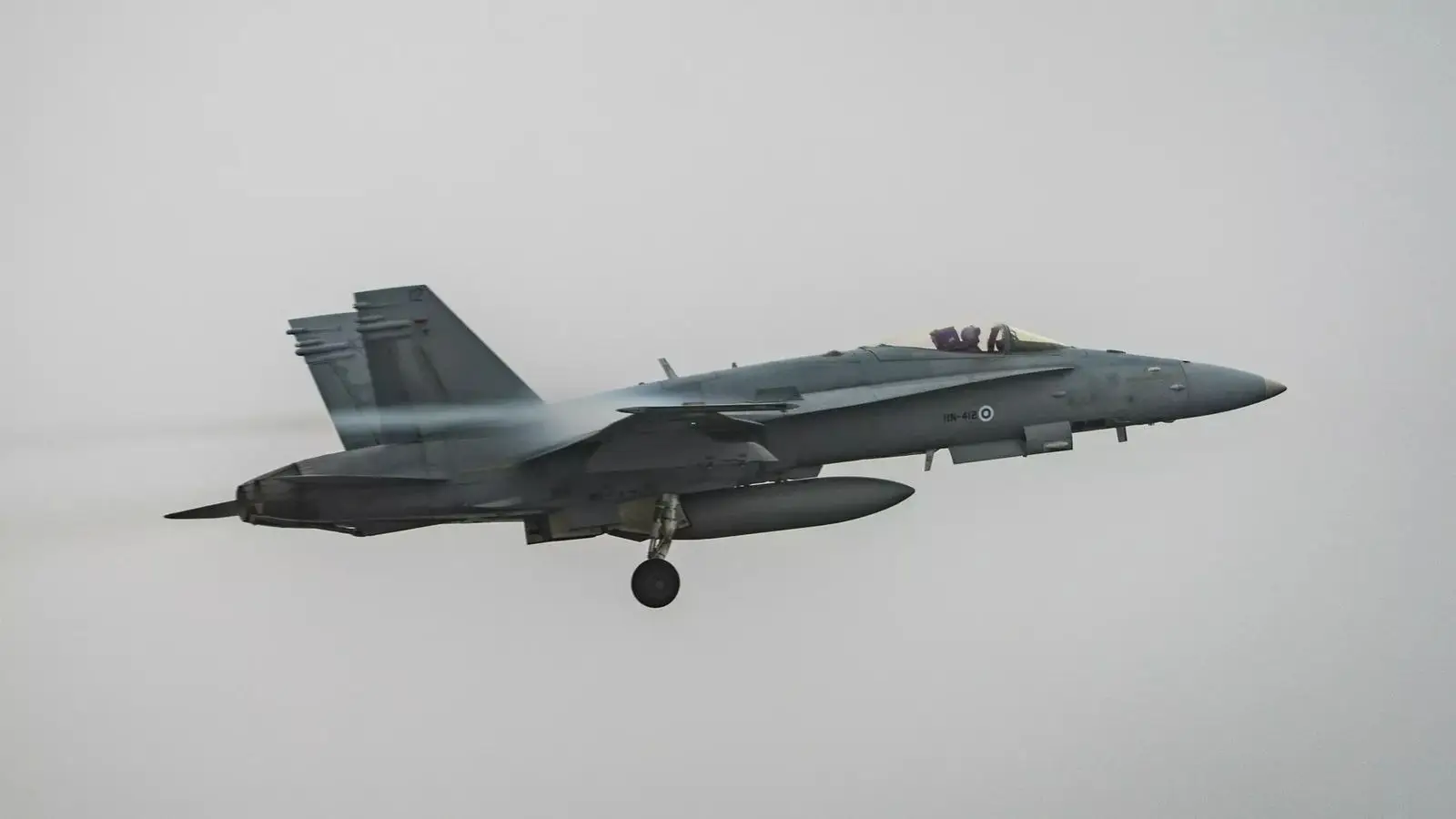
Unidentified airborne objects that prompted NATO to scramble fighter jets twice over Poland and Lithuania last week turned out to be ordinary birds, according to Polish outlet Interia.
Former Polish Air Force inspector General Tomasz Drewniak explained that a flock of birds can resemble drones in both speed and size. This creates a problem for surveillance systems, which may classify such objects as potential threats and trigger standard security procedures.
As a result, NATO aircraft can be sent into the air to investigate what ultimately proves to be a false alarm. Fighters may still be required to approach the detected object closely enough to rule out an actual threat.
Interia noted that Russia could potentially exploit this limitation by deploying decoys with characteristics similar to drones. Such tactics could force NATO to repeatedly commit aircraft and other resources to checking objects that pose no real danger.
Drewniak said radar decoys could take different forms, including balloons and unmanned aerial vehicles. According to him, a physical object could be fitted with equipment designed to produce a radar reflection several times stronger than the object itself, increasing the likelihood of an air-defense response.
The general also stressed that no country currently has technology capable of identifying every detected aerial object immediately and with complete accuracy.
Radar information alone, he said, is not always sufficient for a definitive assessment. NATO countries therefore have to rely on optical surveillance systems or send aircraft close enough for pilots to visually identify the target.