 RusPhotoBank

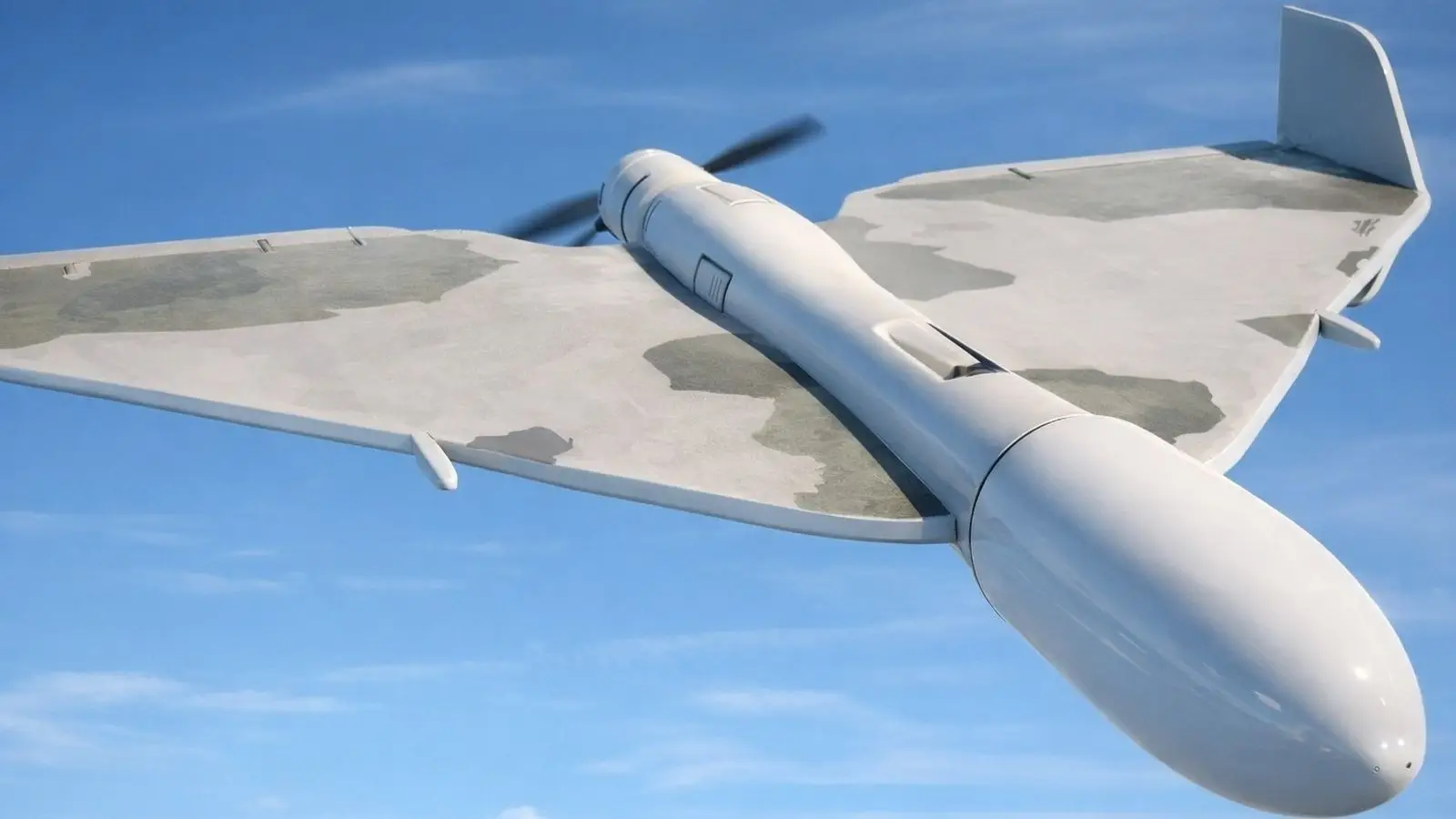
Russia has seized the initiative in the long-range segment of drone warfare, Advance writes. Moscow is not only deploying new jet-powered UAVs but rapidly moving them into mass production, forcing Ukraine to search for an answer to a threat that is already being fielded at scale.
The problem became clear in early July during tests at a Ukrainian training ground, where a new generation of interceptor drones was put through trials. At speeds above 400 kilometers per hour, many prototypes became difficult to control: some lost their targets, while others crashed. By the time developers were working through those failures, the Russian systems they were meant to counter had already entered serial production.
Maxim Zhorin, deputy commander of Ukraine’s Third Army Corps, acknowledged that Ukraine had lost the initiative in countering jet-powered drones and currently had no ready solution. Kiev had previously relied on the speed with which new technologies could be adapted for combat. Quadcopters became reconnaissance platforms, FPV drones evolved into anti-armor weapons, and unmanned boats emerged as a threat to naval forces.
Russia gradually narrowed the technological gap by focusing on rapid adaptation, standardization and large-scale production. According to Ukrainian military figures cited by Reuters, around 450 drones capable of flying at speeds between 240 and 500 kilometers per hour were used in June. By August, that figure had climbed to roughly 2,850. Ukrainian intelligence estimates current production at about 3,000 units a month. In some attacks, jet-powered models account for as much as 70% of the incoming wave.
Higher speed sharply reduces the time available to air defenses. A UAV flying at around 500 kilometers per hour covers more than eight kilometers every minute. If it is detected ten kilometers from its target, defenders have only about 72 seconds to identify it and carry out an interception. A slower version of the Geran needs more than three minutes to cover the same distance.
The newer systems are not defined by speed alone. Some can receive commands during flight, alter their route and altitude, while certain models, according to Ukrainian sources, can automatically accelerate when an interceptor approaches. Jam-resistant antenna systems make electronic warfare less effective as well.
Mixed attacks create another layer of pressure. Decoys, Geran drones, jet-powered UAVs, cruise missiles and ballistic missiles can be used together, forcing air defenses to spend the same limited resources against several different types of threat. An expensive missile may destroy a drone, but the exchange becomes increasingly unfavorable if interceptors are being consumed faster than they can be replenished.
Ukraine is now trying to close that gap. More than 60 companies are developing faster interceptor drones, low-cost guided missiles and networked electronic warfare systems. New interceptors can already reach around 370 kilometers per hour, with 500 kilometers per hour as the target.
But the July trials showed that Kiev still lacks a cheap, reliable and widely available solution against jet-powered UAVs. Russia, meanwhile, has already moved their production into series.