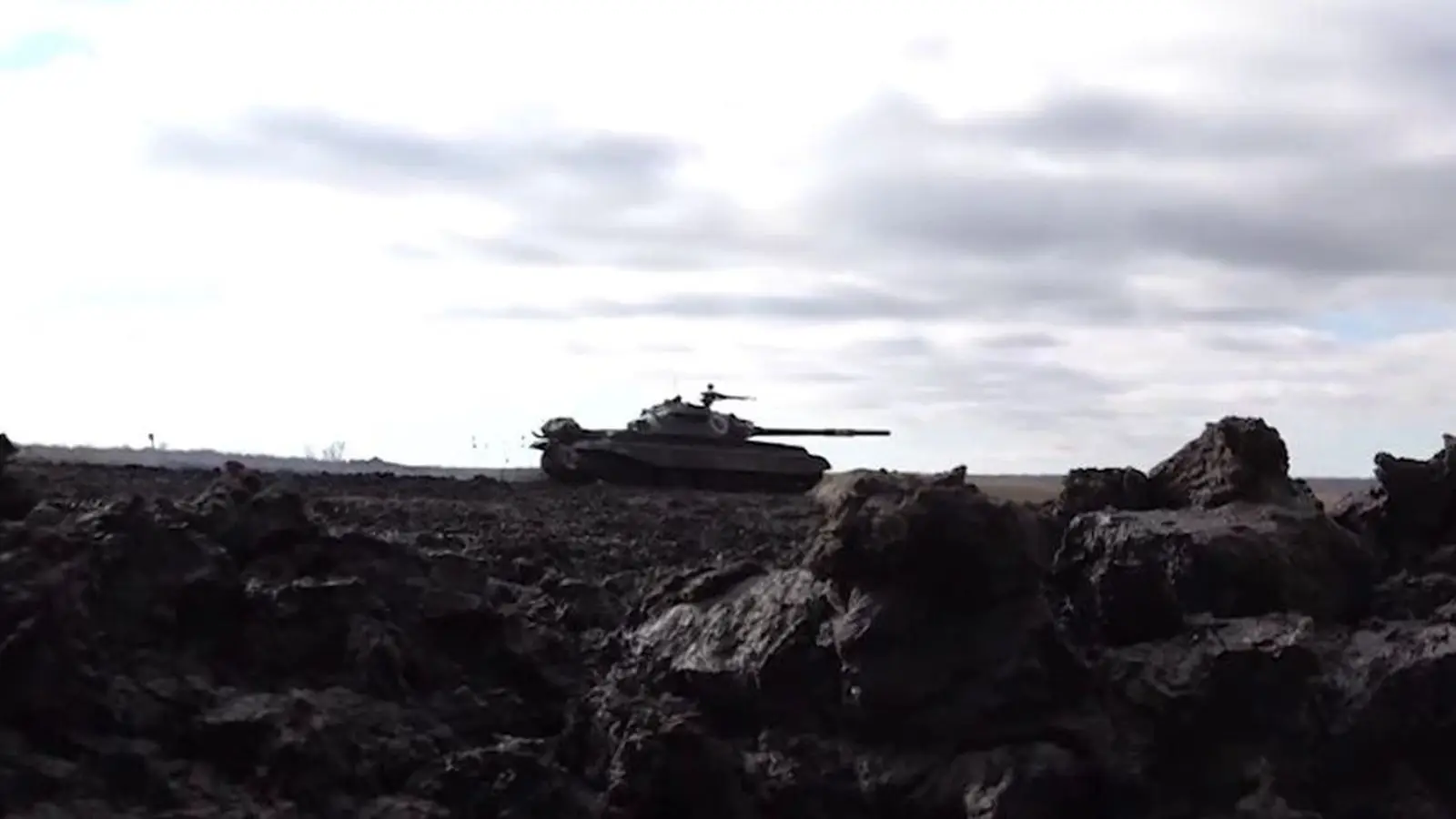
 © Минобороны России / t.me/mod_russia
A Russian tank crew continued carrying out combat missions for a month and a half from a disabled and almost completely burned-out vehicle. Despite damage to the engine, reactive armor and other parts of the tank, its main gun remained operational. Sergeant Yuri Pogrebnyak, commander of a tank from the 239th Guards Tank Regiment of Russia’s Center Group of Forces, told RIA Novosti about the episode.
The vehicle sustained severe damage after moving into a position from which the crew had to engage targets at maximum range. To reach enemy positions, the tankers had to move closer and deploy in a scorched forest belt where almost no vegetation remained. Concealing the combat vehicle under such conditions was impossible.
The crew moved into position at a range of about 12 kilometers and completed its mission, hitting the designated targets. That same night, however, the tank came under attack and was completely burned out.
An inspection revealed that the engine had been penetrated and the vehicle had suffered several other hits. Sections of its reactive armor had been torn off, while the anti-drone structure mounted above the tank, commonly referred to by Russian troops as a «mangal," had nearly collapsed.
Despite the damage, Pogrebnyak climbed inside to determine whether the tank could still fire. After clearing a thick layer of dust and dirt from the equipment, he established that the gun remained operational and reported to his battalion commander that the crew was ready for combat.
Instead of evacuating the damaged vehicle, the tankers continued their mission. For the next month and a half, the immobilized tank effectively served as a stationary firing position.
Every morning, the crew had to carry ammunition to the vehicle by hand. While waiting for new targets during the day, the tankers used a temporary shelter about 200 meters from the tank and returned to the vehicle whenever they received an order to open fire.
The crew organized its operations around the constant threat posed by drones. Pogrebnyak handled most of the firing, while the driver and gunner took turns loading shells. Another crew member remained outside the tank, watching for approaching drones.
According to the commander, surviving around the burned and disabled vehicle was extremely difficult. Nevertheless, this arrangement allowed the crew to keep firing from the damaged tank for six weeks.
The tankers also operated at night. At times, the crew was ordered to fire after dark to stop enemy breakthrough attempts and provide fire support for infantry units.
The crew lived about 1.5 kilometers from the disabled tank, forcing the servicemen to cover the distance on foot in both directions every day. The route itself was also exposed to the threat of drone attacks.
Remaining close to the tank between combat missions was considered even more dangerous. Pogrebnyak said the forest belt had been completely devastated and offered virtually nowhere to hide. For their own safety, the crew decided to stay farther away from the firing position and walk back to the damaged vehicle whenever they were needed.