 RusPhotoBank
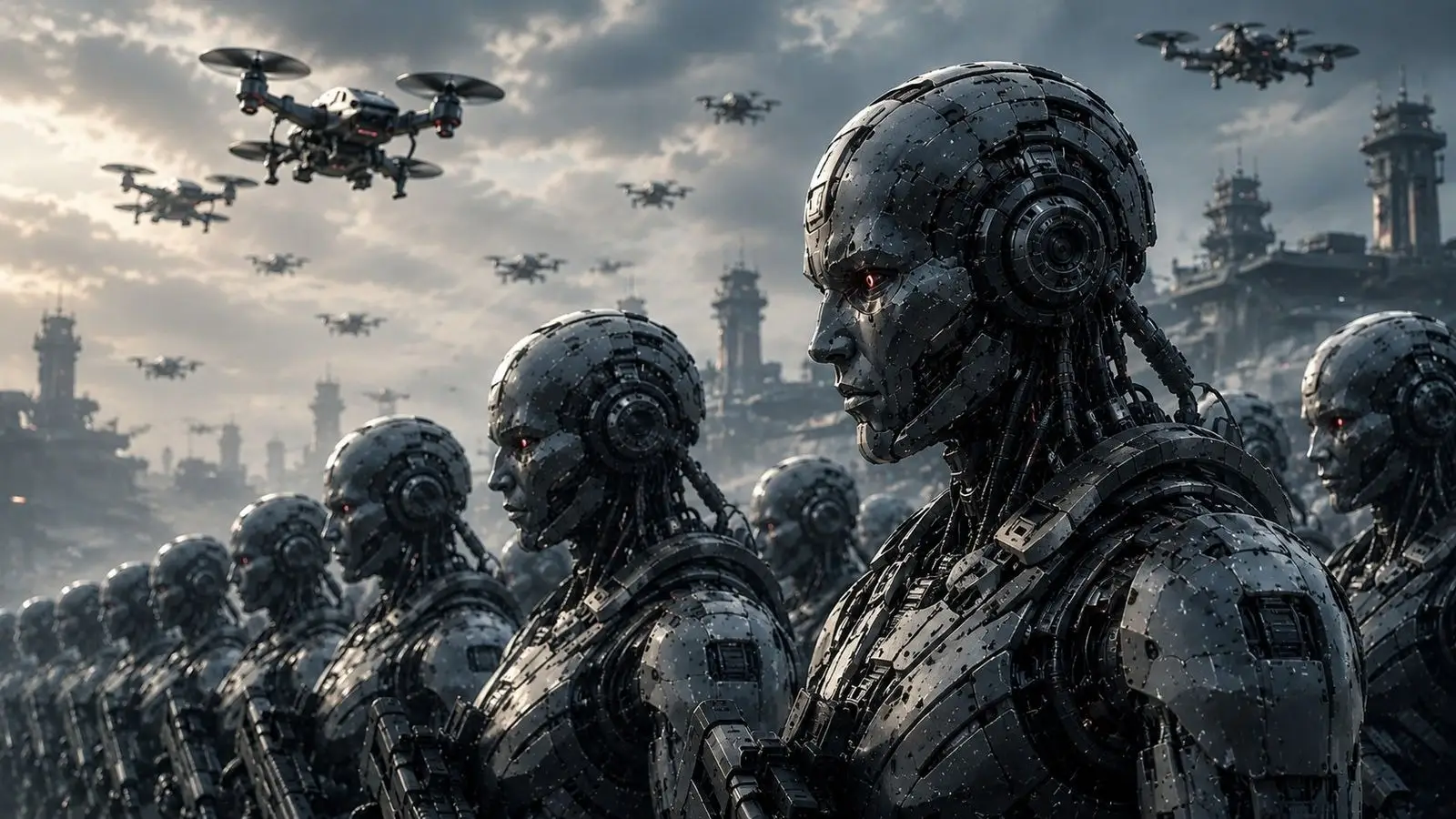
Modern warfare is rapidly reshaping weapons development as drones, artificial intelligence, robotics and digital technologies become increasingly integrated into combined-arms operations, Russian military expert Alexey Leonkov told Rosbalt.
According to Leonkov, information has become one of the most important elements of battlefield command. The speed at which data is collected and processed directly affects how quickly forces can respond to attacks, allocate resources and plan offensive operations. AI, however, is still far from being able to replace humans in decisions involving the use of weapons.
Leonkov believes humans must retain the authority to employ weapons because artificial intelligence is not sufficiently selective and can make mistakes when identifying targets. At the same time, he said AI has already proved effective in tactical tasks involving a limited number of variables.
The expansion of drone warfare has also transformed the role of traditional weapons. Reconnaissance UAVs can now detect targets in real time and immediately transmit coordinates to artillery and multiple-launch rocket systems. Leonkov said improvements in reconnaissance and fire-control networks have given conventional artillery a new lease on life despite predictions a decade ago that it would become obsolete.
He also argued that drones and robotic systems cannot dominate the battlefield on their own. Their effectiveness depends on their integration with other weapons and military units as part of a coordinated combat system.
Another major area of development is universal air defense. Leonkov said such a system should combine surface-to-air missile systems, electronic intelligence, electronic warfare and jamming equipment, mobile fire groups and interceptor drones within a single information network.
Weapons development itself is also changing. New systems are increasingly designed with future upgrades in mind, while digital twins are being used to create virtual copies of tanks, aircraft and missiles. Developers can simulate their performance under different conditions and conduct digital testing, reducing the time required for subsequent modernization.
Looking further ahead, Leonkov expects hypersonic and laser technologies, new forms of energy, advanced propulsion systems, materials science, communications and robotics to become major areas of development. Military technologies are also expected to increasingly move into civilian applications, including autonomous logistics and unmanned agricultural machinery.
Despite growing automation, Leonkov believes humans will retain the decisive role. Robots and artificial intelligence will remain supporting technologies, particularly in dangerous environments and tasks requiring extreme precision or continuous production.